
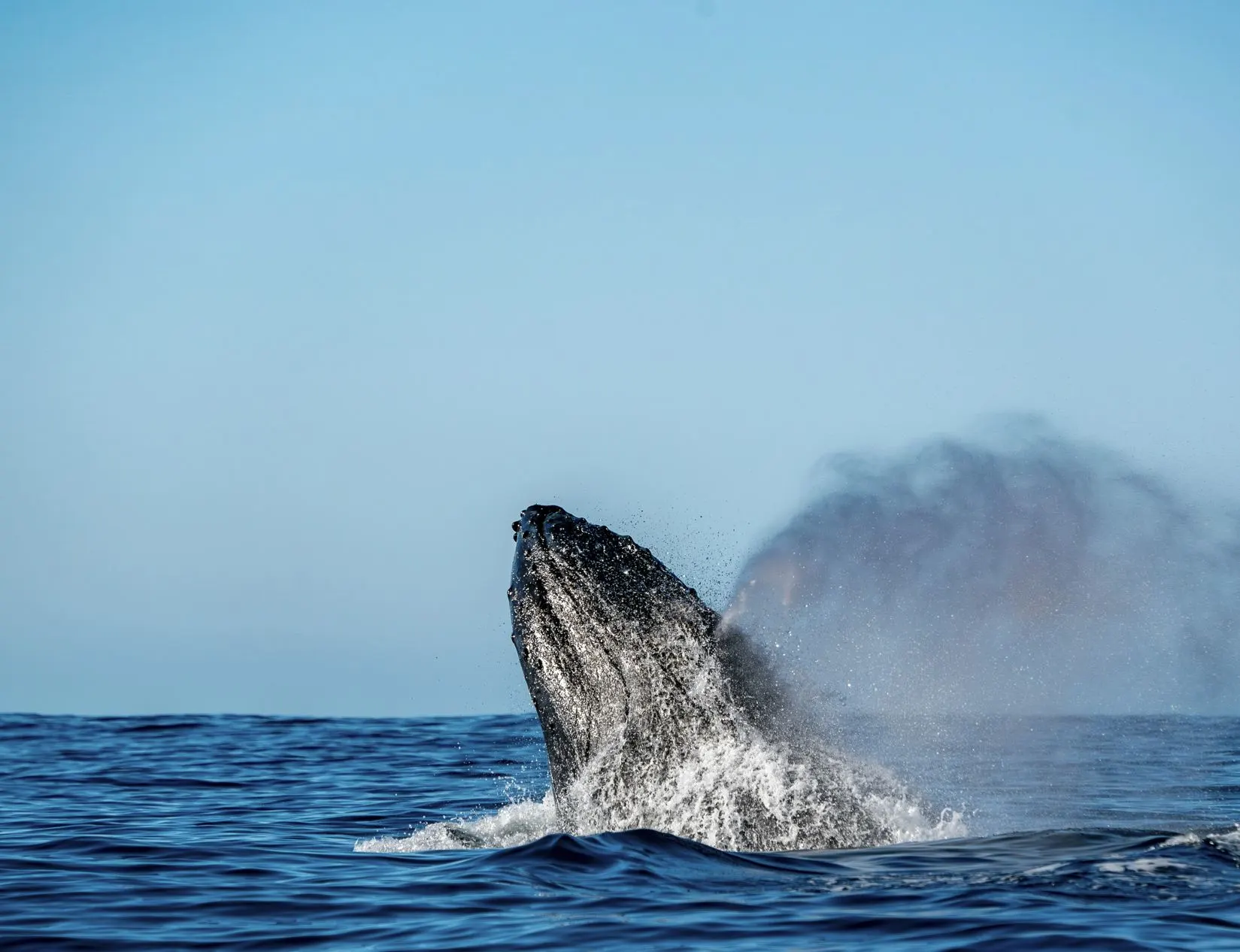
We at The Cabo Sun are on the ground this week along the Tourist Corridor—and yes, we’ve already spotted spouts and tail slaps from the beach. If you’re visiting in late October or November, you can get lucky with early sightings.
But there’s a catch: the official whale-watching season (and licensed boat tours) doesn’t begin until mid-December, so for now it’s a shore-spotting game with a few smart rules. We’ll drop our short reel in this article, where we first saw activity, so you can spot the cues yourself.
For broader context, we just covered this exact trend here, including which beaches have the best sight lines.
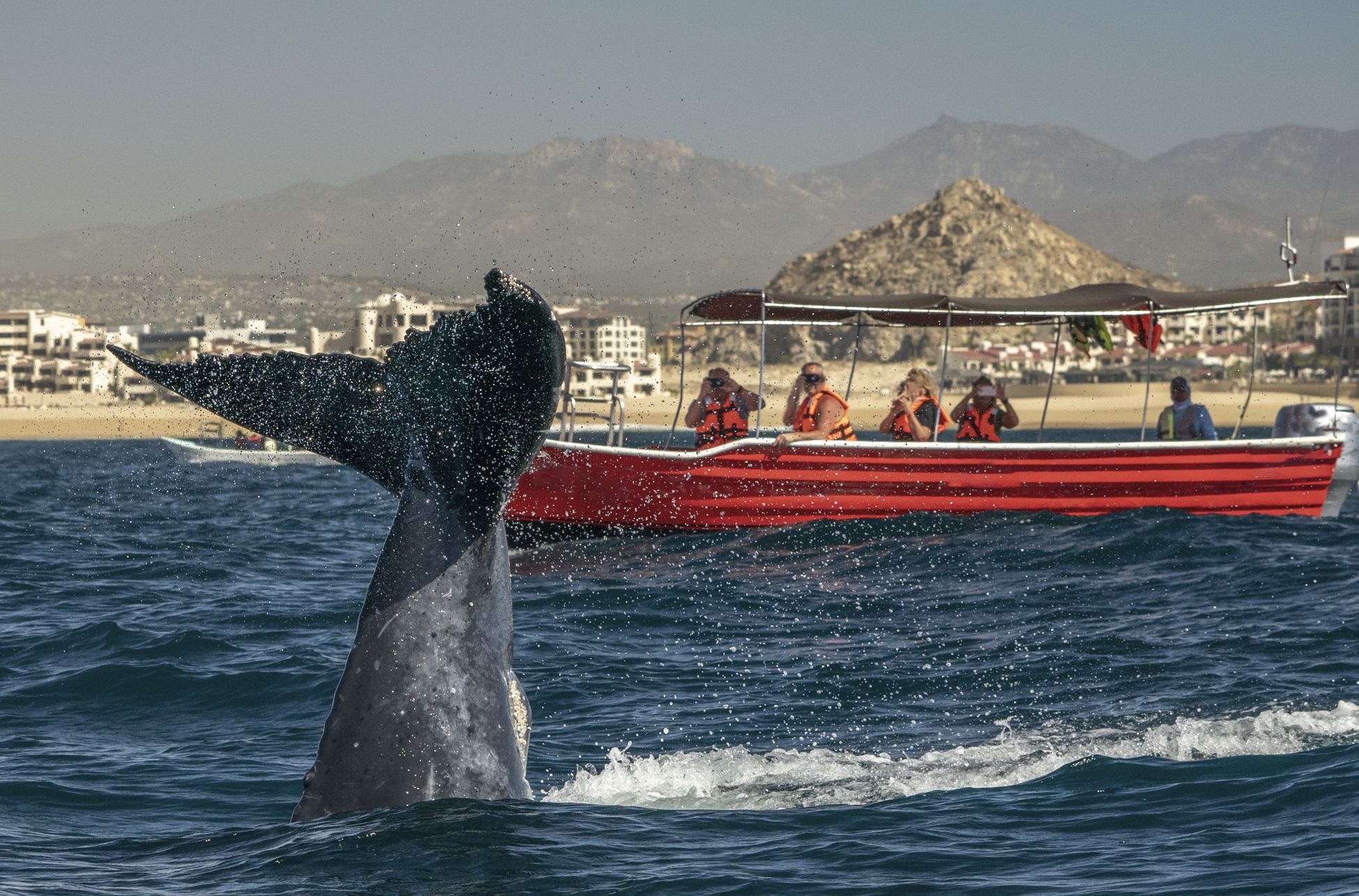
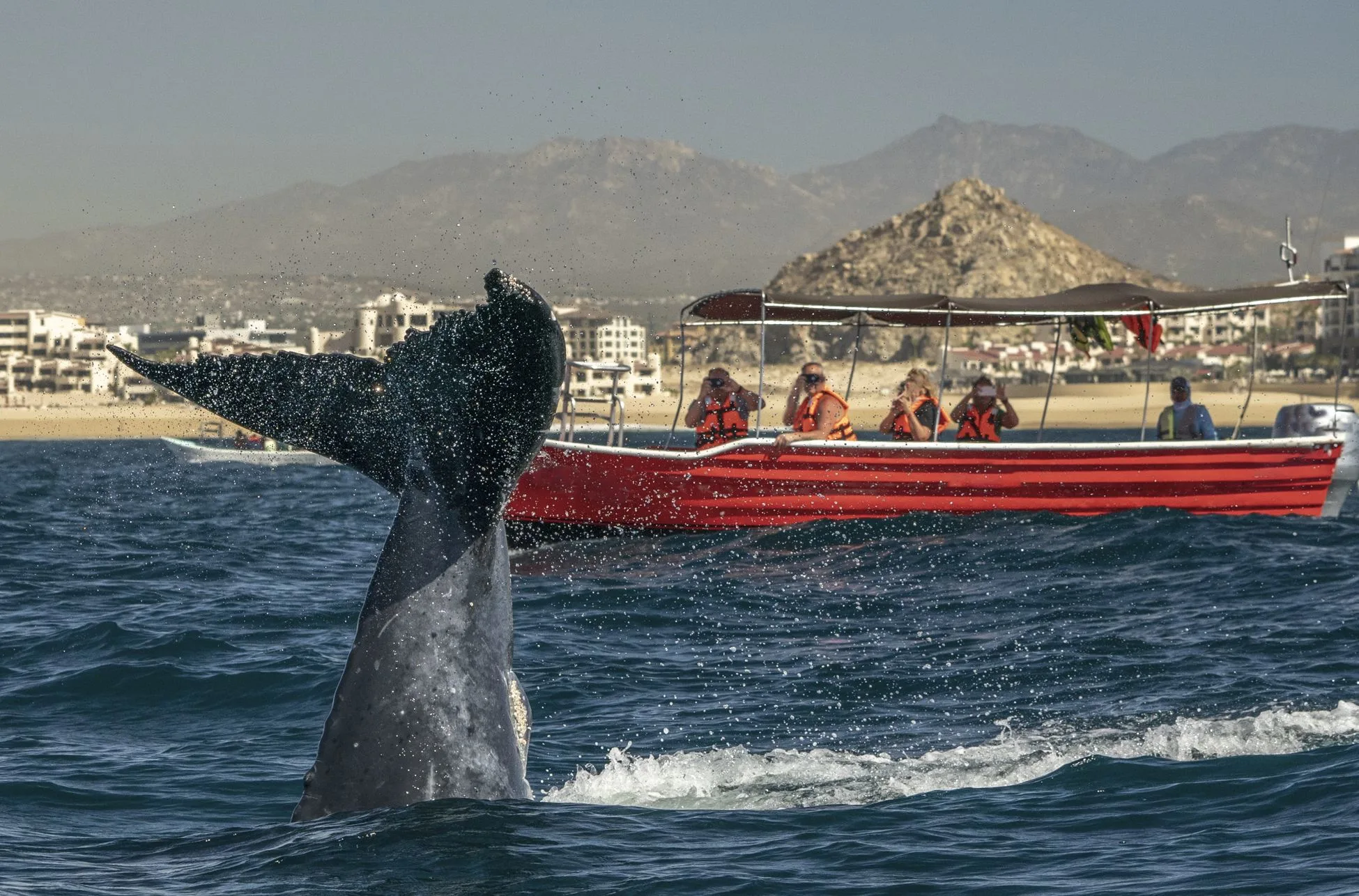
The “Yes” Part: Early Whales Do Show Up
Migrating humpbacks and grays don’t all arrive on the same day.
Each year a few pioneers appear weeks before the season opens, and locals start trading “first spout” sightings.
This fall is no different: our team and readers have reported early action off calm, protected coves like Chileno and Santa María, and along longer horizons near Palmilla and El Médano. Our recent explainer breaks down exactly where and how to scan.
…And The Catch
Mexico regulates commercial whale watching tightly to protect the animals. In Los Cabos, licensed tours typically operate December 15 through mid-April (with peak reliability January–March).
Before that window, operators aren’t running whale tours—and you shouldn’t try to approach whales on private craft either.
The goal is simple: minimize stress on migrating mothers and calves. For timing and context, see our beginner’s guide and seasonal preview, plus a government notice confirming the 2025–2026 observation period.
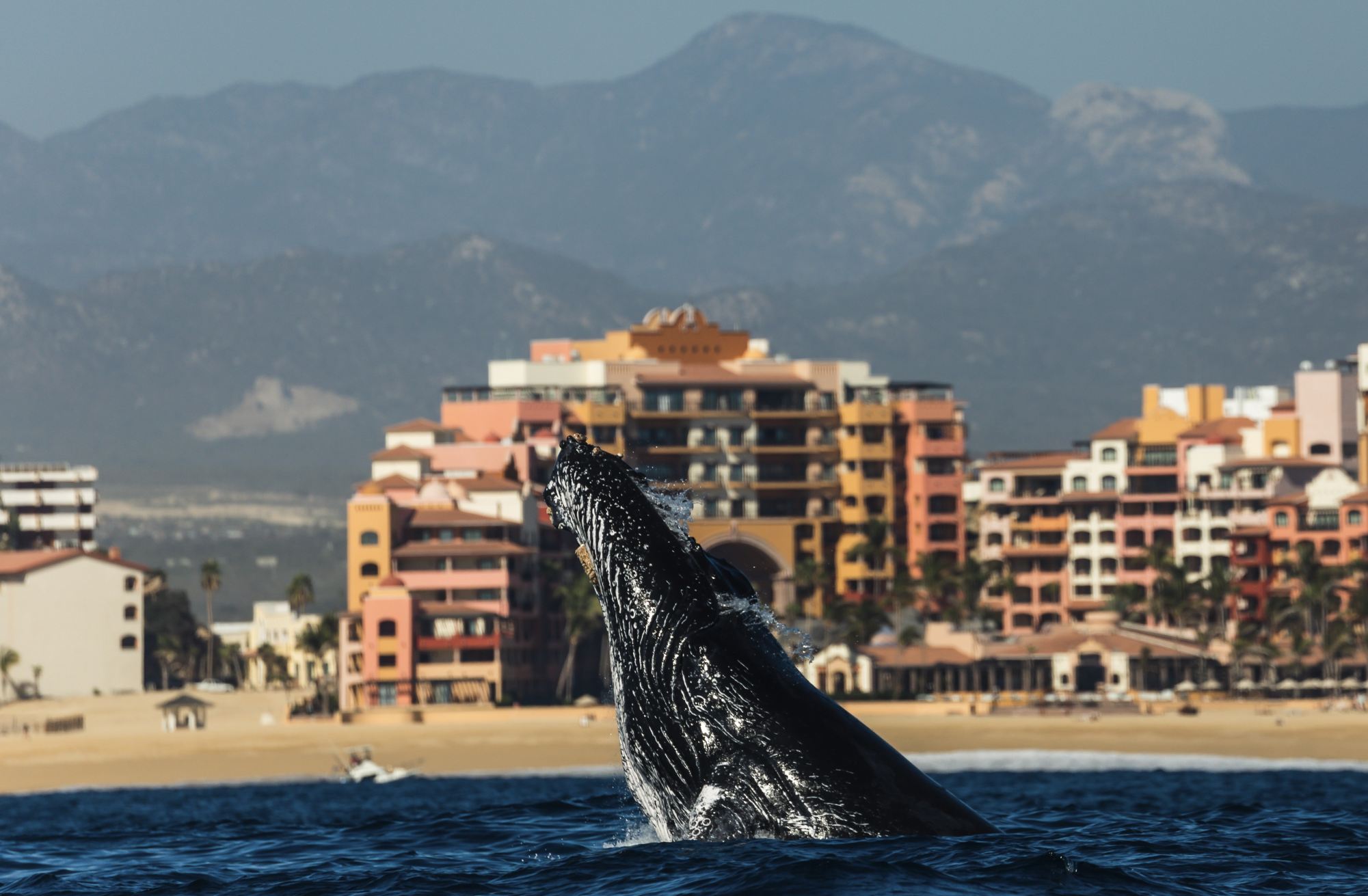
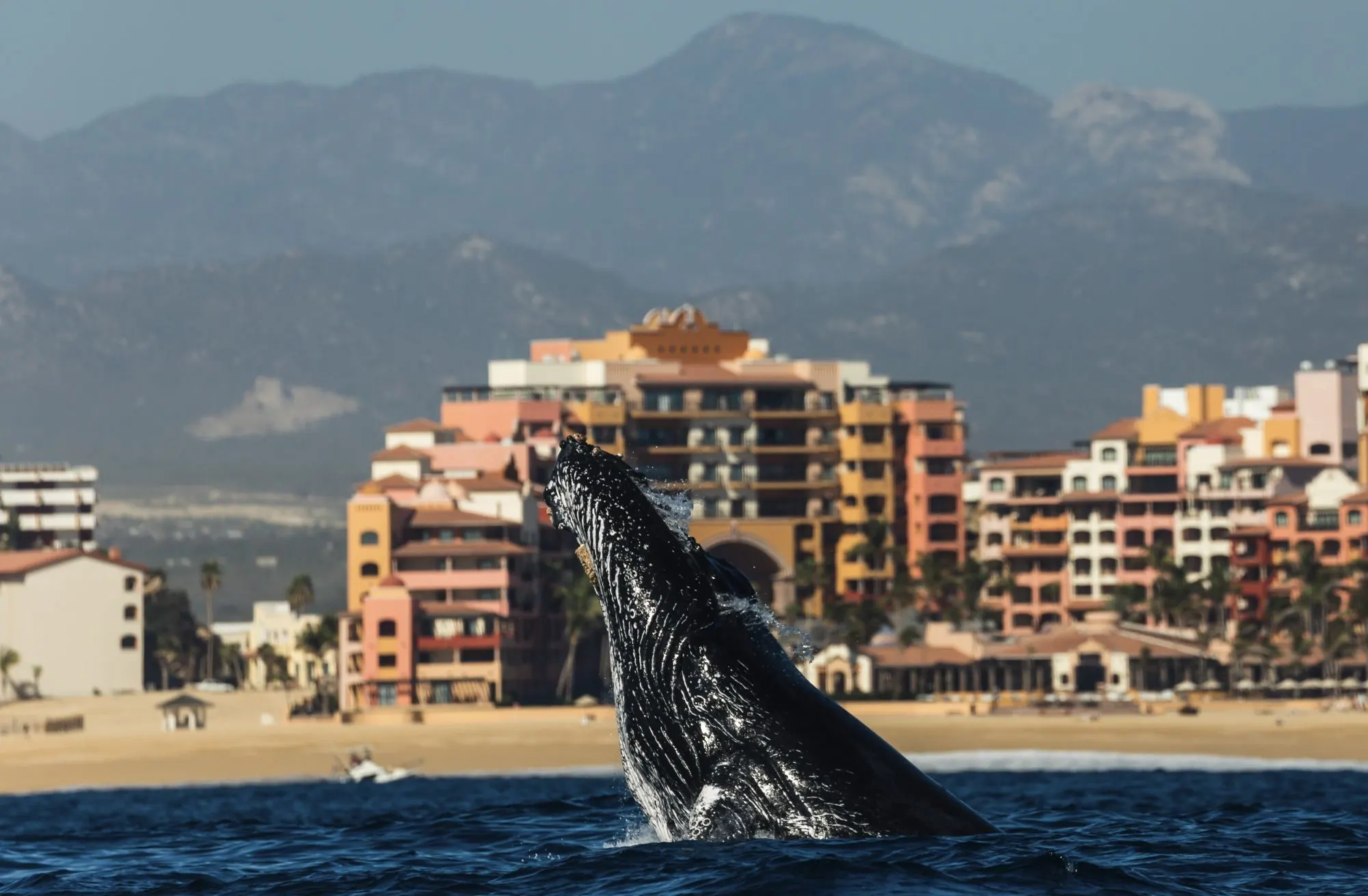
How To Spot Whales From Shore (Right Now)
- Time it right: Early mornings on calmer days offer the best “mirror-sea” conditions. Look for vertical “puffs” (blows) lingering above the horizon, then watch for a dark arching back, tail lift, or surface splash. We outline the visual cues—and the best benches and beach access points—in our early-sightings guide.
- Pick smart beaches: Protected coves give you stable footing and wide angles. Our recent beach-status update lists traveler-favorite beaches that are currently open with yellow flags (swim with caution), which also happen to be great scanning spots.
- Bring simple tools: Binoculars (8x–10x), a hat, water, patience. If you have a tripod, a phone clip helps you capture steady proof when that fluke finally pops.
- Stay put 10–15 minutes: If you see one blow, keep your gaze locked—whales breathe in series. Many surface every 5–8 minutes, often along a steady line.
Safety First: Flags, Surf, and Common Sense
Don’t let the calm look fool you—Cabo waves can be deceptively powerful. Before you wade in (or even step close to shorebreak), check the beach flags and listen to lifeguards. Our color-by-color cheat sheet is easy to screenshot for your walk down from the room.

Etiquette & Rules While You Wait For Season
- No drones over wildlife. It’s disruptive and can violate local rules.
- Give space. Even from shore, avoid clustering on wet, unstable rock ledges.
- Don’t hire “under-the-radar” boats. Wait for licensed, insured operators once the season opens—your money supports responsible practices and trained crews who keep both guests and whales safe.
When Tours Start: How To Plan Your Dates
If seeing whales is a must, the most reliable window is January–February. That’s also high season for everything else in Cabo, so hotel rates and occupancy spike. To dodge sticker shock, skim our fresh rate check (~$500 average in peak weeks) and booking advice—especially if you’re aiming for holiday periods that sell out fast.


A Few Final, Practical Tips
- Anchor your day at a swimmable cove, then alternate scanning the outer blue with quick dips—when flags allow. Our storm-recovery beach update shows which spots are currently in good shape following recent weather.
- Pack light layers. Mornings can be breezy; a windbreaker helps when you’re stationary on a bluff.
- Expect visible security around big events/holidays. It’s normal to see extra patrols on beaches and highways—part of Cabo’s proactive approach to busy weeks.
- Mosquito worries? Resorts generally manage them exceptionally well (we’ve been testing properties this week).


Yes, you might catch whales before the season—from shore. Bring patience, a good vantage point, and respect for the rules.
Then, once December 15 rolls around, hop on a licensed tour and experience Cabo’s full-blown whale superhighway the right way.
For everything we’re seeing on the ground this week (including the reel of our first spout), start with our early-sighting report and plan from there.
The Ultimate Cabo Trip Planner
When’s the best time to go? Our powerful month-by-month guide breaks down the weather, crowds, hotel rates, and whale watching seasons for your perfect trip.
Find Your Perfect Los Cabos Resort In Seconds
This simple, powerful tool was built by our on-the-ground experts to match you with the ideal resort for your specific budget and travel style.
Subscribe to our Latest Posts
Enter your email address to subscribe to The Cabo Sun’s latest breaking news affecting travelers, straight to your inbox.