
It is the number one mistake travelers make in Los Cabos: booking a stunning beachfront resort, only to realize upon arrival that the ocean is too dangerous to enter. Stop guessing and verify your hotel’s official beach safety status instantly with our live tool below.
Can I Swim At My Hotel?

Understanding Your Results
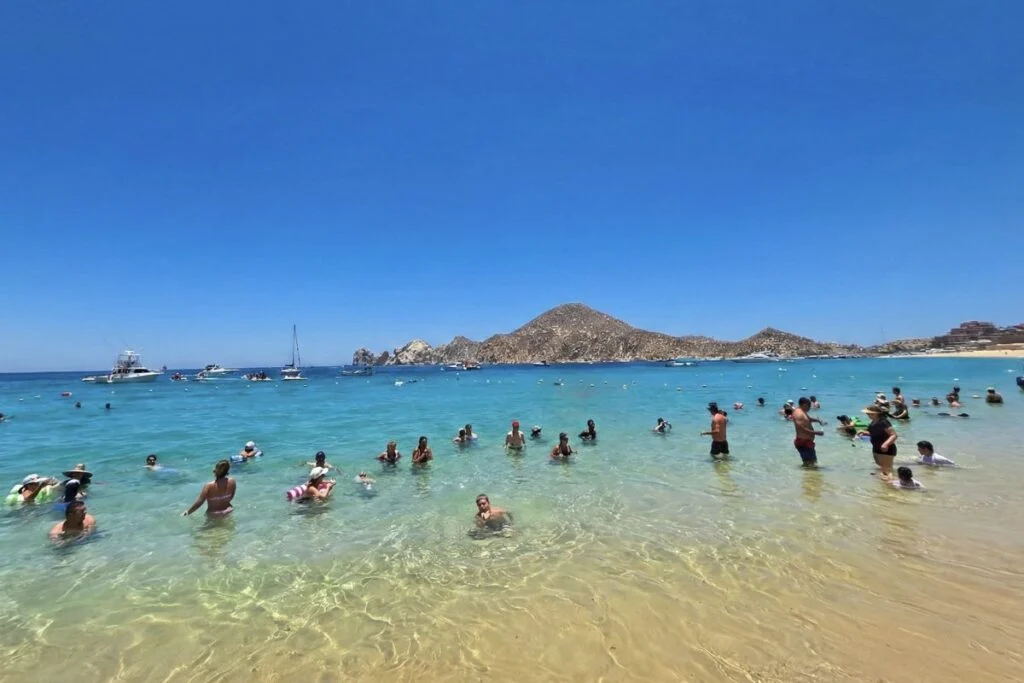
✅ Green: Yes, Swimmable If your resort returned a “Yes,” you are likely located on Medano Beach, Chileno Bay, or Palmilla. These areas are protected from the heavy Pacific swells. The water is generally calm, and lifeguards are present. These are the best options for families or weak swimmers.
⚠️ Yellow: Caution / Mixed These resorts are typically found in the Tourist Corridor (the stretch of highway between Cabo San Lucas and San Jose del Cabo). Resorts here, like the Hilton or Paradisus, often have man-made breakwaters that create small, swimmable coves.
- The Rule: Swimming is possible, but never guaranteed. You must check the beach flags every morning. If the wind picks up, these coves can close quickly.
Flag
Deadly currents. Do not enter water.
Flag
Strong swimmers may struggle. Stay out.
Flag
Swim carefully. Currents active.
Flag
Conditions good for swimming.
Flag
Presence of jellyfish or stingers.
❌ Red: Not Swimmable If your result is “Red,” do not attempt to swim in the ocean. This usually applies to the luxury resorts on the Pacific Side (Hard Rock, Nobu, Pueblo Bonito Sunset).
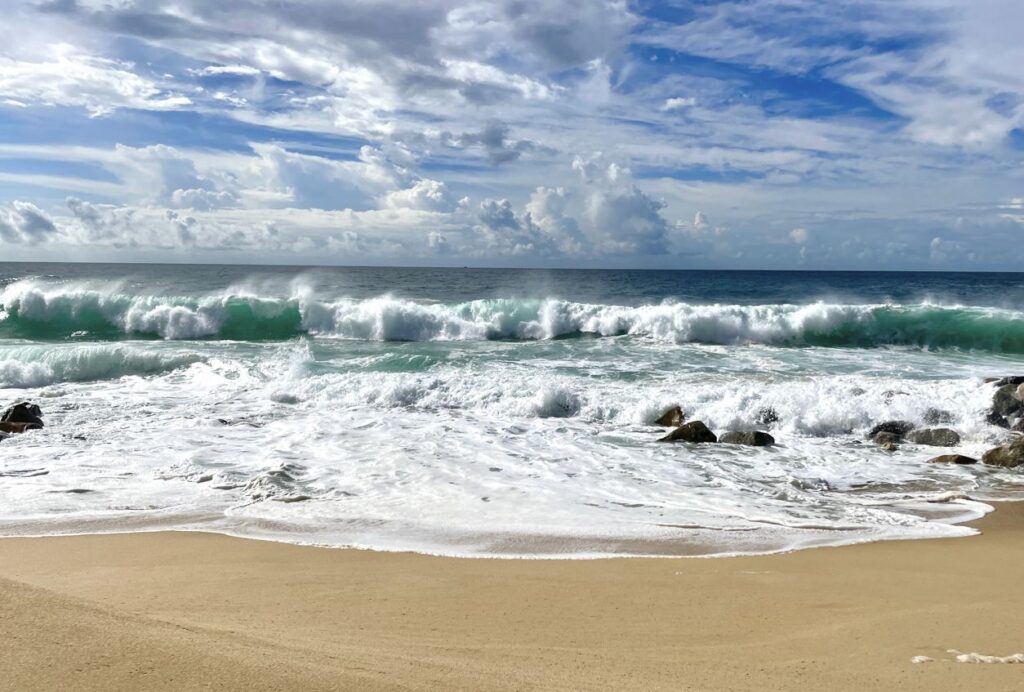
- The Danger: The shore break (where the wave hits the sand) is violent, and the undertow can pull an adult out to sea in seconds. Enjoy the infinity pools, walk on the sand, but keep your feet dry.
Why Is Cabo So Dangerous?
Unlike Cancun or the Caribbean, where the water is generally calm, Los Cabos sits at the violent meeting point of the Pacific Ocean and the Sea of Cortez.
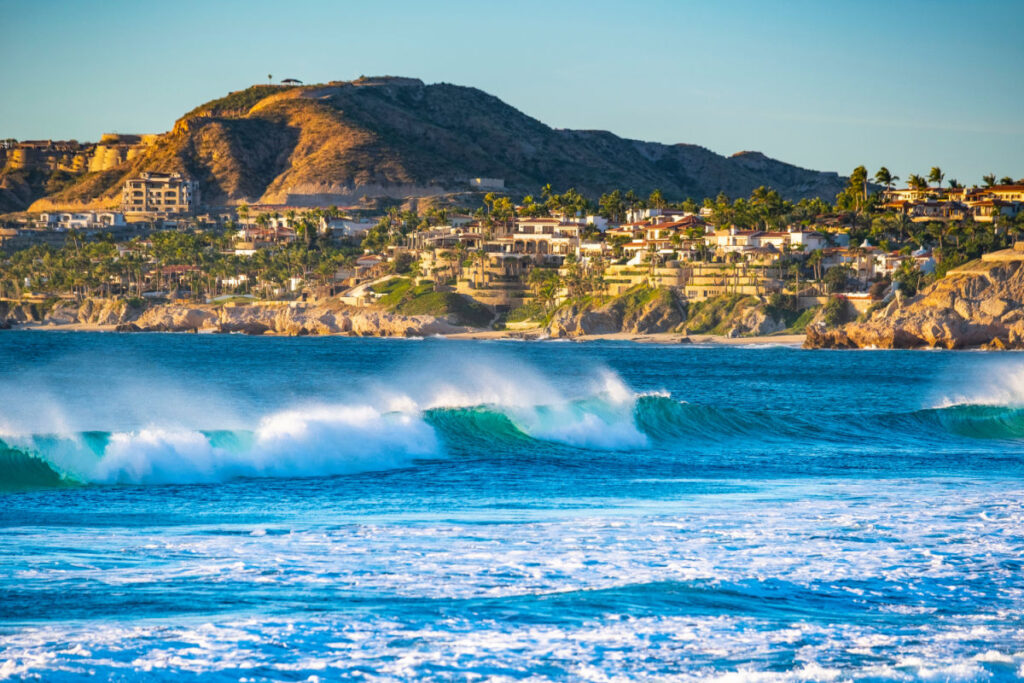

The geography creates a unique phenomenon:
- Steep Drop-offs: At many beaches, the ocean floor drops dozens of feet just a few yards from the shore.
- Riptides: The colliding currents create invisible rivers that pull swimmers away from the beach.
- Shore Break: Waves crash directly onto the sand rather than breaking further out, which can cause serious injury to those standing in the shallows.
The Flag System: The Final Authority
While our tool provides the general rule for your resort, the Lifeguard Flags are the law. Conditions change daily. Even a “Swimmable” beach can be closed during a storm.
- 🟢 Green Flag: Water conditions are safe for swimming.
- 🟡 Yellow Flag: Use caution. Swimming is allowed, but currents may be active.
- 🔴 Red Flag: Danger. Do not enter the water.
- ⚫ Black Flag: Extreme Danger. Do not enter the water.
- ⚪ White Flag: Jellyfish presence.

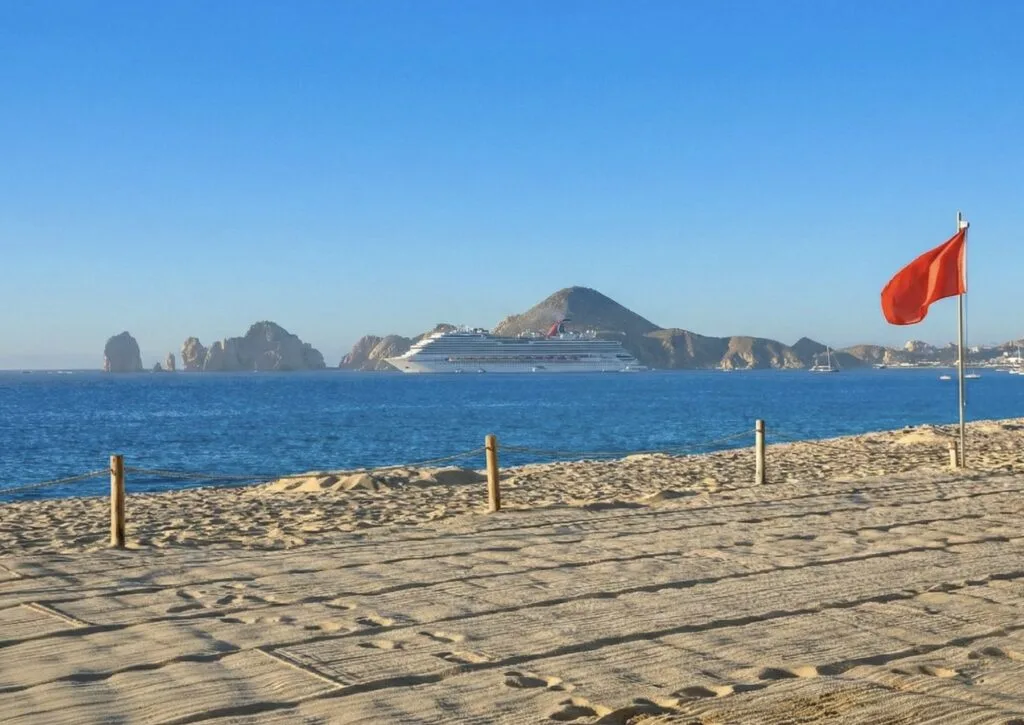
What To Do If Your Hotel Isn’t Swimmable
If you checked your hotel and got a “Red” result, don’t panic. You can still enjoy the ocean.
- Take a Water Taxi: For $5-$10 USD, you can take a boat from the Marina to Medano Beach or Lover’s Beach, where the water is calm.
- Visit a Public Beach: Chileno Bay and Santa Maria Bay are public, Blue Flag-certified beaches with calm waters. They are easily accessible by Uber or taxi from any resort in the corridor.
Disclaimer: This information is for general guidance only and is subject to change based on daily weather, tides, and flag warnings. We are not liable for the use of this information. You are solely responsible for verifying current conditions and lifeguard instructions before entering the water.
The Ultimate Cabo Trip Planner
When’s the best time to go? Our powerful month-by-month guide breaks down the weather, crowds, hotel rates, and whale watching seasons for your perfect trip.
Find Your Perfect Los Cabos Resort In Seconds
This simple, powerful tool was built by our on-the-ground experts to match you with the ideal resort for your specific budget and travel style.
Subscribe to our Latest Posts
Enter your email address to subscribe to The Cabo Sun’s latest breaking news affecting travelers, straight to your inbox.