
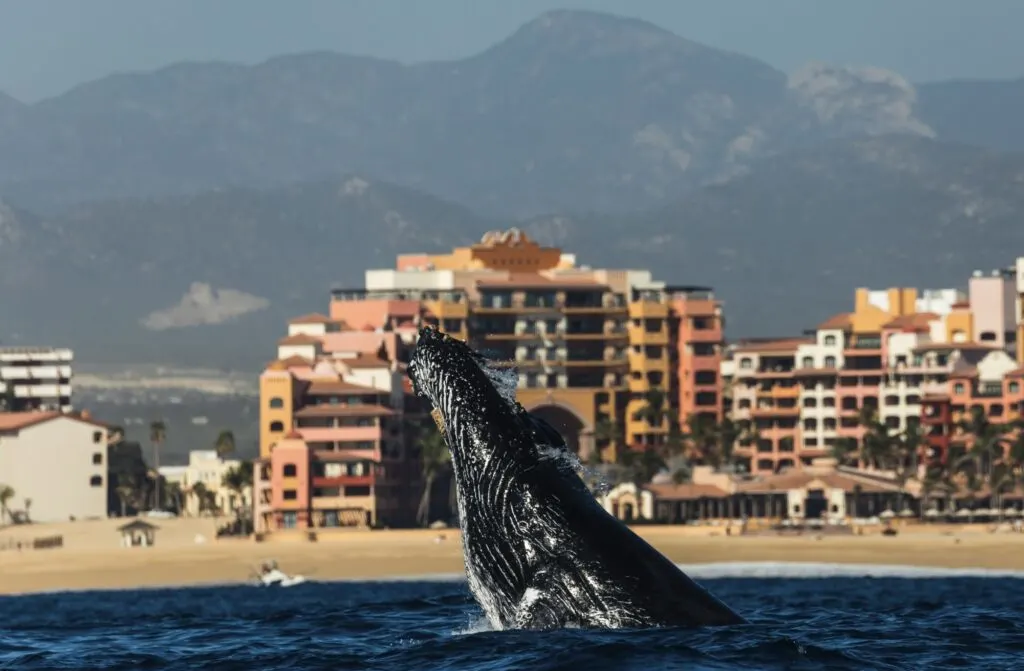
Good news for ocean-lovers: the first whales of the season have already been spotted off Los Cabos—weeks earlier than usual.
As we at The Cabo Sun have reported every fall, early arrivals do happen, but there’s a big catch this year: official whale-watching tours are not starting early, and authorities are asking everyone to enjoy sightings from shore until the season opens.

What’s happening (and why tours aren’t running yet)
Environmental officials confirmed whales began appearing around mid-October along the tourist corridor between San José del Cabo and Cabo San Lucas. They’ve urged locals and visitors not to approach whales by boat until the official season begins in December under federal permits. In one incident, a stranded calf near the Paradisus and Hilton hotels was successfully returned to the sea after a multi-agency rescue—another reminder of why protocols matter.
In Los Cabos, the whale-watching season typically runs from December 15 to mid-April, with peak viewing in January–March. Operators follow federal rules set by Mexico’s environmental authorities, and tours don’t legally commence before the start date.
Translation: if you’re visiting in late October or November and you happen to spot a blow or a breach, consider it an awesome bonus—but don’t expect sanctioned tours until mid-December.

Where (and how) to spot whales from shore right now
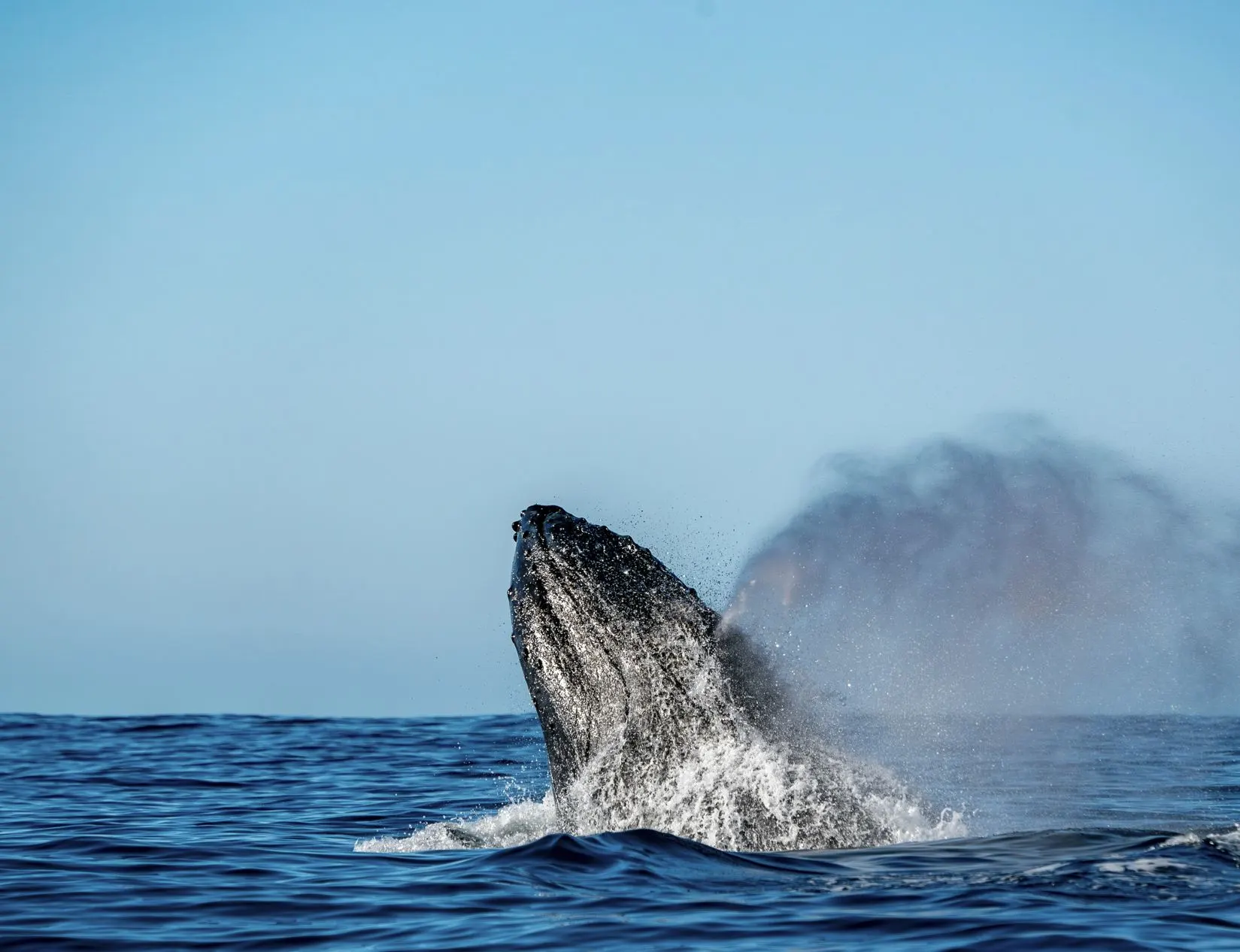
Until tours begin, your best bet is to keep your eyes on the horizon from high-visibility beaches and viewpoints along the corridor. Patience is key; bring sunglasses and scan for “blows” (puffs of vapor) and tail slaps.
- Chileno & Santa María: Calm, protected coves with wide sight lines, great for scanning the outer horizon between swims. We recently noted these traveler-favorite beaches are open with yellow flags—meaning swim with caution and follow lifeguards.
- Palmilla & El Médano: Popular and easy to access; look beyond the surf zone toward deeper water. Review our Beach Flag Guide before you wade in—whales or not, safety first.
- High ground: Hotel terraces, seaside walking paths, and natural overlooks near Land’s End can offer great angles—binoculars help.
Beach safety still comes first
Early whales arrive against a backdrop of shifting ocean conditions after recent storms. Los Cabos uses a colored-flag system (run by ZOFEMAT) to communicate surf hazards.
Before you post up for a whale-watch, check the flag at your beach access and listen to lifeguards. Our guide breaks down what every color means, including the white flag for marine life and the black flag when beaches close.
Respect the rules (and the whales)
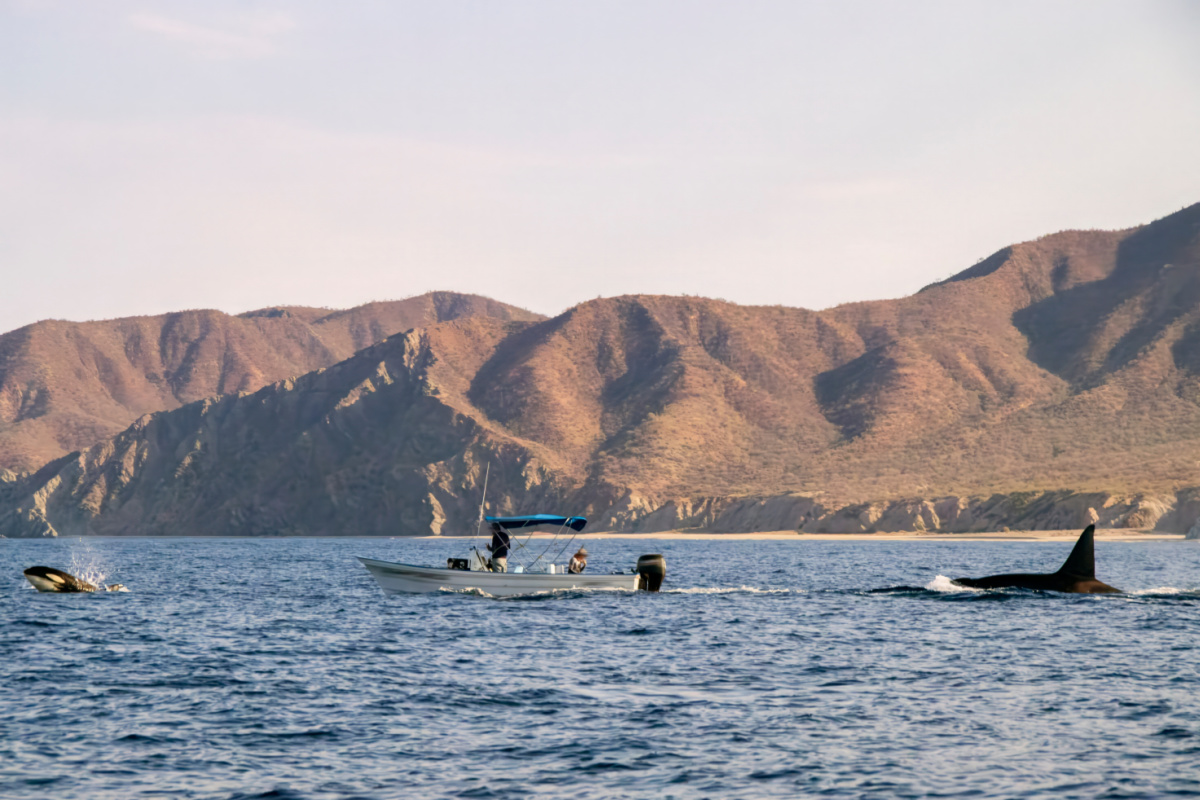
Even from shore, please remember that approaching whales by unauthorized boat before the season opens is prohibited and can put both animals and people at risk. Mexico also maintains specialized teams to respond to whales entangled in fishing gear; the national Whale Disentanglement Network (RABEN) trains responders and coordinates rescues with authorities like CONANP and PROFEPA. If you see a whale in trouble, notify local authorities rather than trying to intervene yourself.
Want a refresher on what changes the moment tours kick off? We put together a practical primer on when the whales really arrive and how sightings build through December into peak season—perfect if you’re planning a winter trip.
Planning tips if you’ll be here before December 15
- Set expectations: Sightings are possible but unpredictable. Book your activities for other reasons (beaches, dining, excursions), and treat any whale moment as a happy surprise. Our recent explainer on first sightings of the season lays out what’s realistic in late fall.
- Pick the right vantage points: Choose beaches with good sight lines and services (lifeguards, clear flag posts). We keep running updates on beach status after storms so you can pick a safe spot to relax and scan.
- Bring the right gear: Polarized sunglasses, a hat, water, and patience. If you have binoculars, even better.


Coming after opening day? Here’s how to maximize your tour
Once the season officially begins, consider booking morning departures (typically calmer seas) and build some flexibility into your schedule.
Peak interactions generally run January through March. For a deeper dive on timing—and why later winter is great for baby humpback sightings—bookmark our season guide for Los Cabos whale watching.
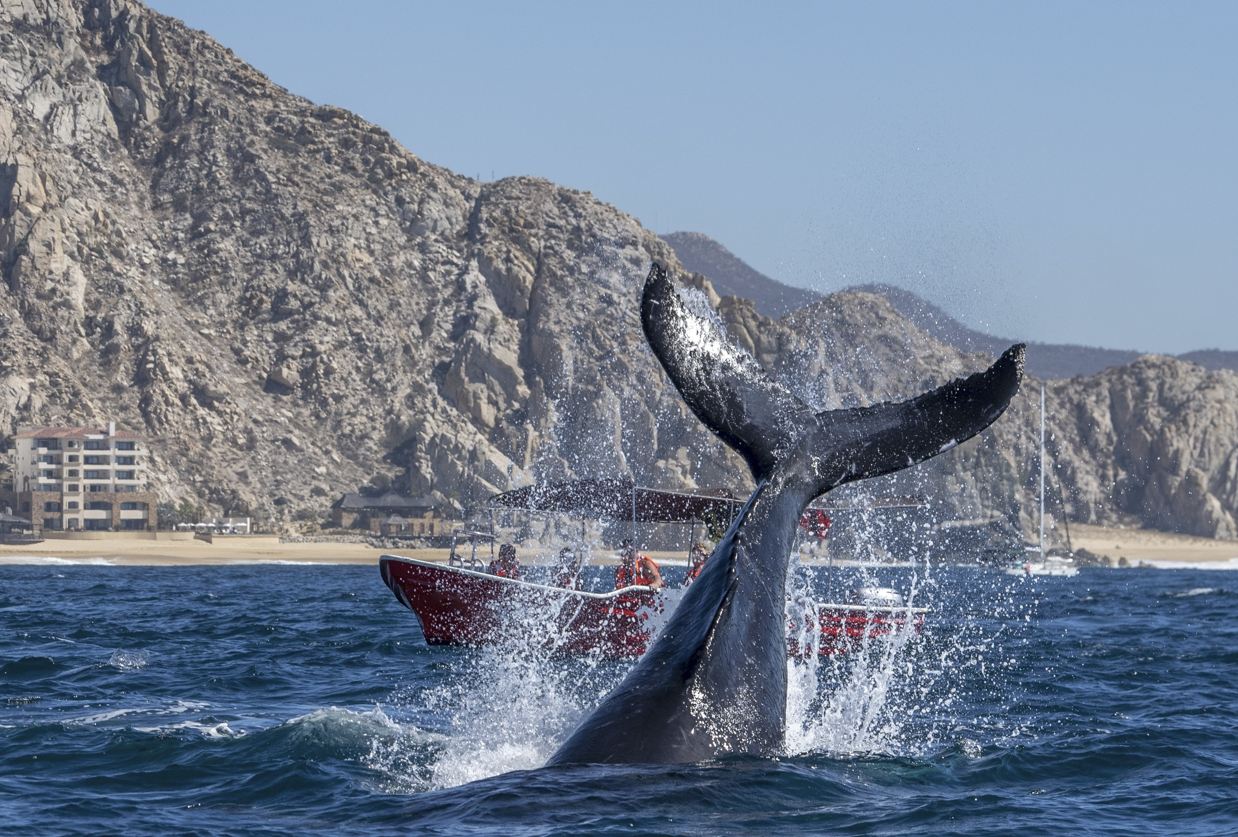
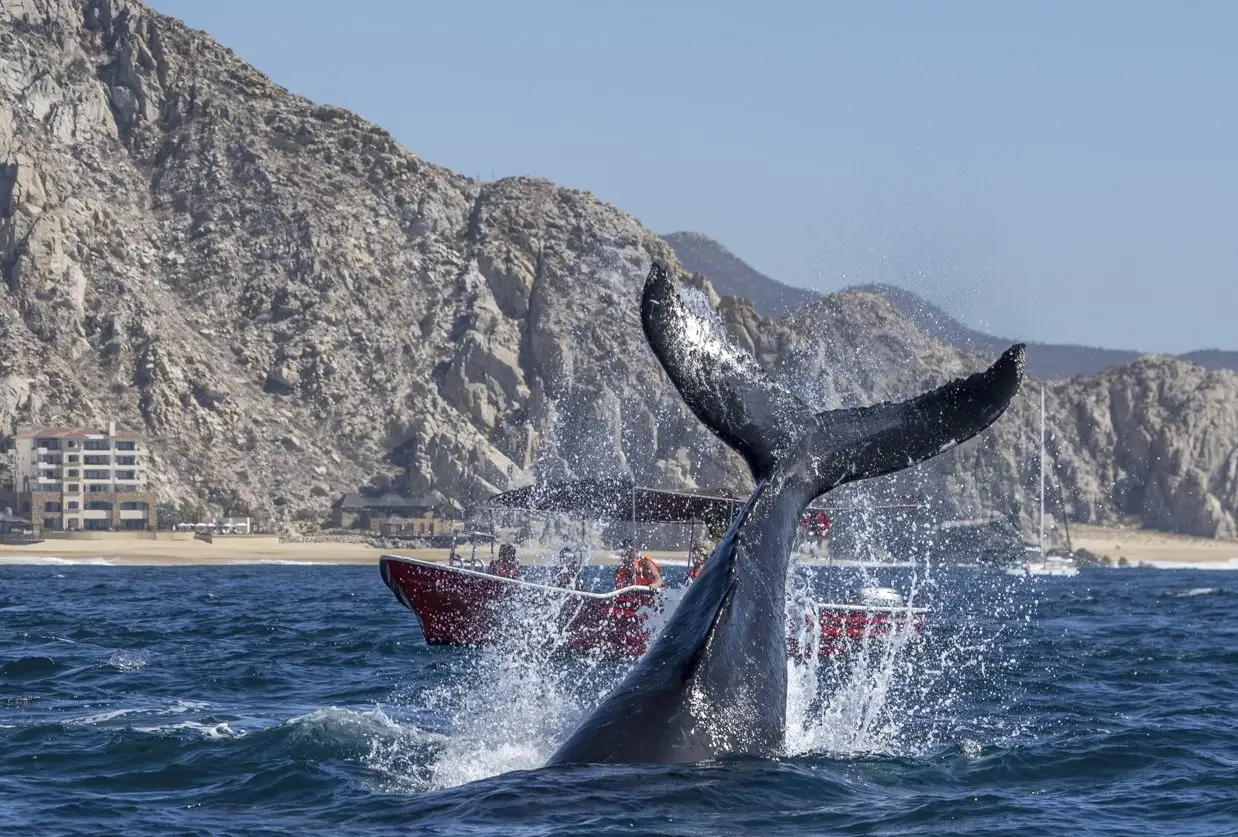
Early whales are back, and that’s thrilling to see from shore. But the ocean is a protected, living stage with rules that keep everyone safe.
Enjoy the horizon show from the beach for now, follow the flags, and when December 15 arrives, you’ll have the green light to head out with licensed captains for the full experience. Until then, we’ll keep tracking conditions and sharing updates so you know exactly what to expect.
The Ultimate Cabo Trip Planner
When’s the best time to go? Our powerful month-by-month guide breaks down the weather, crowds, hotel rates, and whale watching seasons for your perfect trip.
Find Your Perfect Los Cabos Resort In Seconds
This simple, powerful tool was built by our on-the-ground experts to match you with the ideal resort for your specific budget and travel style.
Subscribe to our Latest Posts
Enter your email address to subscribe to The Cabo Sun’s latest breaking news affecting travelers, straight to your inbox.