
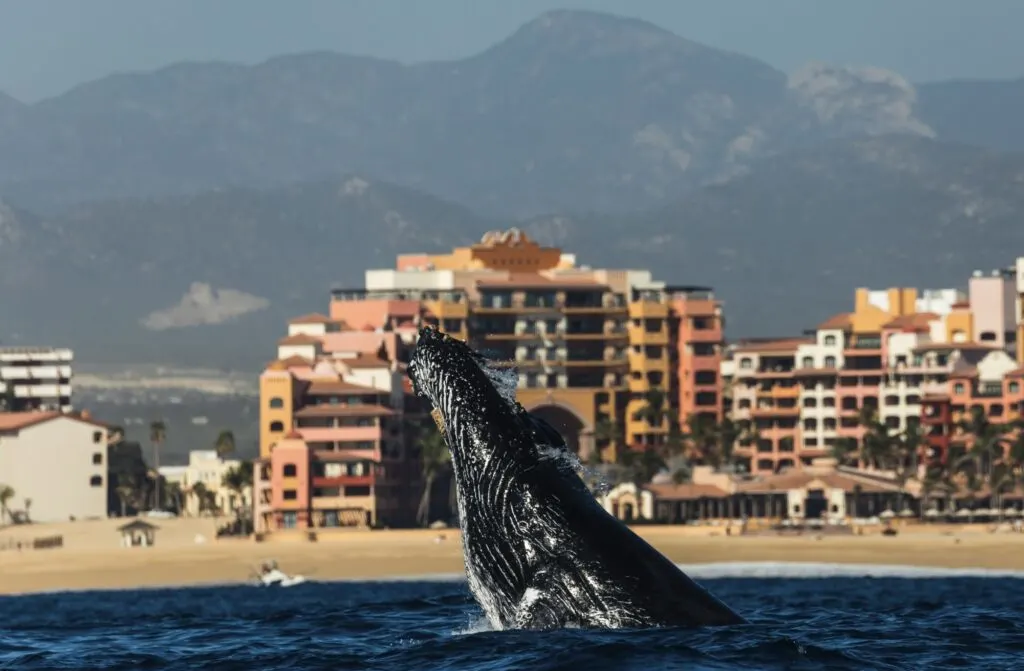
It is the most magnificent sight in all of Los Cabos: a 40-ton humpback whale launching its entire body out of the sea, crashing back into the brilliant blue water in a spectacular display of power and grace. Witnessing the annual whale migration is a bucket-list experience, and for many, it’s the primary reason for a winter getaway to the Baja Peninsula.
But when you’re planning your trip, the generic answer of “sometime in the winter” isn’t good enough. You want to know when your chances are best. When do the whales really arrive?


Here at The Cabo Sun, we’re giving you the definitive, on-the-ground guide to the whale watching timeline. We’ll separate the “official” season from the exciting first sightings, so you can plan your trip with insider knowledge.
The “Official” Season vs. The “Real” Arrival
First, the most important date to know is December 15th. This is the official, government-mandated start date for the commercial whale watching season in Los Cabos, which runs until April 15th. This is the period when all licensed tour boats are legally permitted to take visitors out specifically for whale watching.
However, the whales don’t check a calendar.


The “real” arrival of the first humpbacks is a celebrated secret among locals and seasoned visitors. The first to appear are typically adventurous young males, and they are often spotted by fishermen and early-bird boaters as early as mid-to-late November. While sightings are not guaranteed this early, a trip during the “magic window” of November could reward you with the special thrill of seeing the very first arrivals of the season.


A Month-by-Month Guide: What to Expect
To truly maximize your chances, it’s best to understand how the season progresses.
- Late November: A Possibility, Not a Promise. You might get lucky and see one of the first few whales to arrive in the bay. Don’t book a trip just for the whales this month, but consider any sighting a fantastic bonus.
- December: The Season Begins. Official tours kick off on December 15th. Sightings in the latter half of the month are good and become more consistent every day as thousands of whales pour into the warm waters off Baja.


- January & February: ❄️ PEAK ACTION. This is the absolute sweet spot. The highest concentration of humpback whales is in the area. This is the best time to see the most dramatic surface activity: breathtaking breaches, tail slapping, and “competition pods” of males vying for the attention of females.
- March: 🤱 NURSERY SEASON. This is arguably the most magical time. By March, many mothers have given birth, and the focus of the tours shifts to finding adorable and curious newborn calves bonding with their mothers. The encounters are often more tender and can happen closer to the boat (at a safe, regulated distance).

- April: 👋 The Last Goodbye. The whales begin their long migration back north to their summer feeding grounds. Tours are still running, particularly in the first half of the month, but sightings become less frequent as the weeks go on. The season officially closes on April 15th.
The “best” time to see the whales truly depends on what you want to experience. But whether you’re hoping for a lucky first glimpse in November or a guaranteed spectacular show in the heart of winter, booking an ethical, small-group tour in advance is the key to an unforgettable encounter with these magnificent giants of the deep.
The Ultimate Cabo Trip Planner
When’s the best time to go? Our powerful month-by-month guide breaks down the weather, crowds, hotel rates, and whale watching seasons for your perfect trip.
Find Your Perfect Los Cabos Resort In Seconds
This simple, powerful tool was built by our on-the-ground experts to match you with the ideal resort for your specific budget and travel style.
Subscribe to our Latest Posts
Enter your email address to subscribe to The Cabo Sun’s latest breaking news affecting travelers, straight to your inbox.