
I see it almost every time I walk down Medano Beach on a breezy afternoon.
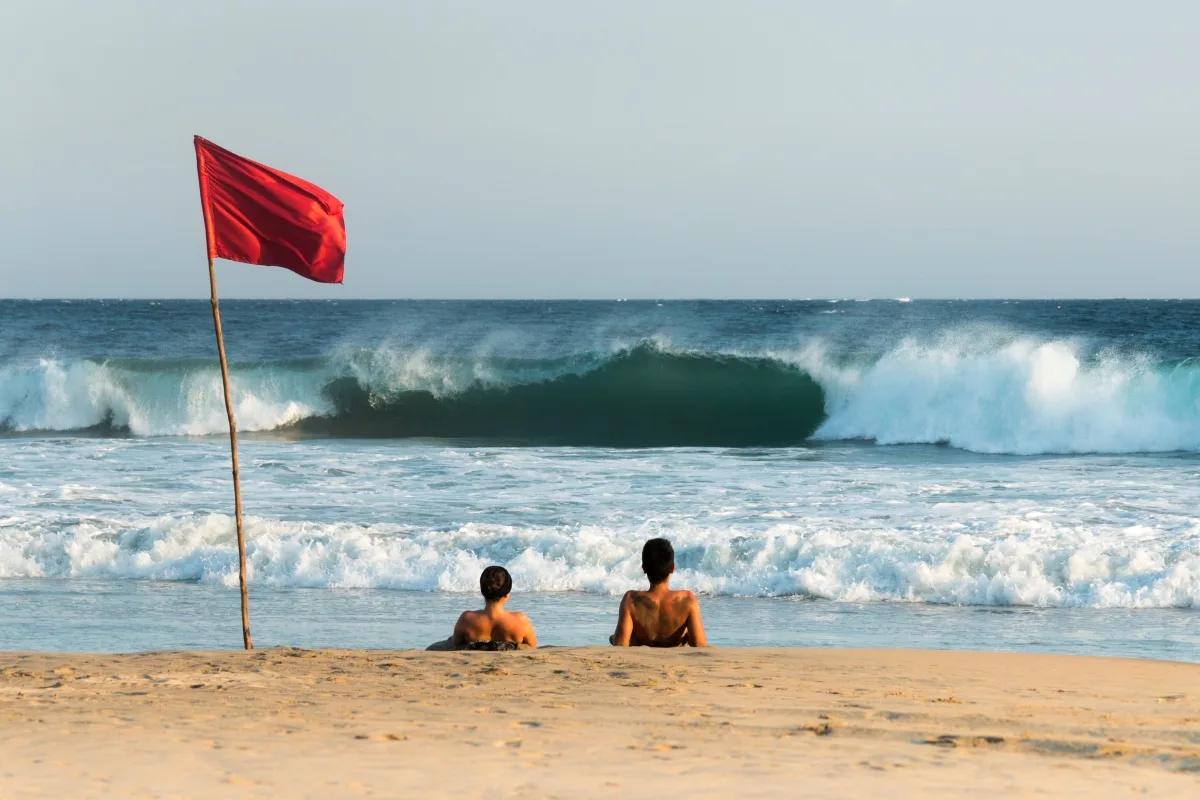
A bright crimson flag is whipping in the wind right next to the lifeguard tower, clearly signaling danger. Yet, directly in front of it, a group of tourists is wading waist-deep into the surf, holding their drinks and laughing.
It is the ultimate Cabo paradox: The warning sign is flying, but the water is full of people.
If you are standing on the sand debating whether to jump in, you are probably wondering, “If it’s so dangerous, why is everyone swimming?” As someone who has watched the ocean here flip from a calm bathtub to a washing machine in a matter of minutes, here is the exact psychology of why tourists ignore the red flags, and why copying them is the fastest way to ruin your trip.

The “Translation” Problem: Red vs. Black
The biggest reason people get in the water during a Red Flag is a simple misunderstanding of the risk.
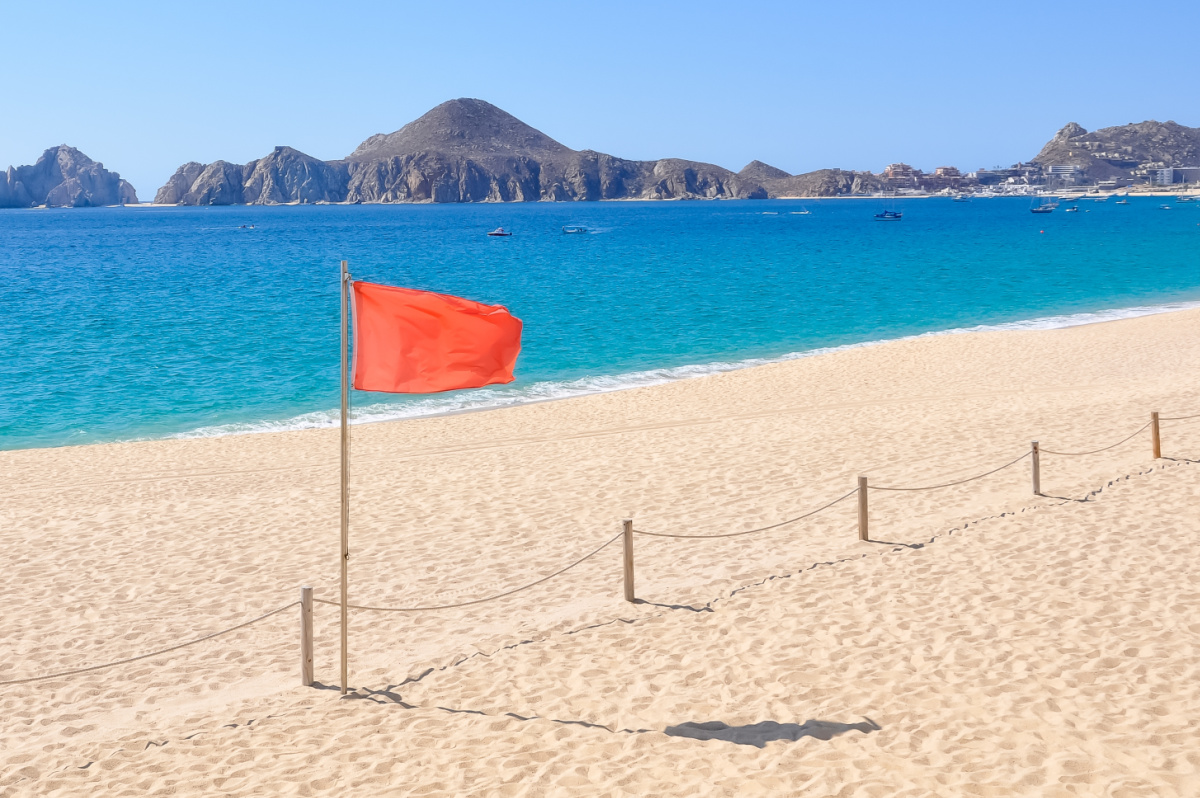
- The Cabo Reality: In Baja, the local beach authority (ZOFEMAT) uses a strict color code. A Red Flag means High Hazard. It is a massive, flashing warning that the shore break or rip currents are currently dangerous.
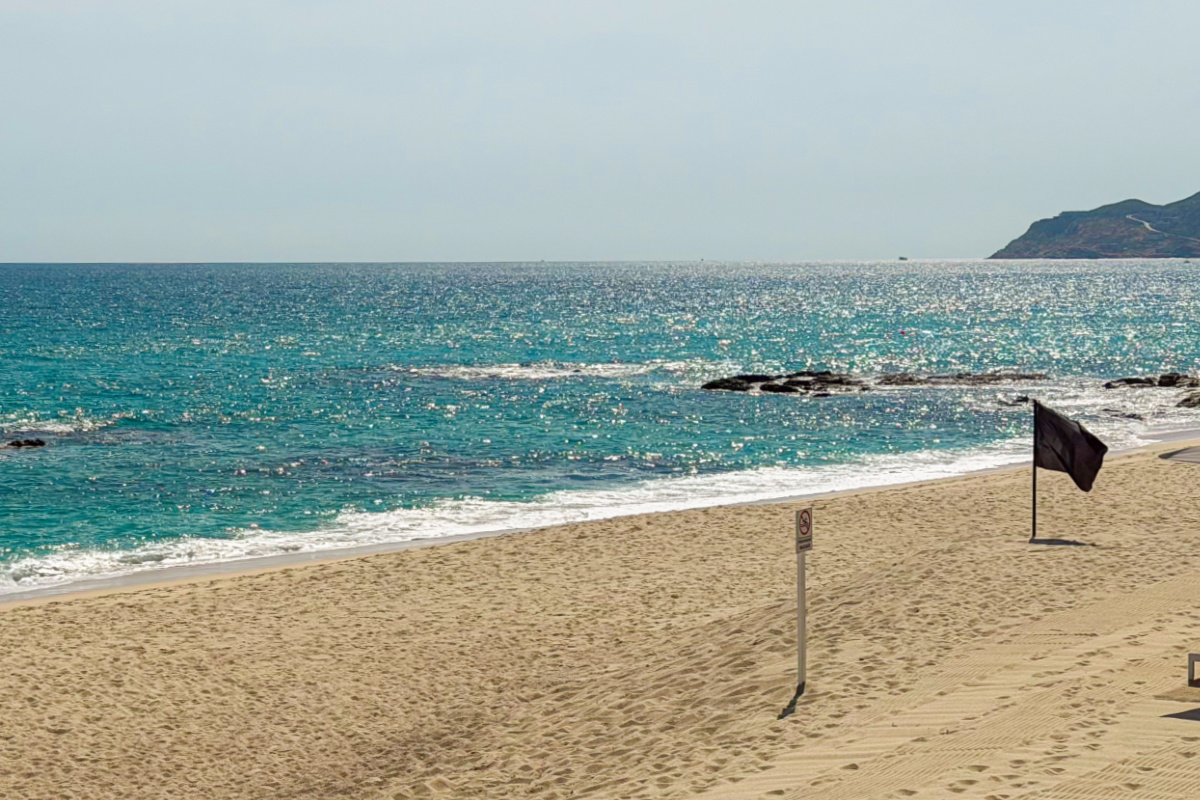
- The Loophole: It is heavily advised to stay out, but it isn’t an outright legal ban. The lifeguards are focused on scanning the water for people drowning, not blowing their whistles at every person who dips their toes in. Because you won’t get called out for wading in, people assume it must be safe. (Note: A Black Flag is a ban—the beach is completely closed).
The 3 Reasons Tourists Take The Risk
Beyond misunderstanding the rules, tourists usually fall victim to one of three psychological traps on the beach.
1. The “Optical Illusion” (Mar de Fondo)
Cabo sits right where the Sea of Cortez collides with the deep Pacific Ocean. Often, distant storms send powerful underwater energy toward the coast, a phenomenon called mar de fondo (deep sea swell).
- The Trap: From your lounge chair, the first 10 feet of water might look completely flat and inviting. But just beneath the surface, the undertow is pulling with the strength of a freight train. You step in, lose your footing on the steep sandy drop-off, and suddenly you are dragged sideways.

2. The “Surfer” Bleed-Over
You look down the beach and see a few guys shredding the waves. You think, “If they are out there, I can handle a quick swim.”
- The Trap: Local surfers intentionally chase the exact swells that are deadly to swimmers. They have a massive piece of buoyant fiberglass strapped to their ankle and years of local knowledge. A surfboard is a flotation device; your inflatable flamingo is not. Never use a surfer as your safety gauge.
3. The Groupthink (And The Margaritas)
This is the most dangerous factor. One confident (or intoxicated) swimmer wades out to chest depth. Ten other people see them and think it’s safe to follow.
- The Trap: Alcohol dulls your natural instincts. When you combine a few afternoon mezcals with the group mentality of “everyone else is doing it,” you end up with exhausted tourists fighting a rip current they never should have been near in the first place.
The Red Flag Paradox
If it’s so dangerous, why is everyone swimming? Tap a card to reveal the psychological traps of Cabo’s ocean.
RED VS. BLACK
Translation Problem
TAP TO REVEALOPTICAL ILLUSION
Mar de Fondo
TAP TO REVEALTHE SURFER
Don’t Follow Them
TAP TO REVEALTHE CROWD
Margaritas & Mistakes
TAP TO REVEALMy Personal Red Flag Protocol
I love the ocean, but I respect the geography of the Baja Peninsula. If I walk down to the beach and see that Red Flag flying, my protocol is simple:
I don’t test the water. I don’t go in up to my knees. I pivot, find the nearest pool, order a cold Pacifico, and enjoy.
The ocean here is stunning, but it is unforgiving. A Red Flag isn’t a buzzkill; it is free, life-saving intelligence from locals who know the water better than we do.
The Ultimate Cabo Trip Planner
When’s the best time to go? Our powerful month-by-month guide breaks down the weather, crowds, hotel rates, and whale watching seasons for your perfect trip.
Find Your Perfect Los Cabos Resort In Seconds
This simple, powerful tool was built by our on-the-ground experts to match you with the ideal resort for your specific budget and travel style.
Subscribe to our Latest Posts
Enter your email address to subscribe to The Cabo Sun’s latest breaking news affecting travelers, straight to your inbox.