
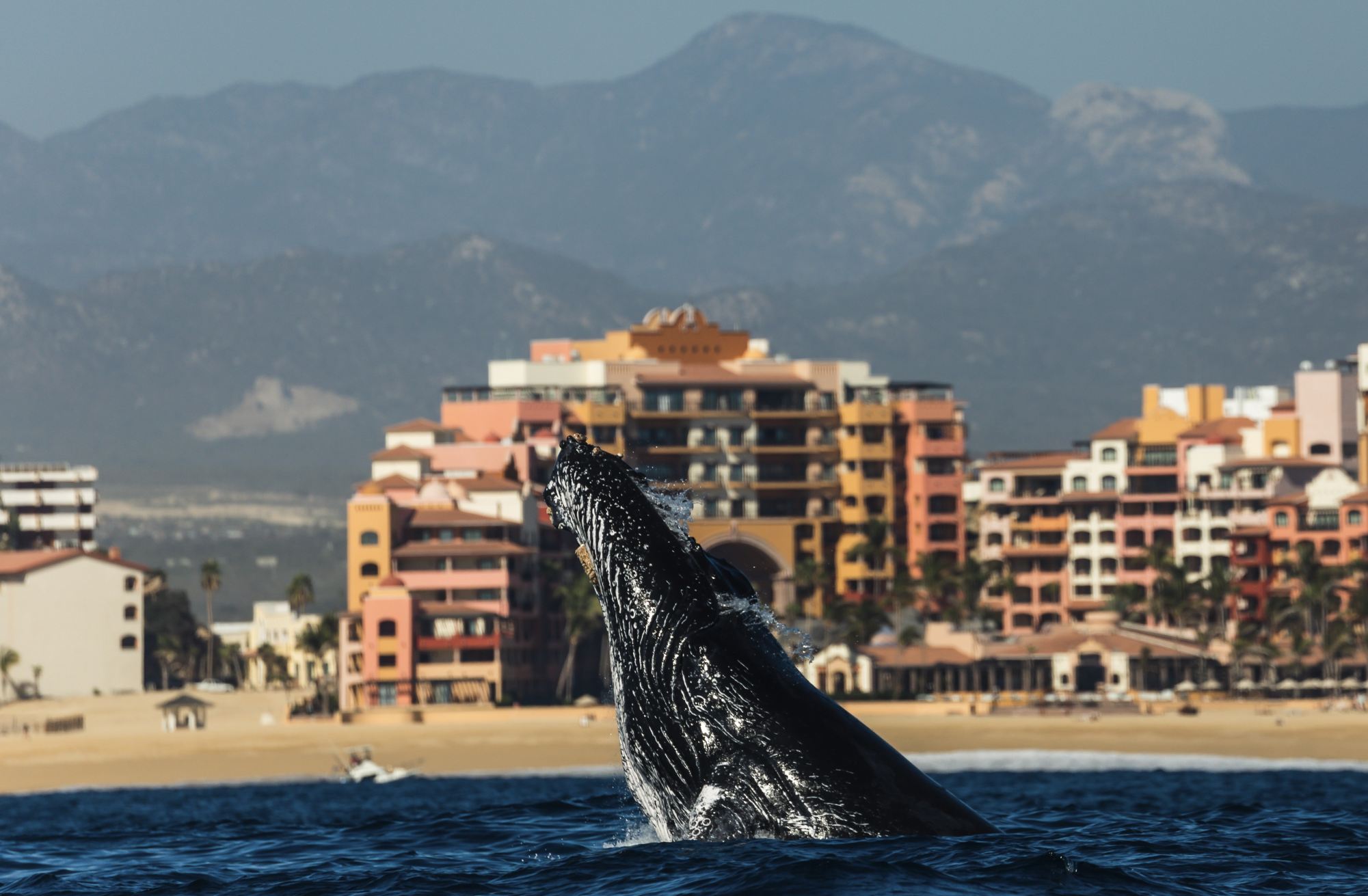
I remember the first time I saw a humpback whale breach off the coast of Cabo San Lucas. I was sitting on a panga just past The Arch, holding a half-drank water bottle, when a 40-ton giant launched itself out of the ocean just fifty yards away. The sound of the splash echoed across the bay. It completely recalibrated how I viewed this destination.
It turns out, I am far from the only one who feels that way.
According to recent data from the Los Cabos Tourism Trust (FITURCA), a massive shift is happening in how people travel to the Baja Peninsula. During the first quarter of the year—the absolute peak of the season—18% of tourists (nearly one in five) came to Los Cabos specifically for marine megafauna encounters.
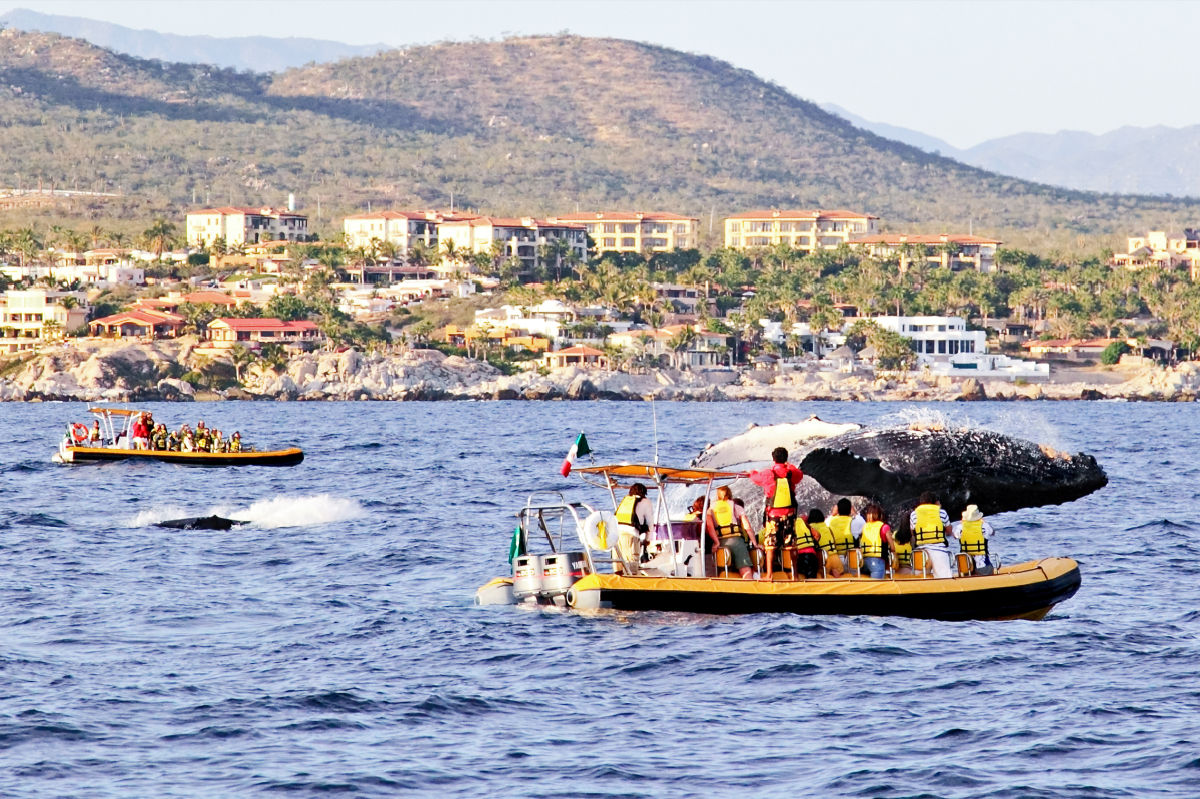

We are talking about whale watching, swimming with whale sharks, and wild dolphin encounters. It is no longer just a side activity; for 20% of visitors, it is the main event.
As the demand for these massive ocean encounters skyrockets, the government is stepping in to make sure the “wild” stays wild.
If you are planning to join the 1-in-5 tourists chasing giants this season, here is what you need to know about the experience and the new rules governing the water.

The “18% Phenomenon”: Why Now?
The winter and spring months in Los Cabos (December through April) align perfectly with one of the greatest animal migrations on earth. Humpback and gray whales travel thousands of miles down from Alaska to the warm, protected waters of the Sea of Cortez and the Pacific coast to mate and give birth.
- The Accessibility: You don’t need a massive expedition to see them. I have sat on the balcony of my hotel and watched mothers teaching their calves to breach while I drank my morning coffee.
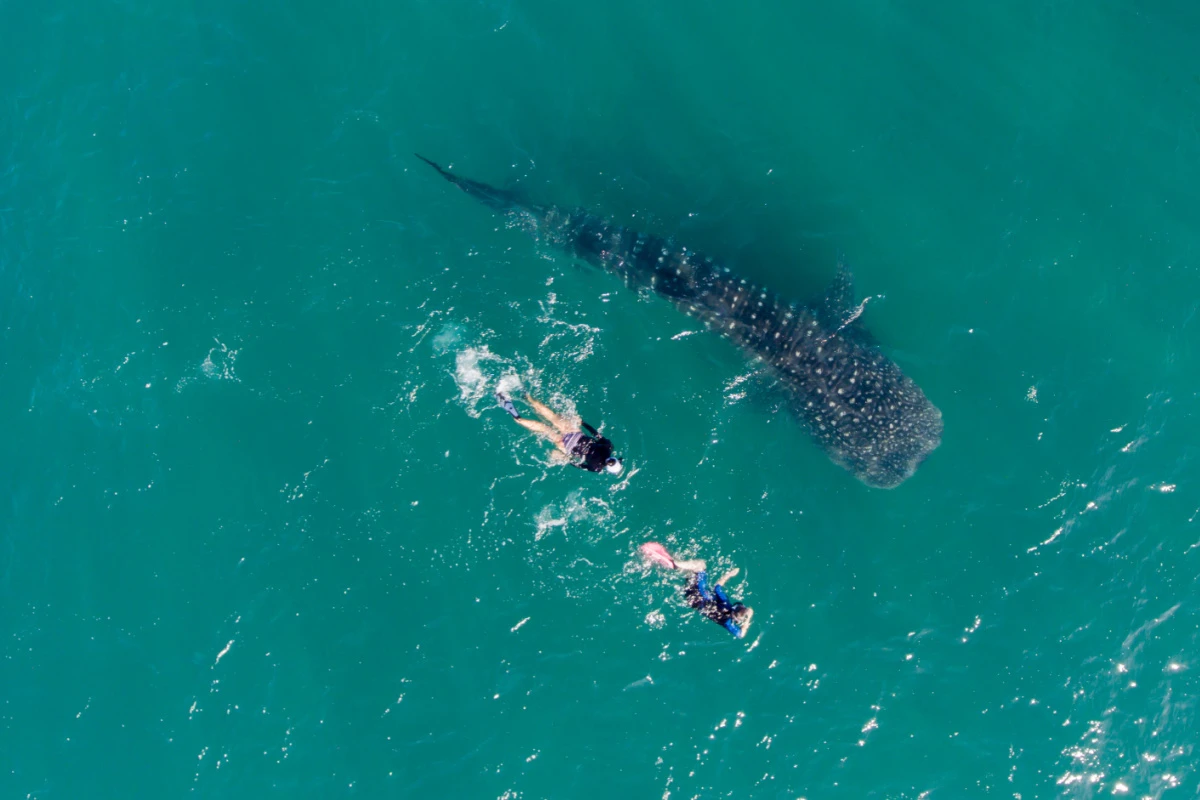
- The Whale Shark Draw: Just a couple of hours north in La Paz, the bay fills with juvenile Whale Sharks (the largest fish in the sea). Tourists are realizing that Cabo is the perfect basecamp to take a day trip and literally swim alongside a 30-foot, filter-feeding giant.
The New “Rulebook” For Operators
With 18% of the massive Los Cabos tourist base demanding boat rides, the ocean can get crowded fast. Nobody wants to be on a boat that is harassing a mother whale and her newborn calf.
To prevent the waters from turning into the Wild West, the Ministry of Environment and Natural Resources (SEMARNAT) is cracking down.
- The Training: SEMARNAT is actively training captains, guides, and business owners operating in the Cabo San Lucas Protected Natural Area.
- The Best Practices Manual: Cristina González Rubio Sanvicente, the head of SEMARNAT in the state, announced they are finalizing a new “best practices manual.” This playbook dictates exactly how boats must approach the animals, how much distance they must keep, and how to protect both the tourists and the marine wildlife.
- What This Means For You: The days of rogue boats chasing down whales for a photo op are ending. The government is actively pushing the destination toward sustainable, responsible marine tourism.
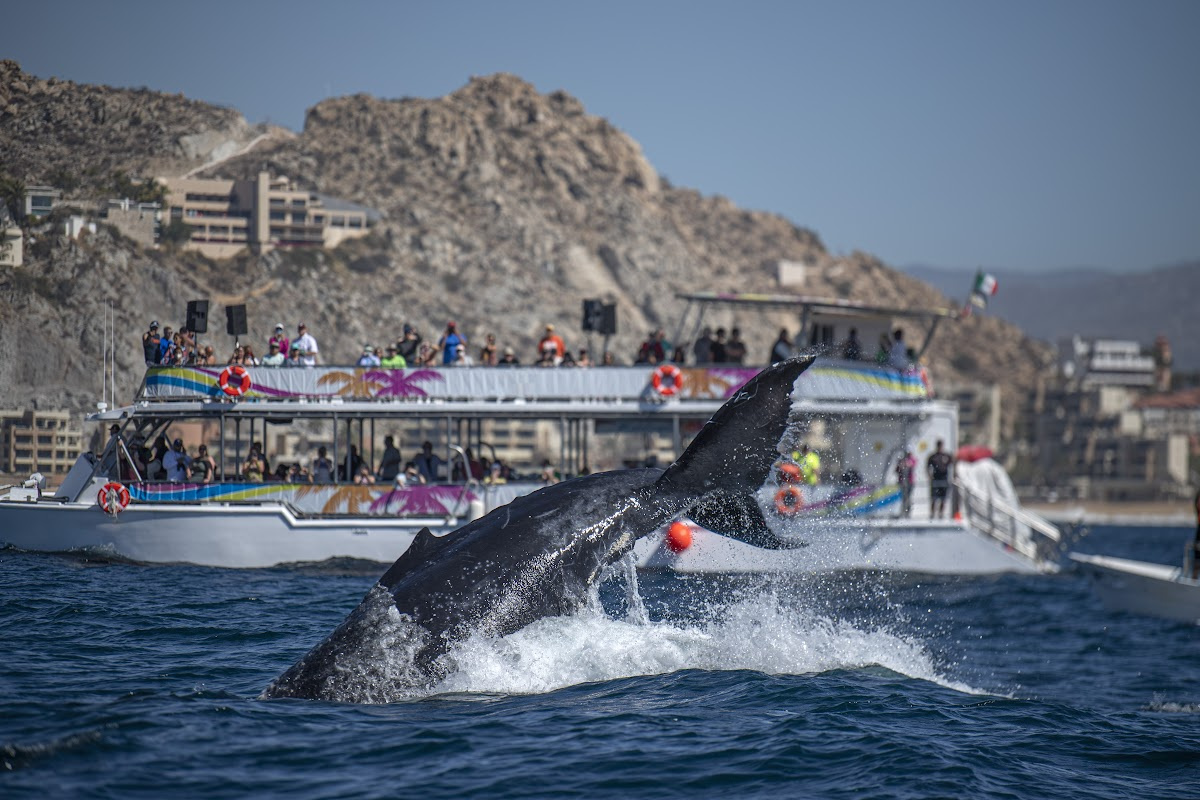

How To Be A Responsible Tourist (My Personal Protocol)
If you are adding a whale watching or whale shark excursion to your itinerary this year, you have a responsibility to book smart.
- Look for the Flag: When I book a boat, I always ask if they have their official SEMARNAT authorization flag. Legitimate operators proudly fly a specific flag on their vessel proving they have passed the government’s conservation and safety training.
- Size Matters: I avoid the massive, crowded “party boats” for whale watching. Look for operators using smaller Zodiacs (inflatables) or small pangas. They are faster, more agile, and generally employ trained marine biologists who actually explain the behaviors you are seeing.
- Morning is Magic: Always book the earliest tour available. The Pacific winds are calmest in the morning, which means smooth water, less seasickness, and much easier spotting.
Chasing Giants in Cabo
Marine encounters are now the main event for 1-in-5 tourists. Tap a card to learn the new rules and how to book responsibly.
THE 18% SHIFT
The Great Migration
TAP TO REVEALNEW RULEBOOK
Government Action
TAP TO REVEALLOOK FOR FLAGS
Official Operators
TAP TO REVEALSIZE & TIMING
The Best Experience
TAP TO REVEALNo Regrets!
There is a reason nearly 20% of travelers are prioritizing this over a day at the beach club.
Seeing a whale up close in Los Cabos is a core memory that makes the entire cost of the flight and hotel worth it.
Just make sure the boat you are on respects the giants you came to see.
The Ultimate Cabo Trip Planner
When’s the best time to go? Our powerful month-by-month guide breaks down the weather, crowds, hotel rates, and whale watching seasons for your perfect trip.
Find Your Perfect Los Cabos Resort In Seconds
This simple, powerful tool was built by our on-the-ground experts to match you with the ideal resort for your specific budget and travel style.
Subscribe to our Latest Posts
Enter your email address to subscribe to The Cabo Sun’s latest breaking news affecting travelers, straight to your inbox.