
For many U.S. travelers planning their trip to Baja California Sur, the first thing that comes to mind is safety. As it should be. But in Los Cabos, the biggest risk to your physical well-being usually doesn’t come from crime or scams.
It comes from the ocean.
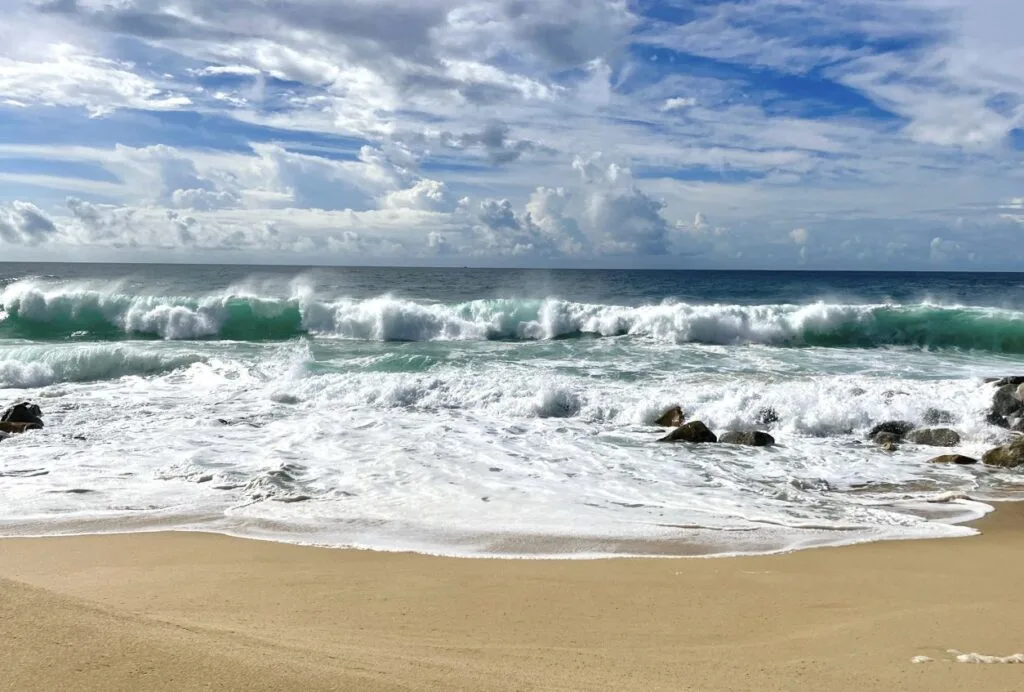
At The Cabo Sun, we see the same tragedy play out every single season. A tourist looks at the beautiful, crashing waves on the Pacific side, assumes it is just like California or Florida, and wades in. They assume that because they are good swimmers in a pool, they can handle the surf.

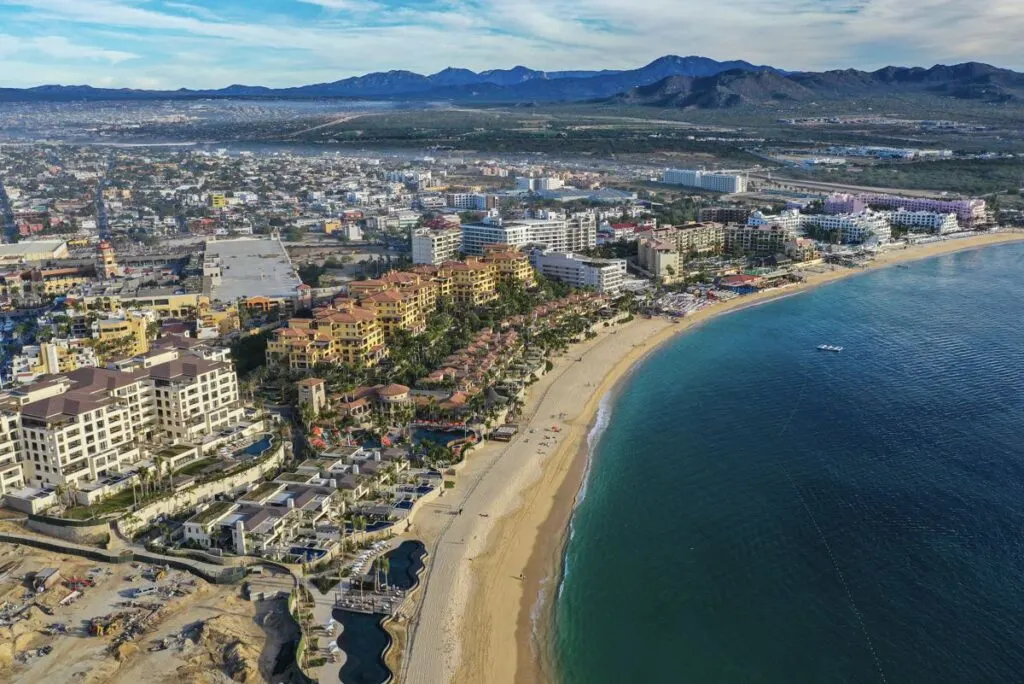
The reality of Baja’s geography is unforgiving. Unlike the gradual, sandy slopes of the Caribbean or the calm Gulf of Mexico, Los Cabos sits at the violent meeting point of the Sea of Cortez and the deep Pacific Ocean. This creates a unique set of hazards—steep drop-offs, crashing shore breaks, and rip currents powerful enough to pull even Olympic-level swimmers out to sea.
The “Scam vs. Surf” Reality Check
We often talk about avoiding time-share scams at the airport or petty theft in downtown areas. But let’s be blunt about the risk profile: a scam can leave you with less money in your pocket; the ocean can end your life.

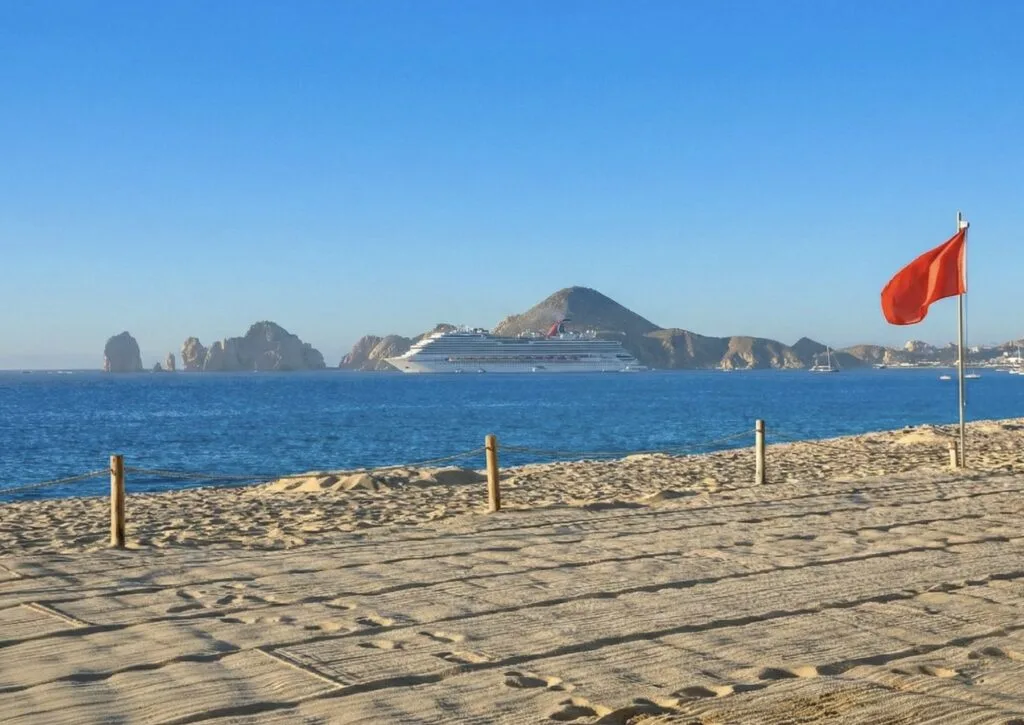
While violent crime against tourists is statistically incredibly rare here—Los Cabos consistently ranks safer than many major U.S. cities—drowning incidents remain a persistent and heartbreaking statistic. The danger is rarely malice; it is nature. In 2025, the majority of tourist fatalities were water-related, often occurring on beaches clearly marked as non-swimmable.
Why Is The Water So Dangerous Here?
To stay safe, you need to understand the mechanics of the Baja coastline.


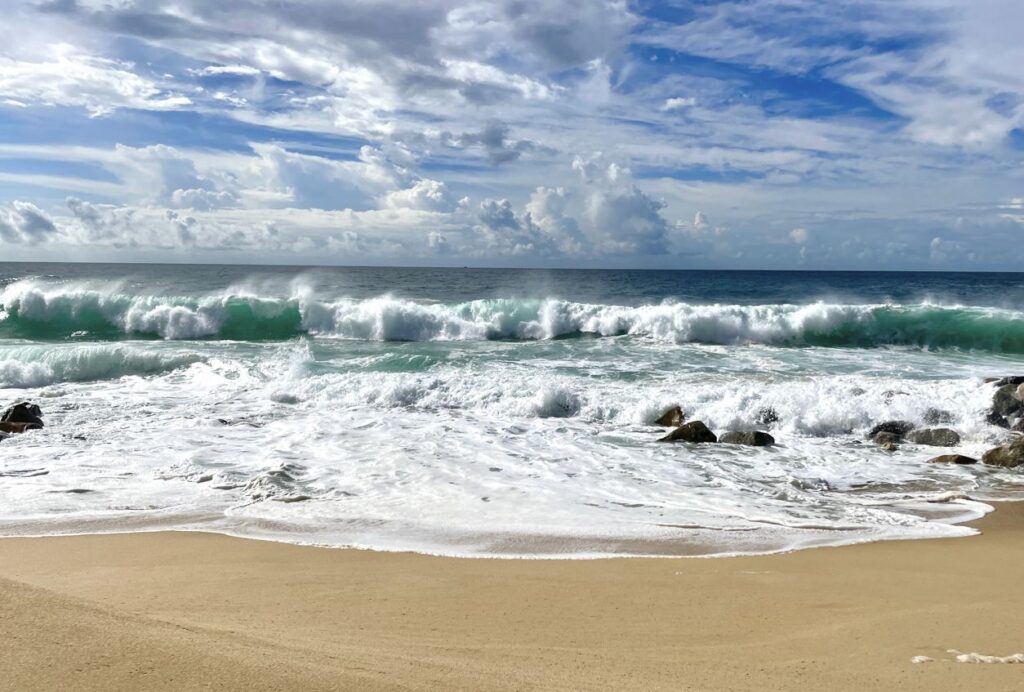
1. The Shore Break: On the Pacific side (home to resorts like Hard Rock, Nobu, and Diamante), the waves don’t break 100 yards out; they break directly onto the sand. This is known as a “shore break.” Even if you are just standing ankle-deep, a sudden surge can knock you off your feet and drag you into the impact zone, leading to injuries or disorientation.
2. The Undertow vs. Rip Current: Most people know about rip currents (water rushing out to sea), but the undertow in Cabo is equally dangerous. Because the beach drops off steeply just a few feet from the water’s edge, the water retreating from a wave creates a vacuum effect that can pull you under the surface instantly.
The Flag System: Your Daily Survival Guide

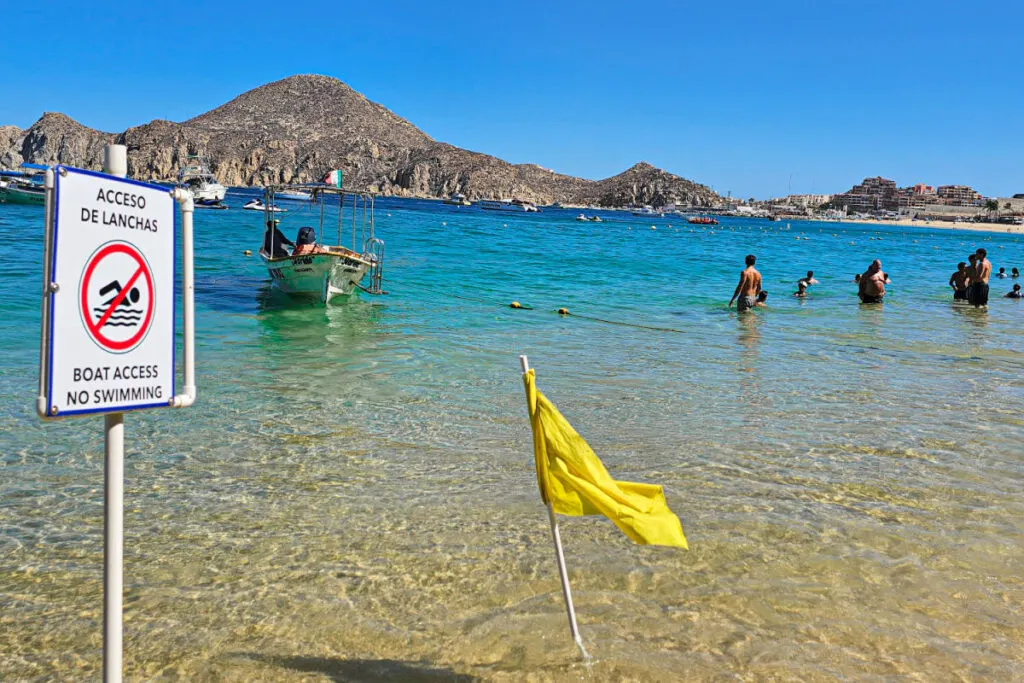
Los Cabos has focused on water safety for tourists for a long time, utilizing an internationally recognized color-coded flag system. These flags are not suggestions; they are the law of the beach.
Before you put a toe in the water, look for these flags on the lifeguard towers or hotel sand:
Tap To Reveal Each Flags Meaning
Flag
Deadly currents. Do not enter water.
Flag
Strong swimmers may struggle. Stay out.
Flag
Swim carefully. Currents active.
Flag
Conditions good for swimming.
Flag
Presence of jellyfish or stingers.
- Green Flag: Safe conditions. The water is calm, and swimming is allowed. You will typically only see these on Medano Beach, Chileno Bay, and Palmilla.
- Yellow Flag: Use caution. There may be light currents or choppy water. Weak swimmers should stay out, and everyone else should stay waist-deep or shallower.
- Red Flag: High Hazard. Swimming is strongly discouraged or prohibited. This usually signals strong currents or high surf. If you enter the water under a red flag, you are putting both yourself and the lifeguards at risk.
- Black Flag: Extreme Danger. The beach is closed to all water entry. Do not even wade in the shallows. This flag often appears during storms or high-swell events on the Pacific side.
- White Flag: Marine life alert. This usually indicates the presence of jellyfish. While not fatal, a sting can ruin your vacation day.
The New Standard: Advanced Lifeguard Training
To combat these risks, local authorities are taking safety one step further in 2026. The government realizes that signage isn’t enough; the human response element must be world-class.
With the aim of improving response capacity to risk situations on the municipality’s beaches, lifeguard personnel from the Federal Maritime Terrestrial Zone (ZOFEMAT) recently participated in specialized first aid training.


This wasn’t just a standard CPR refresher. The training was given by paramedics from the Saint Luke’s institution, a top-tier private medical provider in the region. This is highly advanced training designed to give lifeguards the skills of a “first responder.”
The curriculum covered advanced life-saving techniques, including:
- Hemorrhage control: Treating trauma from surfboard fins or rocks.
- Advanced CPR: Utilizing defibrillators (AEDs) and oxygen directly on the sand.
- Stabilization: Proper handling of victims with potential spinal injuries from shore break impacts.
This partnership between ZOFEMAT and Saint Luke’s ensures that if the worst happens, the person pulling you out of the water isn’t just a strong swimmer—they are a trained medic capable of stabilizing you before the ambulance arrives.
The Swimmable Beach List
The most common mistake travelers make is booking a “Beachfront” hotel assuming they can swim in the ocean.
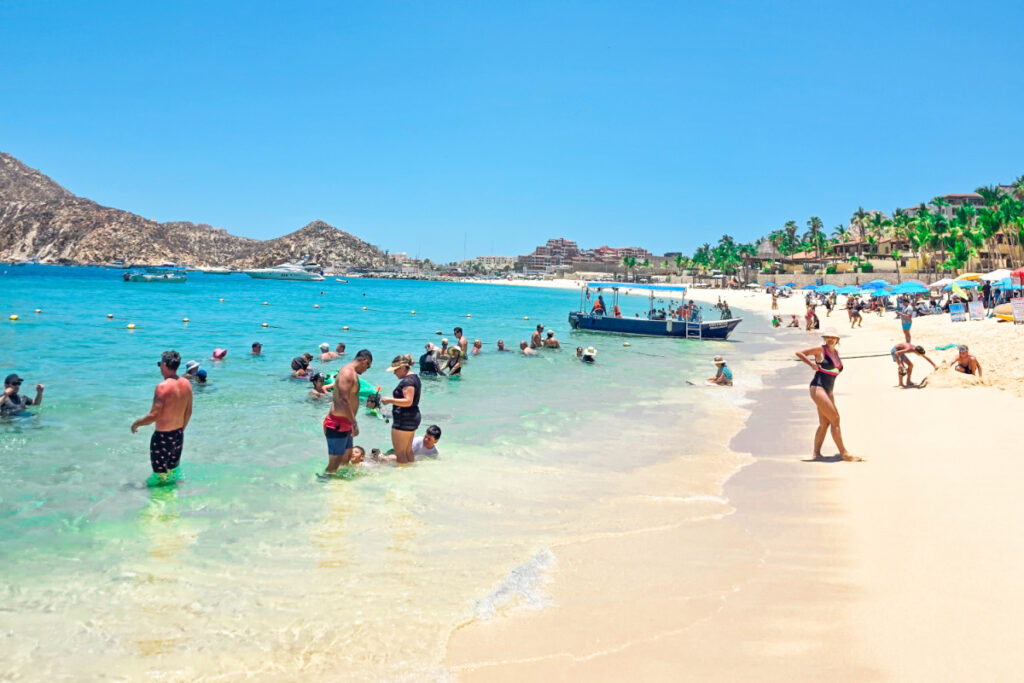
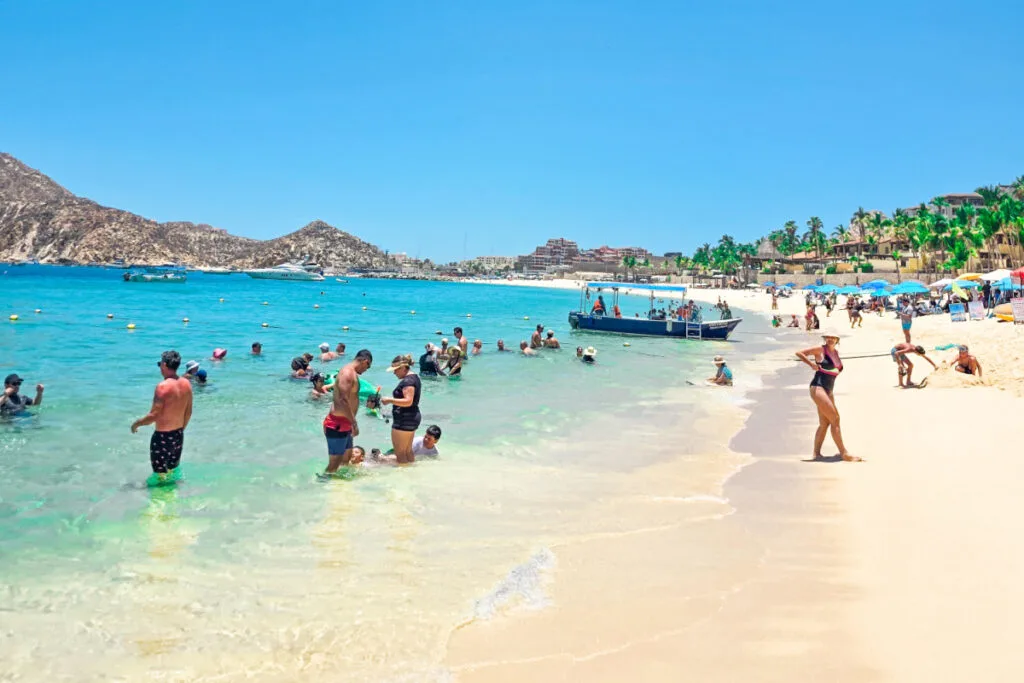
Safe Zones (Generally Swimmable):
- Medano Beach: The heart of Cabo San Lucas. Safe, calm, and lined with beach clubs.
- Chileno Bay: A protected cove in the Corridor, perfect for snorkeling.
- Santa Maria Bay: Another protected horseshoe bay in the Corridor.
- Palmilla Beach: Located in San Jose del Cabo, protected by a rocky point.
Myth vs. Reality
Tap a card to reveal the truth about Cabo’s ocean.
“It’s just shallow water.”
Reveal Truth ↻The Reality
The Shore Break happens in ankle-deep water. It hits with enough force to cause spinal injuries and drag you in.
“I’m a strong swimmer.”
Reveal Truth ↻The Reality
Rip currents here move at 8 feet per second. That is faster than an Olympic swimmer. Stamina won’t save you.
“Black means expert only.”
Reveal Truth ↻The Reality
Black = DEADLY. It means storm surge, toxic conditions, or extreme currents. Do not even put your feet in.
“I’m paying for Beachfront.”
Reveal Truth ↻The Reality
Most Pacific-side luxury resorts (Nobu, Hard Rock, Diamante) are strictly non-swimmable due to dangerous undertow.
Danger Zones (Generally Non-Swimmable):
- The Pacific Side: From the lighthouse up to Todo Santos. This includes Pedregal, Quivira, and Diamante.
- The San Jose Hotel Zone: While beautiful, the shore break here is often too aggressive for casual swimming.
You can use our new Swimmable Beach Tool to check if your hotel has a swimmable beach in seconds.
The Bottom Line
In 2026, Los Cabos is safer than ever, provided you respect the ocean. The lifeguards are better trained, the flags are visible, and the information is available.
Do not let the “vacation mindset” turn off your common sense. If the flag is red or black, stay on the sand with your margarita. If you want to swim, book a hotel on Medano Beach or take a taxi to Chileno Bay. The ocean is the one thing in Cabo you cannot negotiate with.
The Ultimate Cabo Trip Planner
When’s the best time to go? Our powerful month-by-month guide breaks down the weather, crowds, hotel rates, and whale watching seasons for your perfect trip.
Find Your Perfect Los Cabos Resort In Seconds
This simple, powerful tool was built by our on-the-ground experts to match you with the ideal resort for your specific budget and travel style.
Subscribe to our Latest Posts
Enter your email address to subscribe to The Cabo Sun’s latest breaking news affecting travelers, straight to your inbox.