
For many travelers, the specific “Whale Watching Tour” is a non-negotiable checklist item. It is the box you feel obligated to check.
But for others, the logistics simply do not make sense.

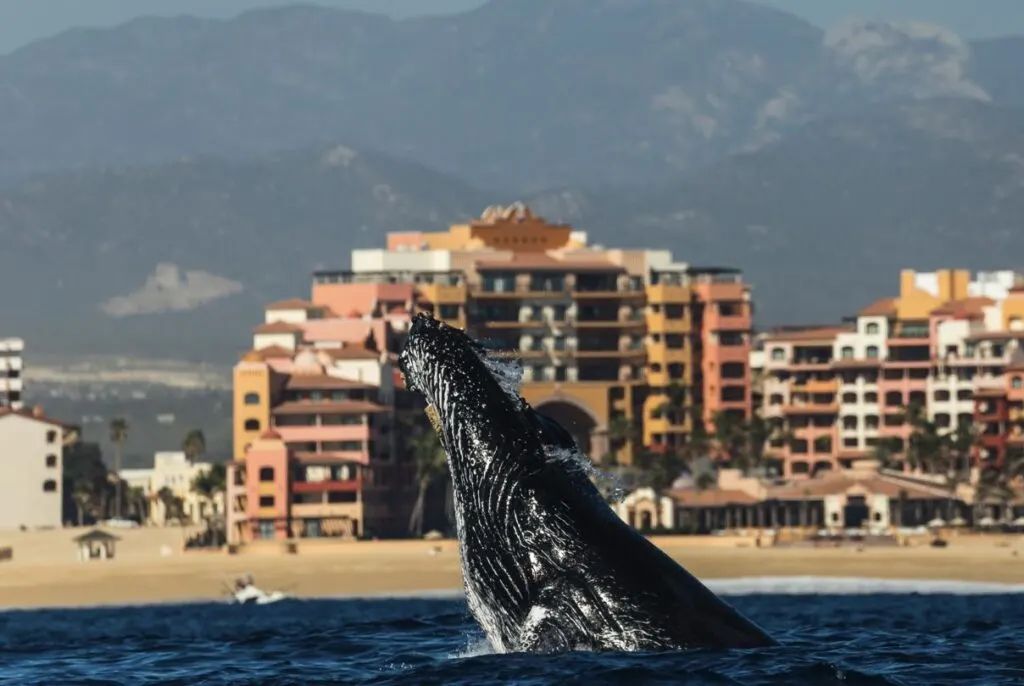
The reality of a boat tour isn’t always glamorous. It often means battling motion sickness, enduring three hours on a small panga with no bathroom, or sacrificing the prime poolside lounger you fought to secure at 8:00 AM. If you are staying at a high-end resort, leaving the property for half a day to get sunburnt on a crowded boat can feel like a bad trade.
Here is the good news: You don’t need the boat. I just left Grand Velas Boutique Resort and spotted whales 3 out of the 5 days I was there.


Over the last week, reports have been pouring in from travelers across Los Cabos who are seeing massive activity right from their hotel balconies. We are currently in the absolute peak of the migration (January through March). The density of Humpback and Gray whales in the water is currently high enough that “land-based” viewing is not just possible—it is a viable, high-comfort strategy.
Here is the operational blueprint for executing a whale watching mission without ever leaving the resort property.
Whale Season Timing
While the official government-sanctioned season runs from December 15th to April 15th, the window for land-based viewing is significantly tighter. To spot whales from a balcony, you need peak density, which occurs strictly between January 15th and March 15th. Outside of this 60-day “high traffic” corridor, the population is too sparse for reliable shoreline viewing, and you will need a boat to find the stragglers.


Rule 1: The “Optics” Upgrade
If you are skipping the boat, you cannot rely on 20/20 vision. This is the single biggest failure point for resort-based viewing.
Travelers often assume they will see whales “up close” from the beach, like a scene from a documentary. You won’t. Without assistance, you will see a splash 400 yards out that looks suspiciously like a breaking wave. You will spend your morning guessing, not watching.
The Strategy: You must bring binoculars. To make land-based viewing work, you need optical compression. A standard pair of 10×42 binoculars is the sweet spot for handheld stability and magnification. The ROI: With the naked eye, a breach is just white water. With glass, that “splash” turns into a clear, high-definition view of a Humpback mother teaching her calf to breach.


Rule 2: Know The “Highways”
Not all resorts are created equal for this. Whales prefer specific depths and currents. Some hotels sit on “dead zones” of shallow sand, while others sit directly on top of the “Superhighways.”
- The Pacific Side (Grand Solmar, Nobu, Hard Rock): This is the gold standard for land viewing. The continental shelf drops off quickly here, creating deep water very close to shore. Whales often hug this coastline to avoid the boat traffic of the bay. It is not uncommon to see them breaching just beyond the breaking waves, sometimes less than 200 yards from the sand.
- The Corridor (Hilton, Marquis, Grand Velas): This is the “Transit Zone.” You will see a high volume of whales, but they are usually “traveling”—moving with purpose between the Pacific and the Sea of Cortez. They are visible, but they move fast.
- San Jose del Cabo (Secrets, JW Marriott): Recent reports confirm this is a hot spot right now. The underwater topography here (near the Estuary) often attracts mothers and calves looking for calmer waters to rest. While the surface water here can be rougher, the sightings are frequent.
- The Avoid Zone: Medano Beach. The boat traffic here is chaotic. The noise pollution pushes the whales further out to the horizon, making land-based viewing frustratingly difficult.
Rule 3: The “Blow” Technique
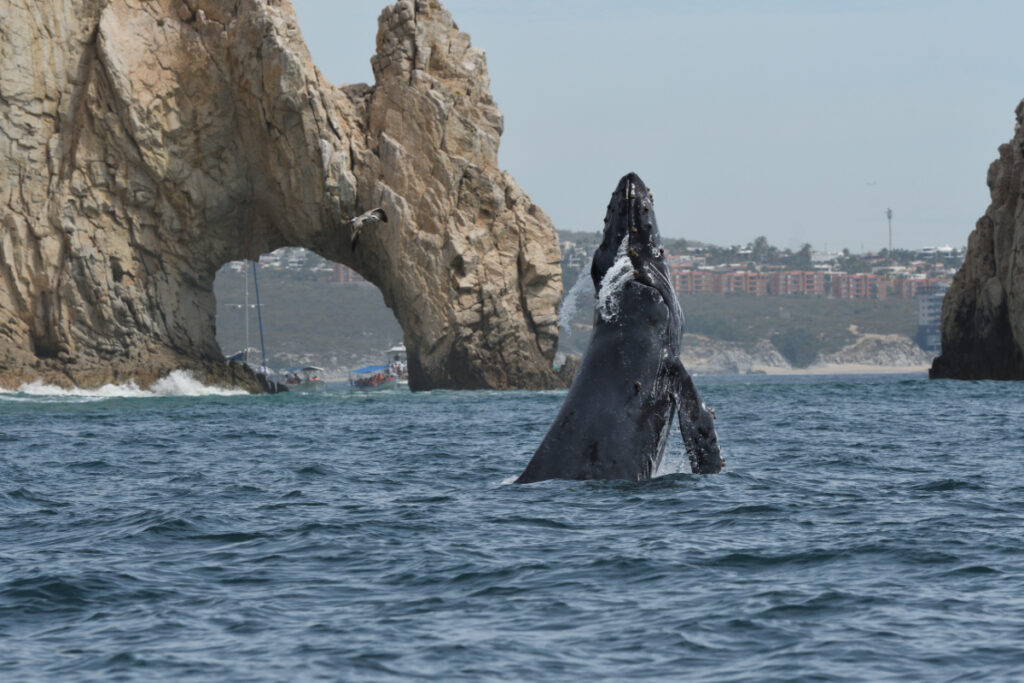
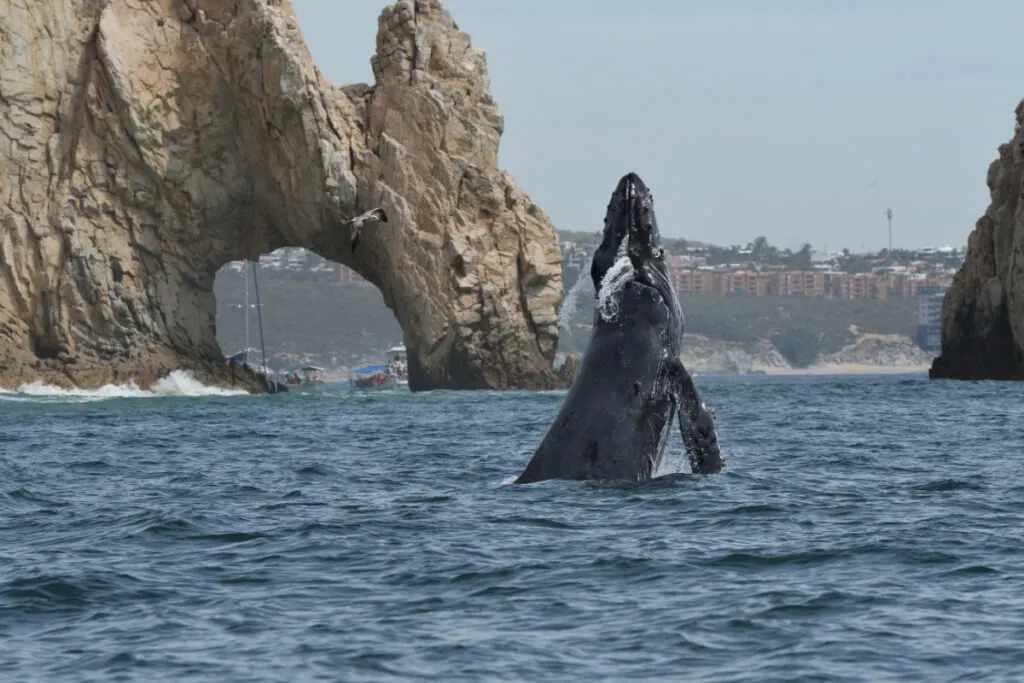
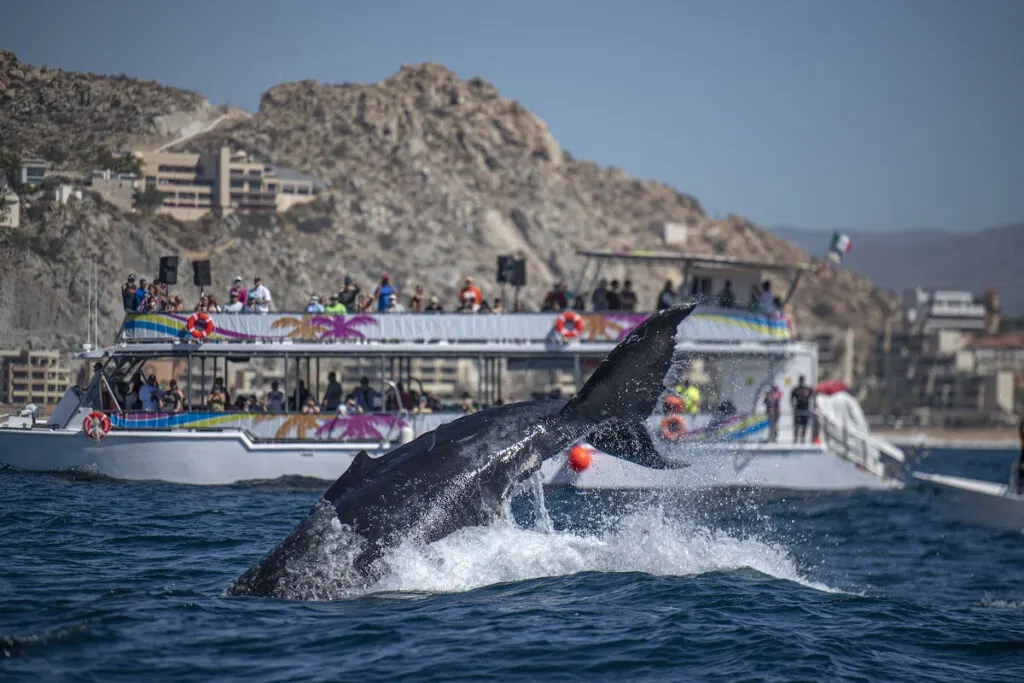
If you are sitting on your balcony looking for a whale jumping out of the water, you are doing it wrong. Breaching is spectacular, but it is rare (about 10% of surface behavior).
The Strategy: Scan the horizon for the blow. A Humpback’s spout shoots 10 to 15 feet into the air and hangs there for seconds like a puff of smoke. It is visible from miles away. Once you spot the “smoke,” lock your binoculars on that location. The back, the tail fluke, or the breach will almost always follow the blow within 30 seconds.
Rule 4: The Golden Window (8:00 AM – 11:00 AM)
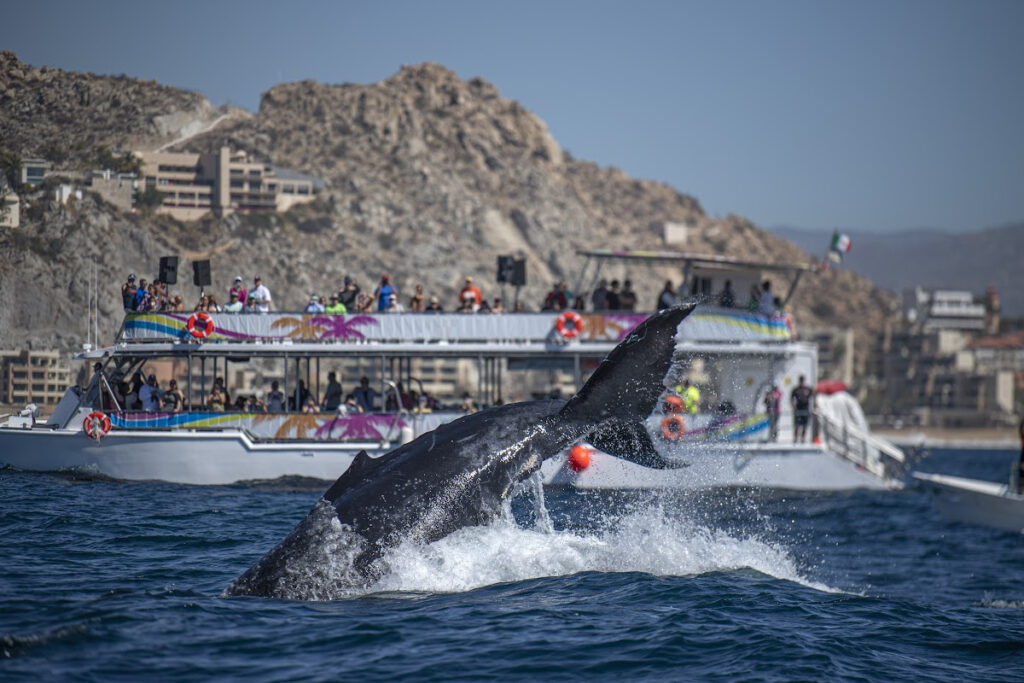
Ocean conditions determine your success. In the afternoon, the Baja wind (often called the Coromuel in La Paz, but effectively the sea breeze in Cabo) picks up. This creates “whitecaps” on the water. When the ocean is full of white waves, spotting a white whale splash is nearly impossible.
You need “glassy” water. The hours between 8:00 AM and 11:00 AM usually offer the calmest surface conditions and the best lighting (sun behind you or overhead, reducing glare).
The Trade-Off
Let’s be realistic: From the shore, you are an observer. From a boat, you are a participant. You will not get the “spray in your face” experience from a balcony.
But you also won’t get seasick. You won’t get wet. And you won’t lose your chair. You can sip your coffee, scan the horizon in comfort, and let the wildlife come to you. In 2026, that is a luxury worth protecting.
The Ultimate Cabo Trip Planner
When’s the best time to go? Our powerful month-by-month guide breaks down the weather, crowds, hotel rates, and whale watching seasons for your perfect trip.
Find Your Perfect Los Cabos Resort In Seconds
This simple, powerful tool was built by our on-the-ground experts to match you with the ideal resort for your specific budget and travel style.
Subscribe to our Latest Posts
Enter your email address to subscribe to The Cabo Sun’s latest breaking news affecting travelers, straight to your inbox.