
If you are planning to hit the beach in Los Cabos today, you might need to adjust your itinerary. A significant ocean swell phenomenon is currently battering the Baja coastline, prompting local authorities to raise red flags across dozens of popular tourist beaches.
While the sunshine is perfect, the water is anything but calm. Local Civil Protection teams and lifeguards have officially flagged 47 beaches across the municipality due to hazardous conditions, rip currents, and massive crashing waves.
Before you pack your beach bag, here is exactly what the current warnings mean, where the most dangerous swells are hitting, and how to safely navigate the coastline this week.
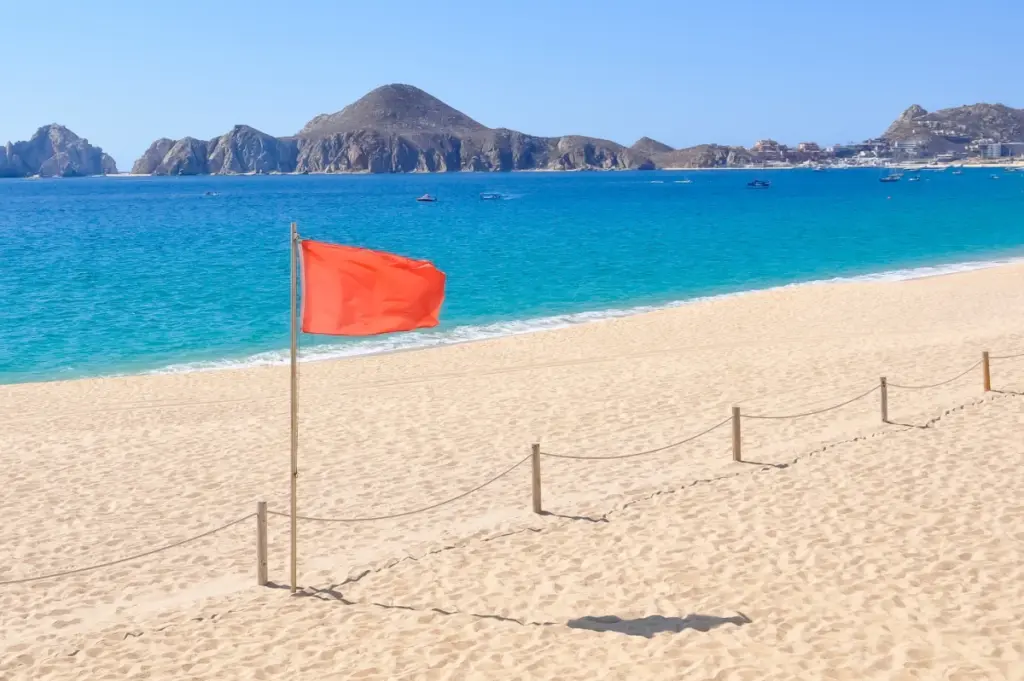
What a Red Flag Actually Means
There is a common misconception among tourists about how ocean warnings are enforced in Mexico.
A red flag signifies a high-hazard environment where entering the water is strongly discouraged.
Because it is not a physically barricaded closure, you will inevitably look out at the water and see a handful of tourists ignoring the warnings and jumping into the waves anyway.
Do not join them. Just because other people are making reckless decisions does not mean the water is safe. The current swell is generating massive waves up to 2.5 meters (over 8 feet) that originate deep on the ocean floor. When they crash onto the shore, they create incredibly powerful, invisible undercurrents. These currents can easily pull even the strongest, most experienced swimmers out to sea. Do yourself a favor and listen to the official warnings—the risk is simply not worth it.
And while the ocean itself may not be safe for entry, Cabo is trending on the super safe side, thanks to travelers like you voting on the safety index! Vote below to help your fellow travelers understand the situation on the ground.


The Most Affected Beaches Right Now
Rafael Álvarez Munguía, the municipal coordinator for the Federal Maritime Terrestrial Zone, announced that the red flags are currently concentrated across Cabo San Lucas, San José del Cabo, and the East Cape.
If you are staying near any of these specific areas, expect the water to be highly hazardous:
San José del Cabo:
- Acapulquito
- Costa Azul
- Las Palmas


Cabo San Lucas:
- Migriño
- Villas del Palmar
- El Tule
- Las Viudas
- The beaches fronting the three Riu hotels


The East Cape:
- A solid red flag zone is currently stretching all the way from Buzzar beach up to Boca del Salado.
- Note on Los Frailes: The beaches from Los Frailes heading north are currently flying Yellow Flags (swim with caution). However, authorities have specifically noted that there is a fairly strong rip current present here, so extreme vigilance is required if you decide to wade in.
Los Cabos Swell Warning
Listen To The Lifeguards
Local authorities are not taking the spring holiday crowds lightly. There is currently a massive, coordinated safety net deployed across the Los Cabos coastline.
If you head down to the sand, you will likely see personnel from Civil Protection, local firefighters, the Mexican Navy, and lifeguards actively patrolling the shoreline. They are there to protect you and assist with any emergencies. If a lifeguard blows a whistle, waves you back to shore, or tells you to step away from the break zone, follow their instructions immediately.
Enjoy the spectacular Baja weather from the safety of the dry sand until the massive swells pass and the green flags return.
The Ultimate Cabo Trip Planner
When’s the best time to go? Our powerful month-by-month guide breaks down the weather, crowds, hotel rates, and whale watching seasons for your perfect trip.
Find Your Perfect Los Cabos Resort In Seconds
This simple, powerful tool was built by our on-the-ground experts to match you with the ideal resort for your specific budget and travel style.
Subscribe to our Latest Posts
Enter your email address to subscribe to The Cabo Sun’s latest breaking news affecting travelers, straight to your inbox.