
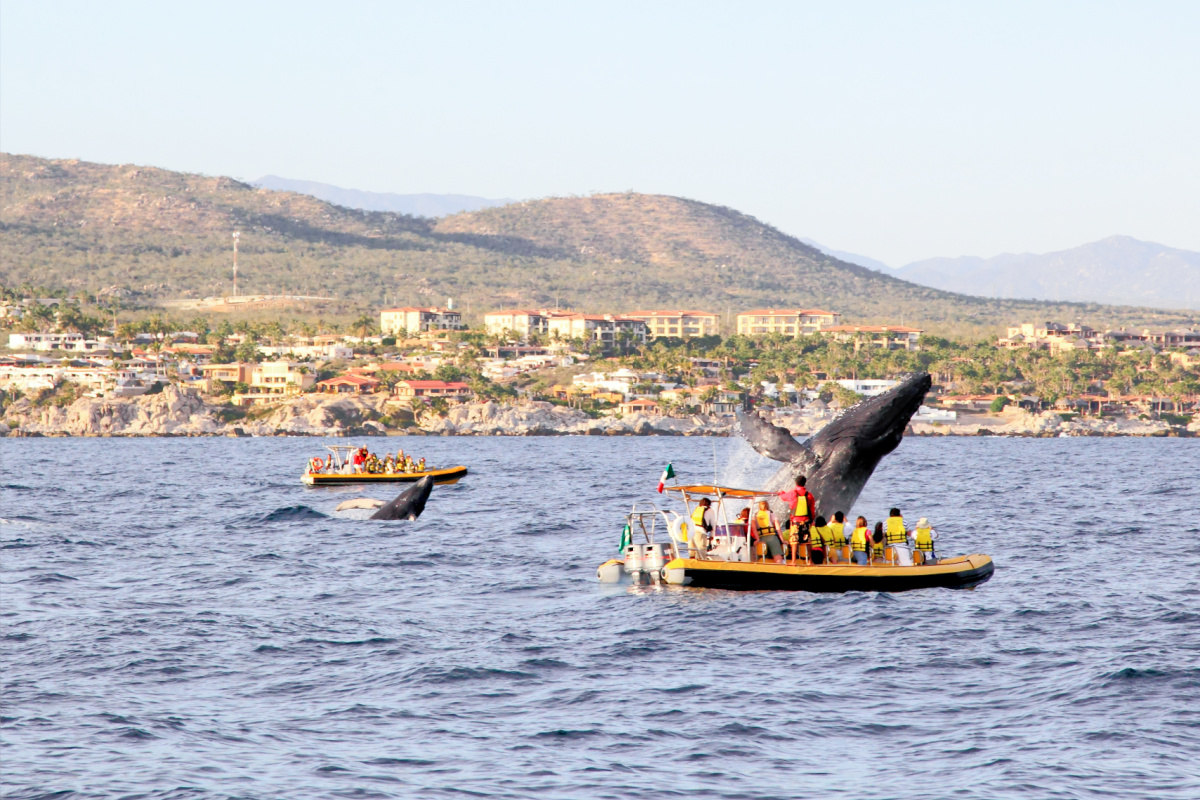
Whale season is officially on in Los Cabos — and if you’ve never seen a humpback launch itself out of the Sea of Cortez like it’s auditioning for a movie trailer… yeah, you’re in for a treat.
Here at The Cabo Sun, we’ve been tracking the permit calendar closely, and starting today (Monday, December 15, 2025), whale watching is officially authorized for Los Cabos under the federal schedule.
Below are 5 things tourists need to know before you hop on a boat (or even before you pick which day to go).

1) “Whale season” has official dates (and they matter)
In Los Cabos, the federal notice authorizes whale watching from December 15, 2025 through April 30, 2026 in the Cabo San Lucas Flora & Fauna Protection Area and Cabo Pulmo National Park (with specific restricted zones).
And here’s a key detail a lot of travelers miss: while Los Cabos (and Mulegé) can start right away, many other BCS whale-watching zones don’t officially open until January 1. So if you’re thinking about a side trip to places like Magdalena Bay later in your vacation, timing matters.
If you want the quick “what month is best?” breakdown (including those early “first sightings”), check our guide on when whales really arrive in Los Cabos.
2) Some areas are restricted — especially around busy waterways
The same federal notice that opens the season also calls out restricted zones in Los Cabos due to heavy navigation — including a restricted area around the Cabo San Lucas port zone and a 2 km area around the Arch, plus additional restricted bands described for the protected area.
Translation: even if you’re on a legit tour, you may not sit right on top of the Arch all morning waiting for whales. The rules are designed to reduce pressure on whales (and prevent the ocean from turning into a bumper-car situation).
Cabo Whale Watching Planner
Season officially starts today (Dec 15)! Here is what you need to know before booking. Click to reveal.
Los Cabos Start: December 15, 2025.
Season End: April 30, 2026.
Note: Other zones like Magdalena Bay start later (Jan 1). Make sure you are booking for the right region.
Look for the Flag: Authorized boats must display a visible SEMARNAT identification flag or sticker.
Why it matters: “Pirate” tours often break speed rules and harass marine life. Stick to authorized operators for a safe experience.
Distance: Boats must stay 60m (small boats) to 80m (large boats) away.
Time Limit: Maximum 30 minutes of observation per group of whales.
Prohibited: No swimming, jet skis, or kayaking with whales. The best tours are calm, not a chase scene.
Go Early: Morning trips usually have calmer seas and less glare for photos.
Dress Warm: It gets windy out there. Bring a light jacket even if it feels hot on land.
 Powered by The Cabo Sun
3) Book legit — and know what “legit” actually looks like
At minimum, your operator should be running under the SEMARNAT framework and following Mexico’s whale-watching standard (NOM-131-SEMARNAT-2010). Tribuna also notes enforcement efforts aimed at preventing unpermitted “pirate tourism,” which is exactly why we tell travelers to choose reputable operators.
A super practical thing you can look for: the official standard says authorized boats should display an identification/distinctive in a visible place during service.
(And if you want our super straightforward checklist for choosing a tour style, what to pack, and how to plan it into your trip, we already mapped it out here: Los Cabos whale tours: 5 things travelers need to know.)

4) The rules on the water are very specific (and you should know them)
Even as a passenger, knowing the basics helps you spot good vs. sketchy behavior fast:
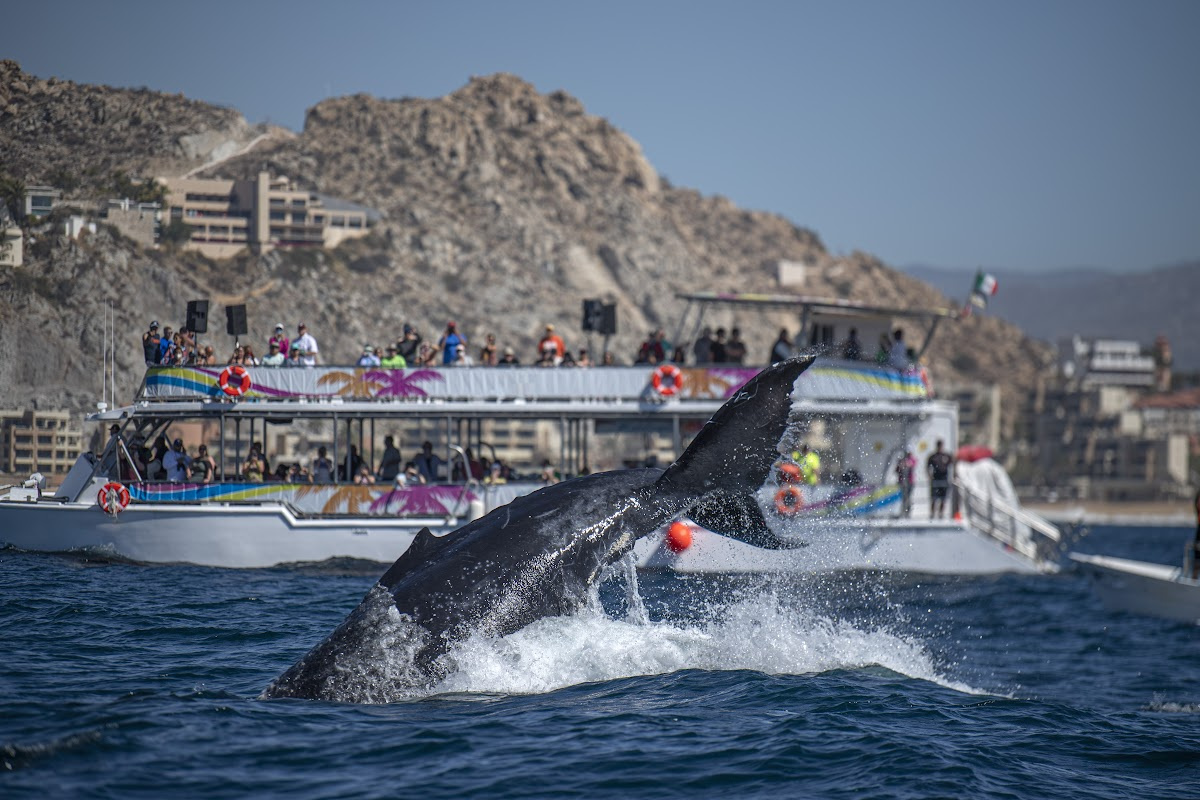
- Speed limits: Under the standard, boats must move under 5 knots in whale observation areas, and slow to under 2 knots when entering the observation zone.
- Boat crowding: A maximum of 4 boats can be around the same whale/group at once.
- Time limit: Boats can typically observe a whale/group for up to 30 minutes.
- Distance: For common species like humpbacks and gray whales, the standard lists minimum observation distances of 60 m (smaller boats) and 80 m (medium/larger boats), with a 240 m “waiting distance” for boats queued up.
- No “bonus activities” during whale watching: The standard prohibits things like swimming, jet skis, kayaks/canoes/inflatables-at-oar, and several other towable/flight-type activities for whale observation.
Bottom line: the best tours feel calm and respectful — not like a chase scene.
5) What you’ll see — and how to make the experience 10x better
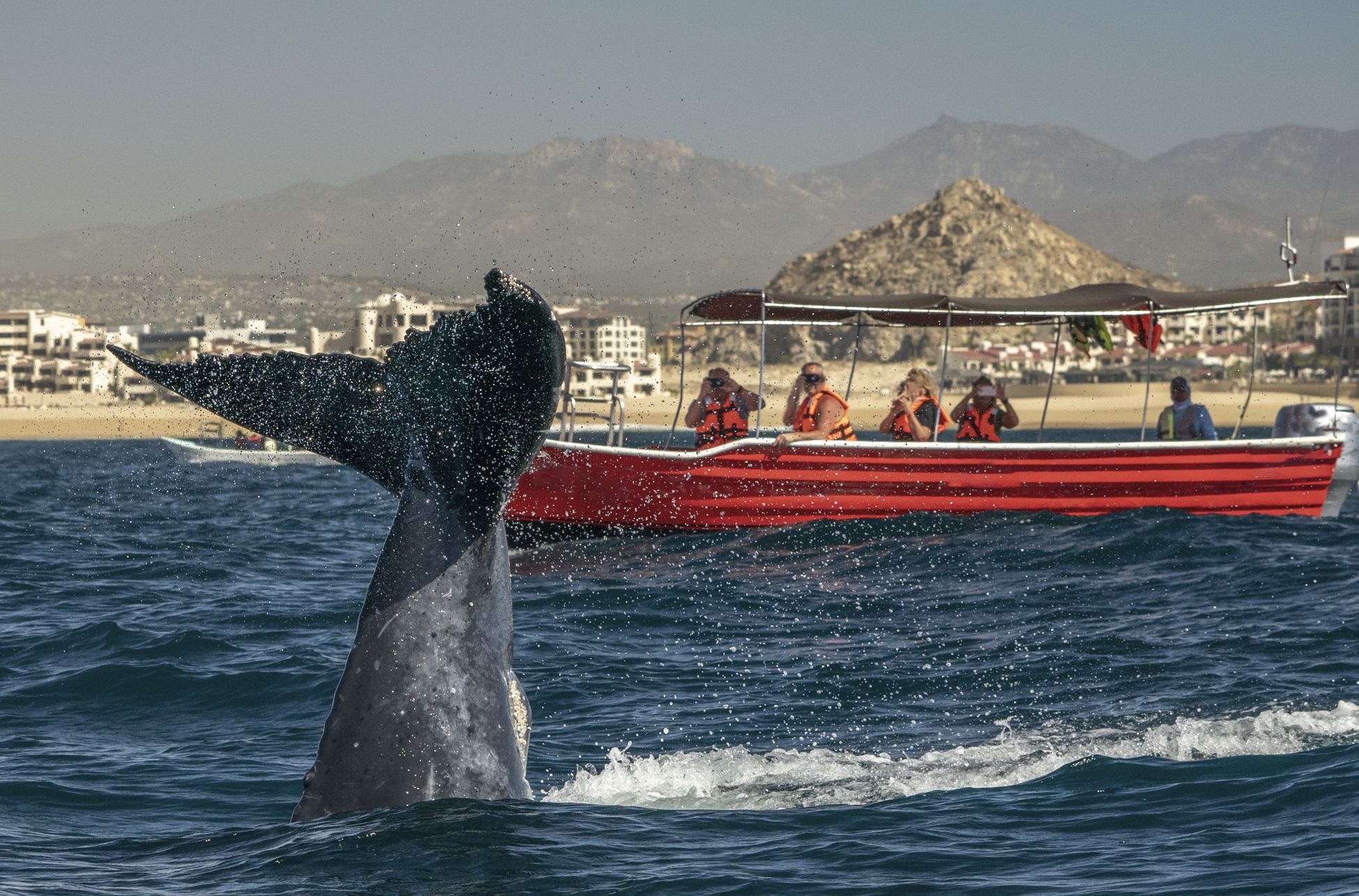
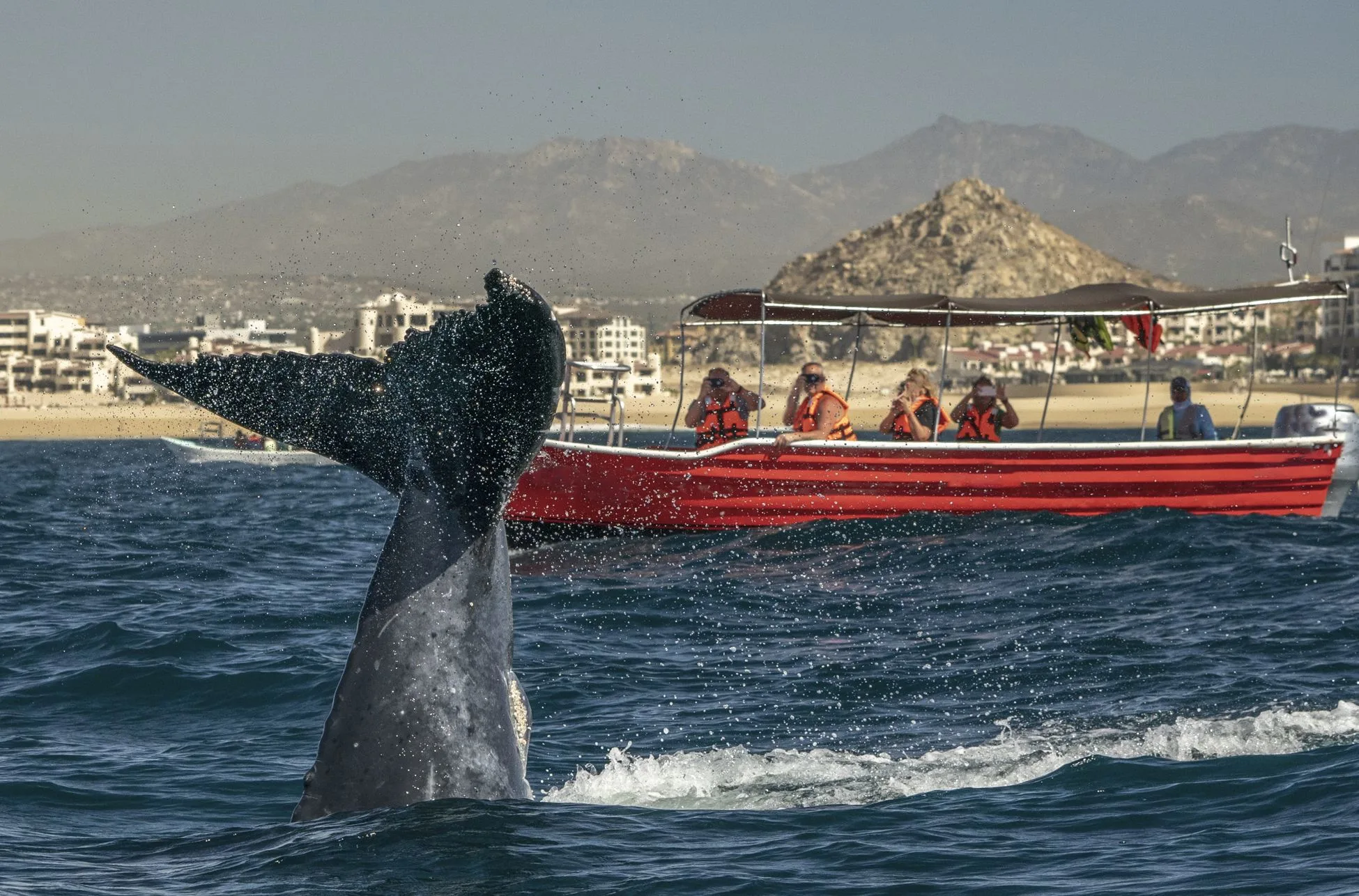
The winter season is when gray whales and humpbacks are expected in the region, migrating into warmer waters.
A few “Cabo Sun” tips we swear by:
- Go earlier in the day if you can. Mornings often mean calmer water (and better photos, because that glare gets intense fast).
- Dress for wind, not your pool chair. Even when it’s warm on land, the ride out can feel chilly.
- Bring motion sickness help if you’re even slightly prone to it. (Do not “tough it out” — whale season is too good to spend it nauseous.)
- Make it part of a bigger “best of Cabo” day. If you’re stacking experiences, our list of must-do Los Cabos excursions is a great way to plan a trip that feels full without being exhausting.
And if you’re traveling on a budget (or you just love the idea of a surprise breach from shore), don’t miss our guide on how to go whale watching in Los Cabos without paying for a tour.
The Ultimate Cabo Trip Planner
When’s the best time to go? Our powerful month-by-month guide breaks down the weather, crowds, hotel rates, and whale watching seasons for your perfect trip.
Find Your Perfect Los Cabos Resort In Seconds
This simple, powerful tool was built by our on-the-ground experts to match you with the ideal resort for your specific budget and travel style.
Subscribe to our Latest Posts
Enter your email address to subscribe to The Cabo Sun’s latest breaking news affecting travelers, straight to your inbox.