
If you’ve felt like the corridor between Cabo San Lucas and San José del Cabo has turned into a slow crawl lately…same.
We at The Cabo Sun drive it constantly, and we’re right there with you. The silver lining?
Los Cabos has big, long-term fixes in motion that are designed to make your future rides much faster.


Why it’s so jammed right now (and why it feels worse)
Los Cabos exploded in popularity faster than its streets were upgraded.
At rush hour, even short hops can stretch past 30–60 minutes, especially near construction zones and key choke points. Local reporting notes the Transpeninsular Highway (Hwy 1) can see up to 63,000 vehicles per day, a huge load for a corridor with limited alternatives.
The municipality’s budget now tops 4.59 billion pesos, but everyday maintenance and signal timing haven’t kept pace—so potholes, topes, and mistimed lights amplify the pain.

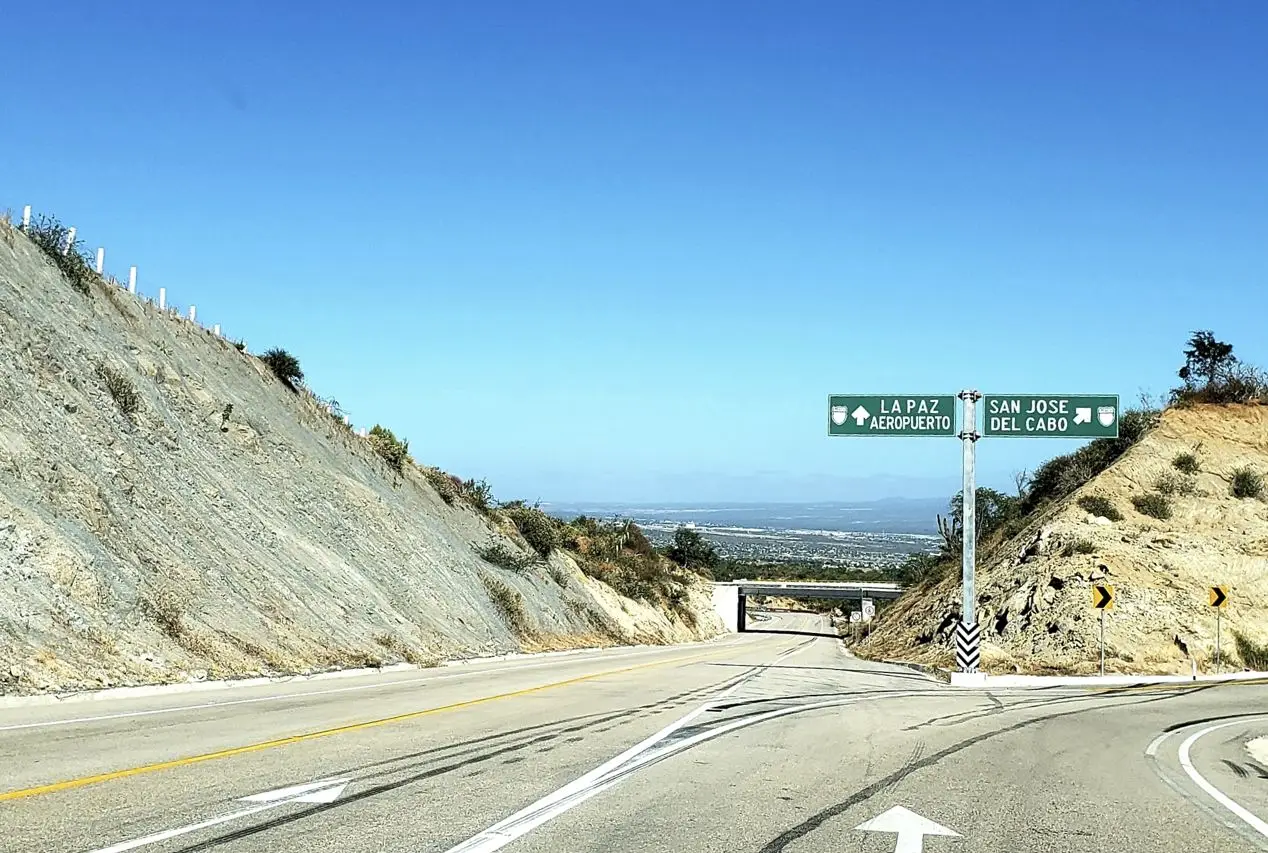
The fix that changes everything: the Fonatur Roundabout underpass
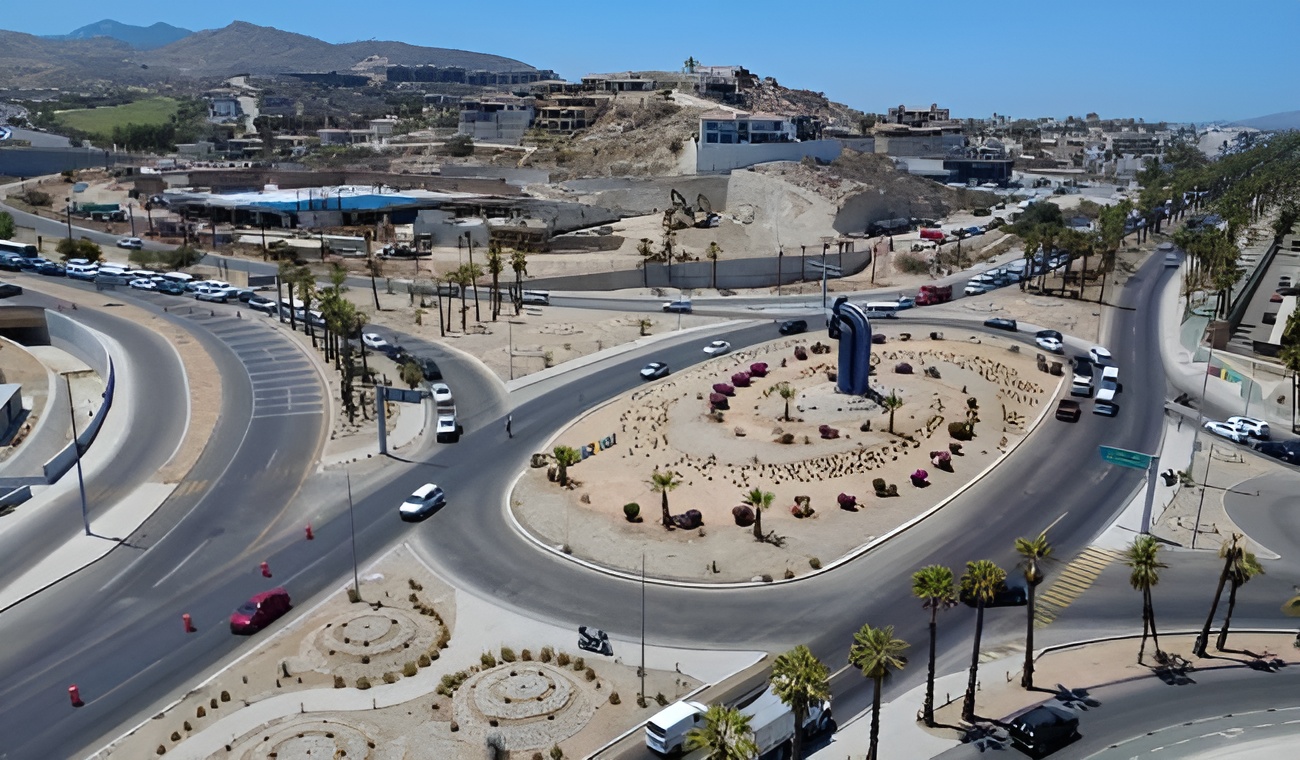
The notorious San José del Cabo Fonatur roundabout is being rebuilt with a grade-separated sunken roadway that will send through-traffic under the circle instead of into it.
Official project notes describe a 1.5-km corridor with four lanes beneath the roundabout, plus sidewalks, a bike path, and safer crossings—exactly the kind of upgrade that clears the worst bottleneck on Hwy 1.
Current guidance points to an 18-month work window, with completion around mid-2026. In short: cones today for green lights tomorrow.
Planning an airport run or transfer soon? We’ve broken down what’s being built and how it affects pickups in here and how long you should expect your transfer to take here.
The real relief valve: a brand-new “Interurban Axis”
Beyond fixing a choke point, Los Cabos is adding a true alternate route—the Eje Interurbano—to siphon traffic off Hwy 1 between CSL and SJC.
It’s written into the PDU-2040 plan, with land donation agreements moving forward this month for a roughly 20-km connector.
Officials have framed it as a strategic third artery parallel to the Transpeninsular—exactly what locals and visitors need. Early estimates put the price tag up to 5 billion pesos.
We unpacked what this means for future trips (and how it will tie into the Fonatur works) here.

Short-term help being studied: peak-hour toll relief
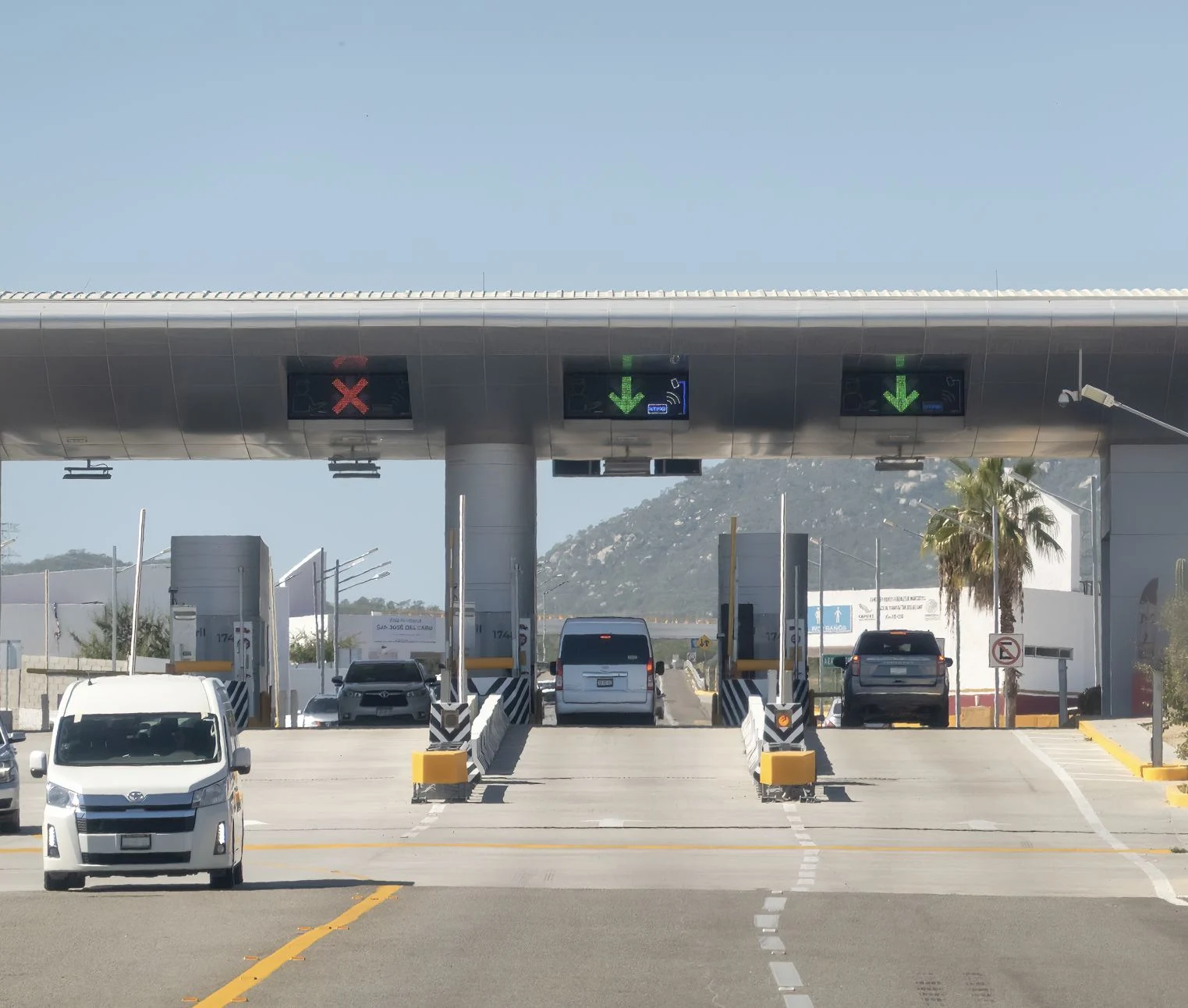
While roadbuilding continues, leaders have asked federal operators to temporarily lift fees at Toll Booth 86 during peak hours to keep cars moving.
CAPUFE acknowledged the request and is analyzing the technical and financial impacts. It’s not approved yet, but it’s on the table as crews modernize the Los Cabos Circuit.

How to save time right now
Until the bulldozers wrap and the new lanes open, beating Cabo traffic is less about secret back roads and more about timing and expectations. The corridor “breathes” during the day—pressure builds around commute windows and construction shifts, then eases when crews break or the airport banks thin out. A few simple tweaks to when you leave (and which stretch you choose) can shave more minutes than any shortcut.
Think of your drive in two buckets: airport-related trips and resort-to-town hops. Airport runs feel the pinch most near the Fonatur work zone; resort dinners and activity pickups stack up around the same windows locals are heading home. Your hotel concierge and transport company see these patterns in real time—lean on them. Day-of advice about whether to favor the Transpeninsular, Leona Vicario, or Tamaral often makes the difference between a crawl and a cruise.
- Travel off-peak when possible. Construction pushes rush-hour pressure to the extreme; the heaviest windows tend to be during the morning southbound commute and the evening northbound return. Give yourself a buffer on airport days.
- Ask your hotel or driver for the day’s best route. Locals rotate between the Transpeninsular, Leona Vicario, and Tamaral depending on closures and lane shifts.
- Add 10–20 minutes to plans that can’t slip. That small cushion turns a nail-biter into a breezy check-in.


Traffic feels rough because Los Cabos grew faster than its roads—but this is the pivot. A grade-separated underpass at Fonatur tackles the worst chokepoint by mid-2026, and the Interurban Axis adds the long-missing alternate between CSL and SJC. In the meantime, targeted measures like peak-hour toll flexibility are being weighed to smooth the daily drive.
On the other side of this buildout, you’ll spend less time in brake-light purgatory and more time doing, well… Cabo.
We’ll keep tracking milestones and on-the-ground impacts so you can plan smarter and enjoy more.
The Ultimate Cabo Trip Planner
When’s the best time to go? Our powerful month-by-month guide breaks down the weather, crowds, hotel rates, and whale watching seasons for your perfect trip.
Find Your Perfect Los Cabos Resort In Seconds
This simple, powerful tool was built by our on-the-ground experts to match you with the ideal resort for your specific budget and travel style.
Subscribe to our Latest Posts
Enter your email address to subscribe to The Cabo Sun’s latest breaking news affecting travelers, straight to your inbox.
Eric Baime
Friday 22nd of August 2025
There is a huge problem at Constituyentes where it intersects with the highway at the entrance to Cabo San Lucas. At the very least, a traffic sensor on the road is needed. Why is this choke point being ignored?
Eric Baime
Friday 22nd of August 2025
Why are there no traffic light sensors on the roads?. This would help with traffic and could be cheaper than building new roads with unnecessary car-damaging topes (like the one before the retorno going to the Home Depot).
I was told that Mexico does not have this technology. Is this true?