
When you finally lock in your vacation dates, grab your passport, and touch down in Los Cabos, your itinerary is likely filled with visions of sunset boat tours, cold drinks, and perfect beach days. Everyone visiting the Baja Peninsula wants to experience the iconic beauty of Land’s End and snap a few vacation photos near the famous Arch.
But this past weekend, that simple pursuit of the perfect beach experience turned into an absolute nightmare for two visiting tourists.
The pair experienced terrifying moments when they became trapped by violently rough seas at Playa del Divorcio, internationally known as Divorce Beach.

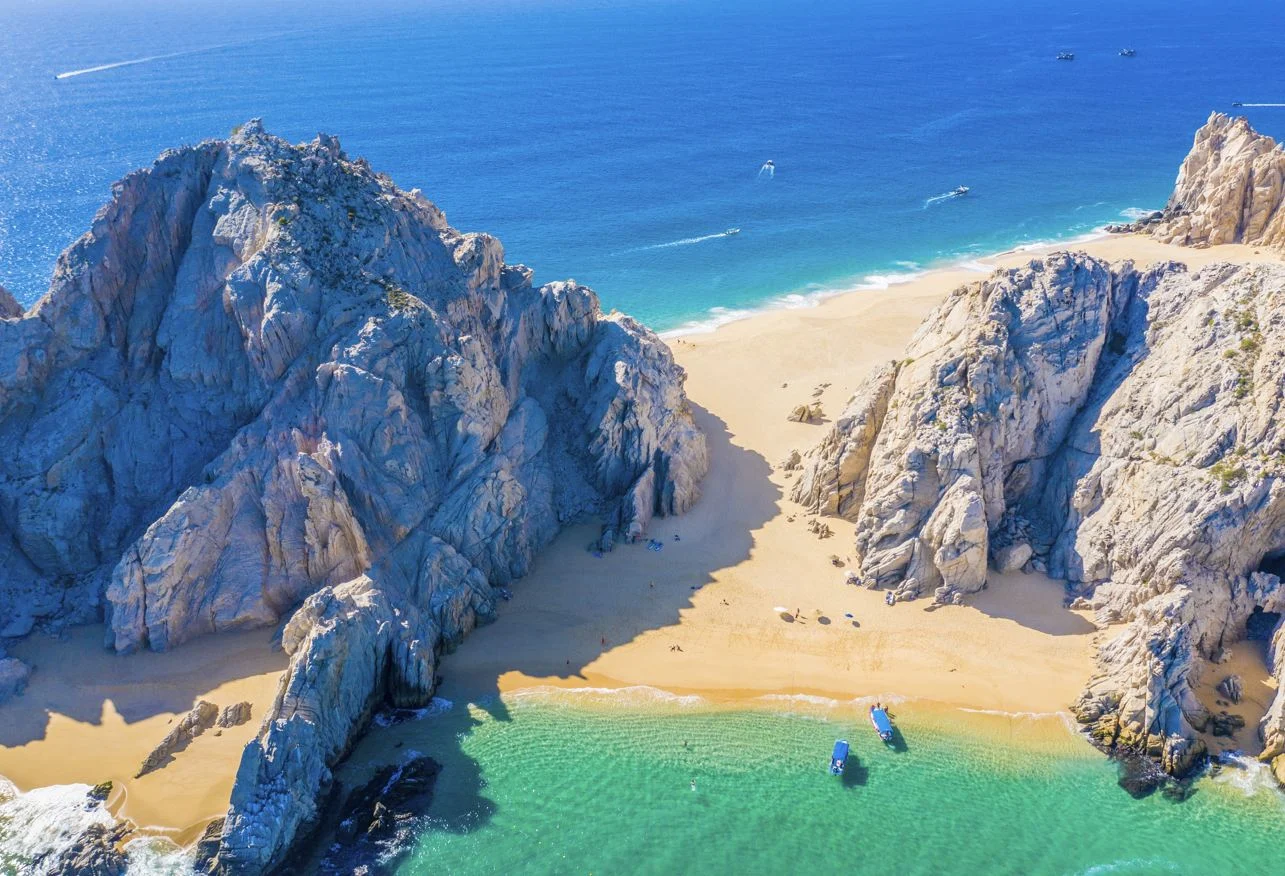
What was supposed to be a relaxing day in the sun quickly escalated into a high-stakes, life-or-death emergency that required the immediate and aggressive intervention of the Mexican Navy.
If you are planning a trip to Cabo in the near future, this incident serves as a critical, sobering reminder of how powerful the ocean truly is.

The Treacherous Geography of Land’s End
To understand exactly how this near-tragedy happened, you have to understand the unique, highly deceptive geography of Land’s End.
The rocky peninsula that forms the very tip of Baja California Sur physically separates two completely different bodies of water.
On one side, facing the bay, you have Lover’s Beach (Playa del Amor). The water here is protected by the rock formations, meaning it is usually calm, clear, and generally safe for wading and swimming.

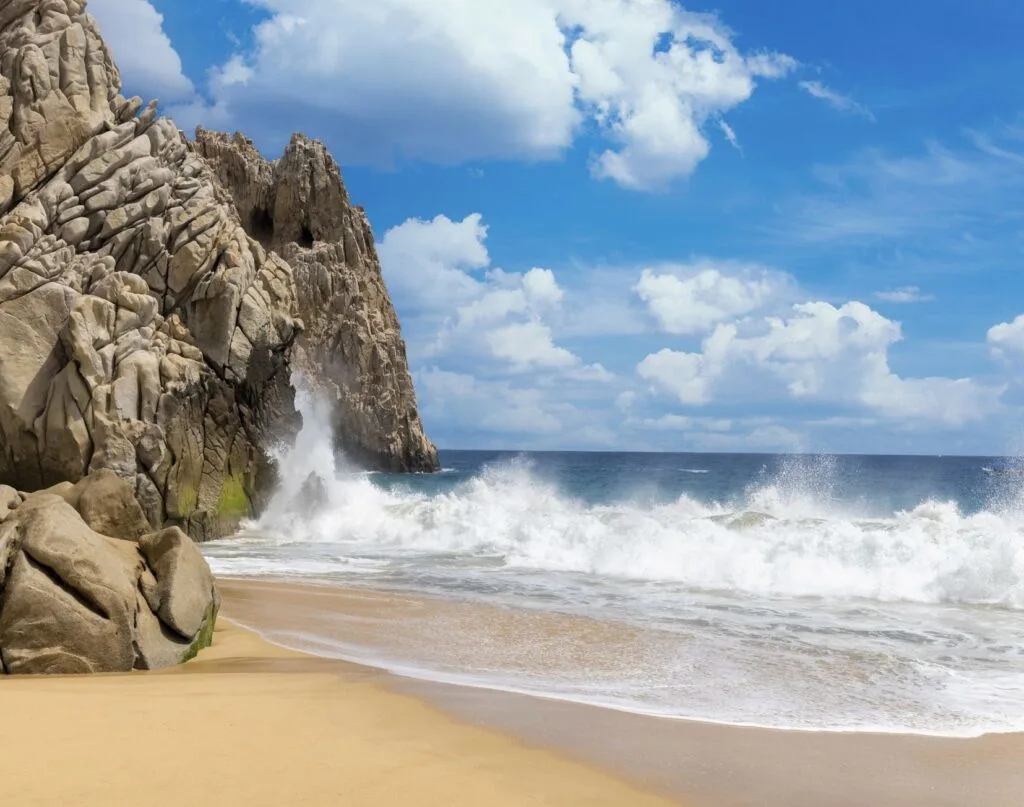
If you take a short, five-minute walk across the sand to the opposite side of the rocks, you will find yourself standing on Divorce Beach. The name is not just a clever local joke—it is a stark, literal warning about the relationship you are about to have with the ocean.
Divorce Beach faces the raw, untamed Pacific Ocean. There is zero geographical protection from the open sea. The water here is defined by sudden plunging drop-offs, massive crushing wave sets, and invisible, high-speed rip currents that can instantly sweep an adult off their feet and drag them out into deep, churning water.
The Silent Danger of the Mar de Fondo
Right now, the inherent danger at Divorce Beach is severely amplified. The entire Baja coastline is currently being battered by a massive mar de fondo (heavy groundswell) generated by distant offshore Pacific storm systems.

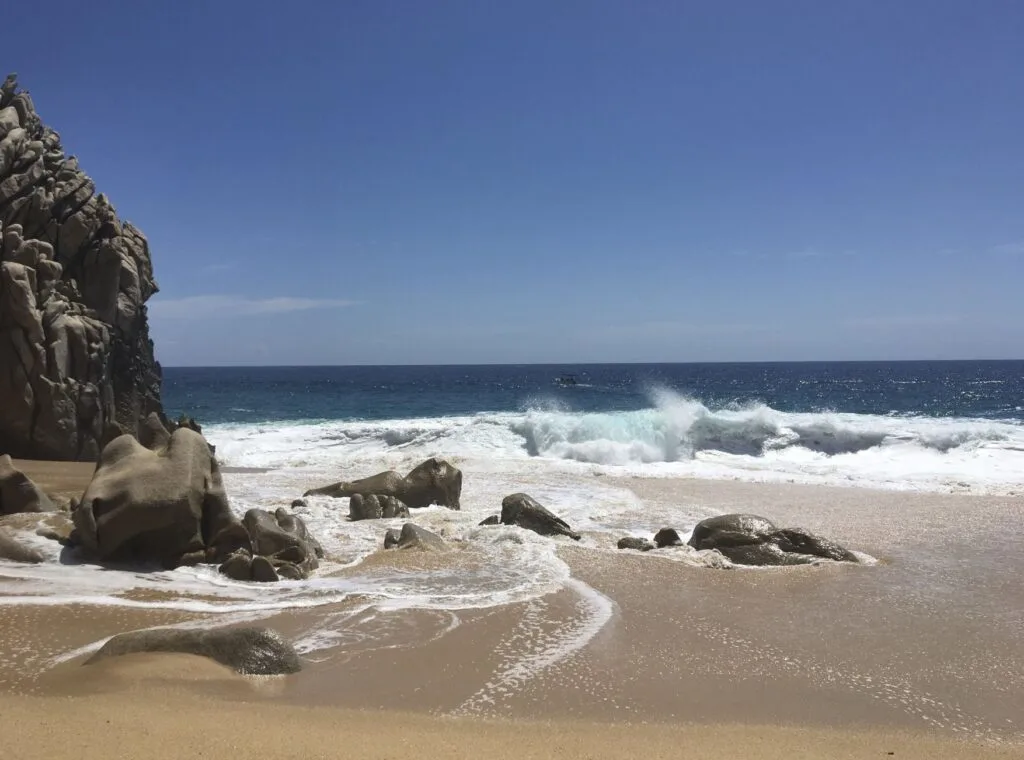
A groundswell is a silent killer. Unlike a localized thunderstorm that provides visual warnings like dark clouds and lightning, a groundswell is generated by weather events happening hundreds of miles out at sea. The weather right above your head at Divorce Beach could be sunny, 90 degrees, and completely cloudless. Because the sky looks perfect, visitors mistakenly assume the ocean is safe.
They walk down to the wet sand to cool off their feet, turn their backs to the water to take a photo, and are suddenly hit by an unpredictable, violent wall of water. By the time they realize they are caught in a massive rip current, the shoreline is already rapidly pulling away from them.
The High-Stakes Naval Rescue
When the two tourists found themselves overwhelmed by the aggressive currents and unable to escape the freezing Pacific water, a desperate emergency call was placed to the local naval command.
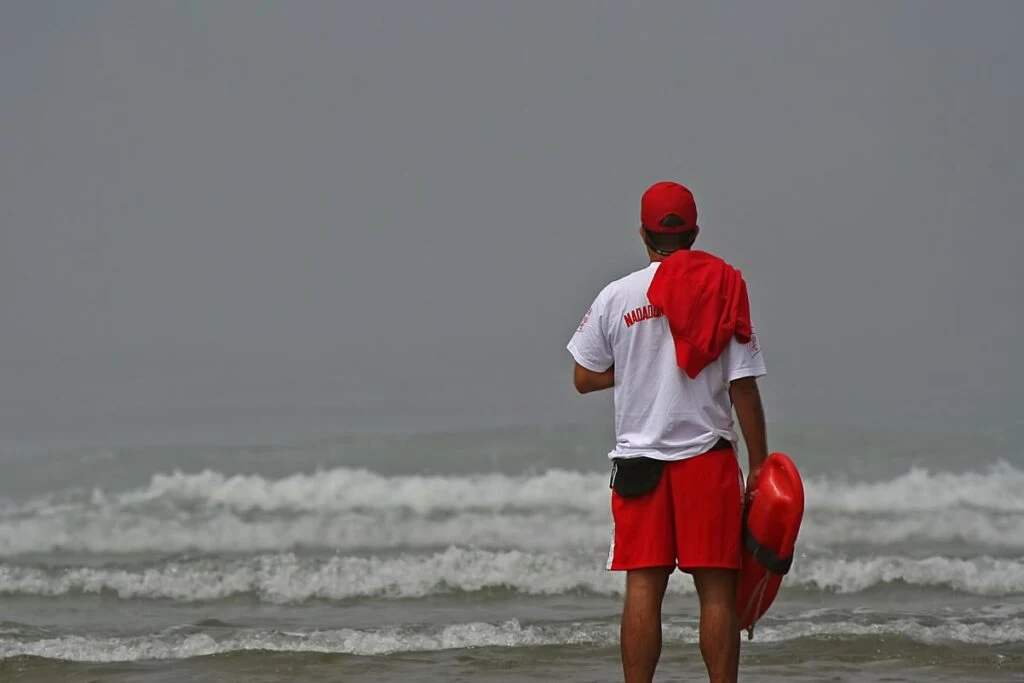
Because of the severe, volatile ocean conditions, standard local lifeguards could not safely execute the extraction. Instead, the Mexican Navy took immediate control of the situation. The Los Cabos Naval Search, Rescue, and Maritime Surveillance Station (ENSAR) deployed a highly specialized Defender-class vessel fully loaded with expert rescue swimmers and Naval Health personnel.
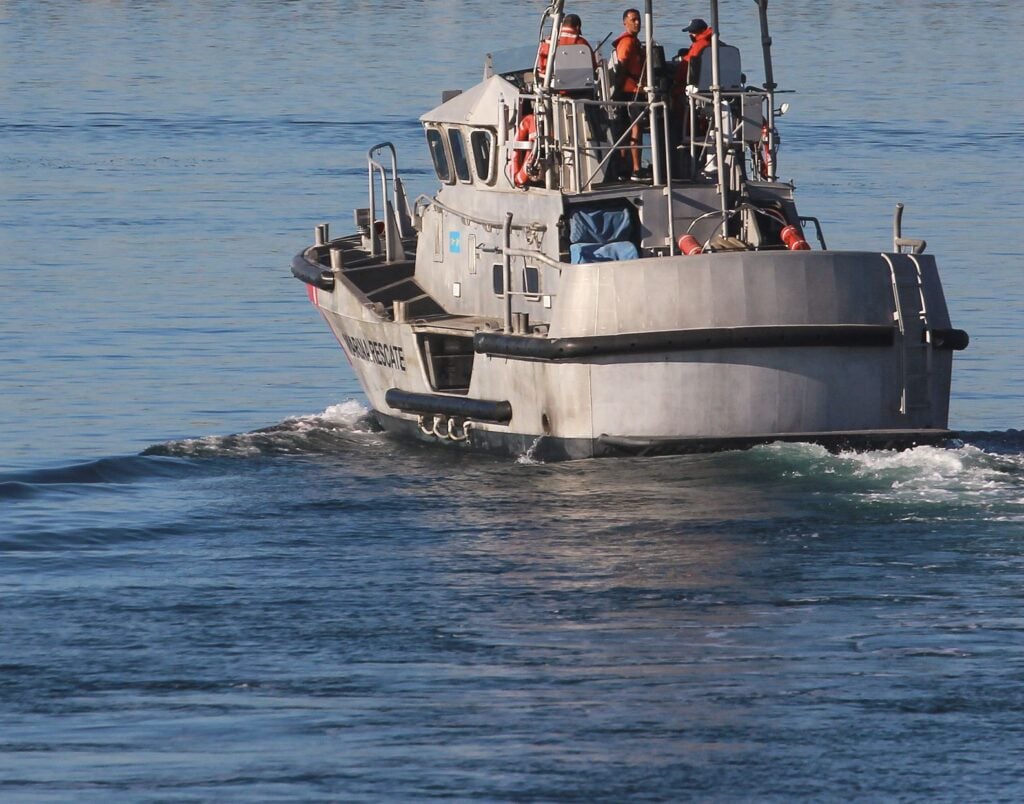
Through incredible skill and rapid response, the naval rescue swimmers managed to pull both tourists from the crushing waves and bring them to safety. The victims were immediately provided with critical first aid to stabilize their condition while the vessel sped back to the Naval Command dock. From there, a private ambulance was already waiting to rush them to a local hospital for specialized medical attention.
The Hard Line From Authorities
In the wake of this near-fatal incident, local authorities are dropping the hammer. A massive, coordinated effort involving the Federal Maritime Terrestrial Zone (Zofemat), Civil Protection, the Secretariat of the Navy, and the Port Captaincy has issued an urgent, non-negotiable warning to all visitors and local tour operators.
The immediate area surrounding the Cabo San Lucas Arch, including the temporary strip of sand that occasionally forms nearby, and the entirety of Divorce Beach are strictly restricted. Swimming in this area is not just highly discouraged—it is completely impossible and severely life-threatening.

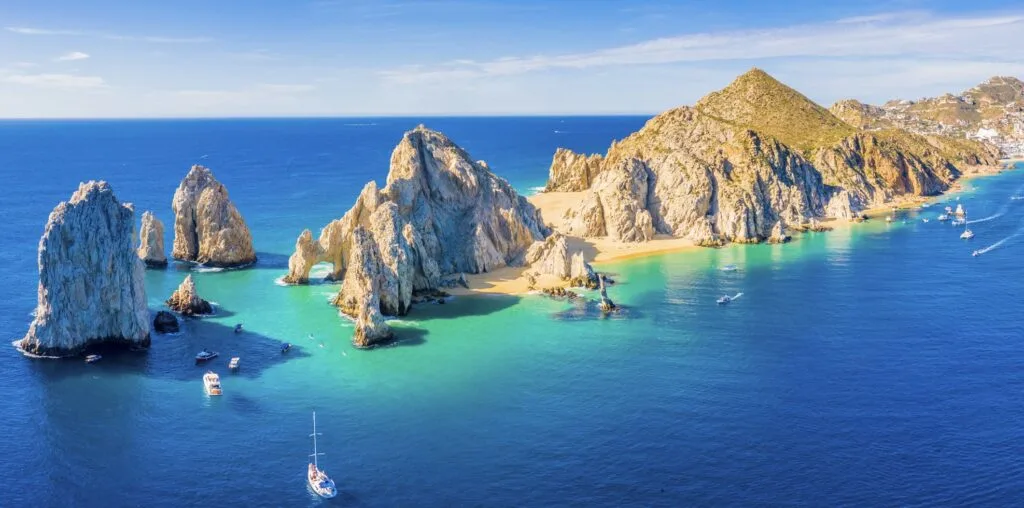
The authorities have explicitly stated that anyone attempting to enter the water during these groundswell conditions is not only risking their own life but is also actively putting the lives of the naval rescue swimmers in extreme jeopardy. Maritime rescue operations in this type of surf are incredibly complicated and inherently dangerous for the responders.
Los Cabos is home to some of the most beautiful coastlines in the world, and there are plenty of places to safely enjoy the water. If you want to swim, stick to the protected, designated zones like Medano Beach or Chileno Bay. Pay strict attention to the colored warning flags, and if you find yourself walking the sands of Divorce Beach, keep your distance from the shoreline. No thrill-seeking moment is ever worth your life.
Join Our Cabo Sun Community of 20,000+ Members
Get real-time answers to your travel questions from our team of local experts and thousands of fellow travelers directly inside our interactive group.
Find Your Perfect Los Cabos Resort In Seconds
This simple, powerful tool was built by our on-the-ground experts to match you with the ideal resort for your specific budget and travel style.
The Ultimate Cabo Trip Planner
When’s the best time to go? Our powerful month-by-month guide breaks down the weather, crowds, hotel rates, and whale watching seasons for your perfect trip.
Enter your email address to subscribe to The Cabo Sun’s latest breaking news affecting travelers, straight to your inbox.
Scott
Sunday 16th of August 2026
Do you get billed for a Rescue like that? Or,any Ocean rescue?