
When you envision a vacation to Los Cabos, the image in your mind is likely framed by pristine white sand and endless stretches of deep blue ocean. It is incredibly tempting to drop your bags at the resort, grab your swimsuit, and immediately sprint straight into the surf.
However, the ocean surrounding Los Cabos is not your typical, tranquil Caribbean bay.
This region is defined by the dramatic meeting point of the untamed Pacific Ocean and the Sea of Cortez. The resulting coastal environment is visually breathtaking but inherently volatile.


Between the powerful seasonal storm swells currently battering the coastline and the localized marine life that occasionally drifts into the bays, swimming in Cabo requires a healthy dose of respect for nature.
Whether you are a strong, experienced swimmer or just looking to wade in waist-deep, here is exactly what you need to know about the water conditions before you take the plunge.
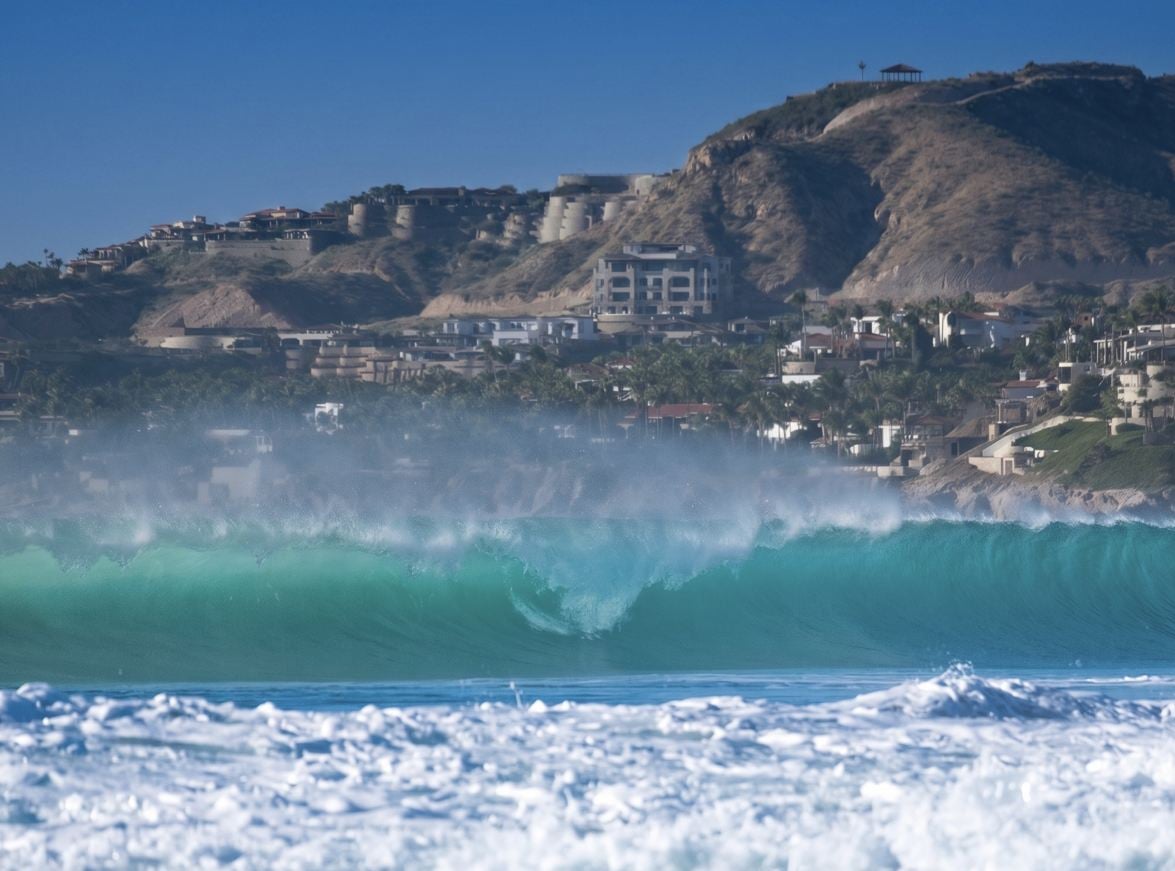
The Current Situation: Massive Swells and Hidden Rip Currents
If you are visiting Los Cabos during the late summer months, the ocean is particularly active. Right now, the region is dealing with a significant mar de fondo—a heavy, long-period ocean swell generated by distant storms and offshore hurricanes like Genevieve.
Even if the skies above your luxury resort are completely clear and sunny, these distant weather systems act like massive engines, pushing kinetic energy hundreds of miles across the ocean surface. When that energy finally hits the shallow coastal shelf of the Baja peninsula, it transforms into towering, powerful waves. Recently, maritime authorities have tracked wave sets crashing onto Cabo beaches at heights between 7 and 9 feet.


More dangerous than the wave height itself is what happens underneath the surface. The massive volume of water pushed onto the sand has to pull back out to sea, creating aggressive, high-speed rip currents.
These localized underwater rivers can easily sweep an adult off their feet and drag them into deep water in a matter of seconds. Never underestimate the pull of the ocean, especially when offshore storms are churning.


Swimmable vs. Unswimmable Beaches
One of the most surprising realities for first-time visitors to Los Cabos is discovering that the majority of the beaches in the destination are strictly unswimmable, even on a perfectly calm day.
The peninsula’s unique geography creates sudden, plunging underwater drop-offs just a few feet from the shoreline on the Pacific coast. The beaches stretching up the Pacific side—including popular resort areas near Diamante and Pedregal—are renowned for rogue waves and fatal undercurrents.
These beaches are for walking, sunbathing, and whale watching, but absolutely not for swimming.


If you want to get into the ocean, you must stick to the protected bays along the Sea of Cortez side and the Tourist Corridor. Destinations like El Médano Beach, Chileno Bay, Santa María, and Palmilla are historically the safest, most swimmer-friendly locations. However, as recent weather events have proven, even these highly protected bays can become dangerous when heavy swells wrap around the peninsula.
Decoding the Beach Flag System
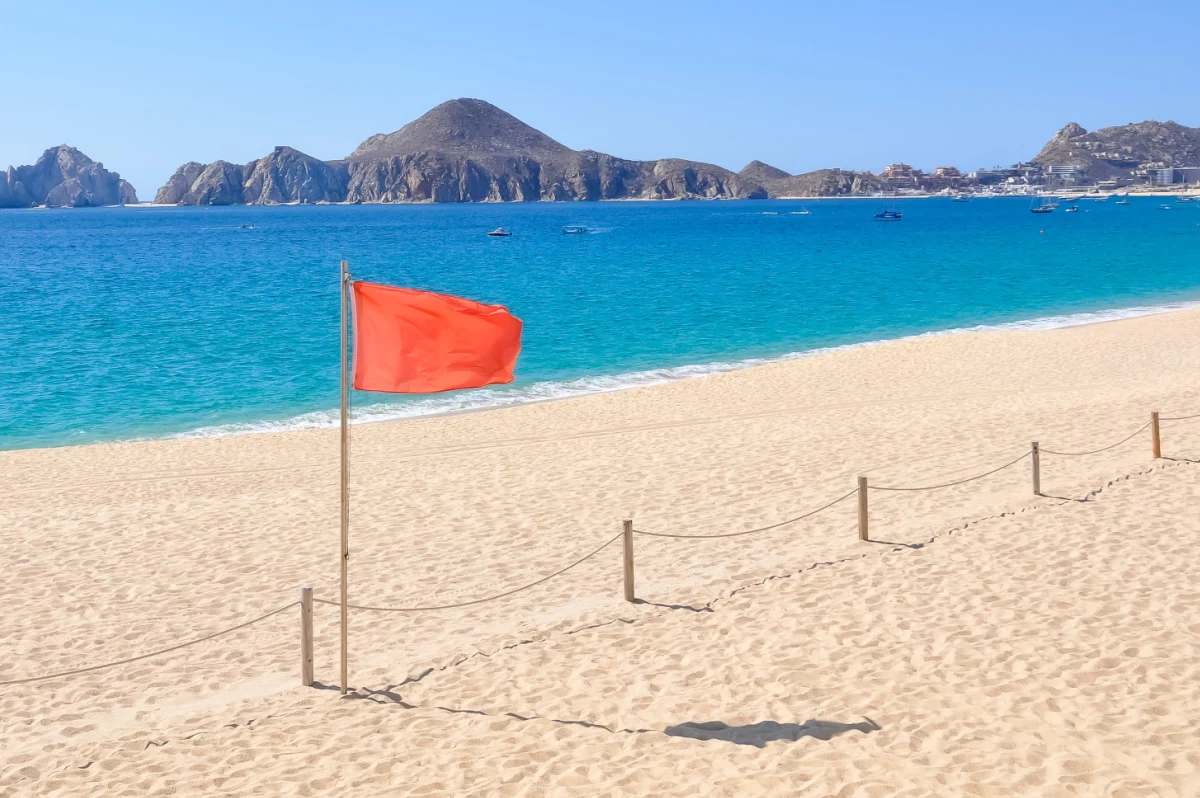
To keep tourists safe, local Civil Protection authorities and resort lifeguard teams utilize a highly visible, standardized color-coded flag system on the beaches. Before you even set down your towel, you need to locate the nearest lifeguard stand and check the color of the flag flying.
- Green Flag: Water conditions are perfectly safe for swimming. Enjoy the ocean!
- Yellow Flag: Exercise caution. There is some moderate surf or a slight current. Weak swimmers and children should stay in the shallow wash.
- Red Flag: High hazard. Conditions are dangerous, and swimming is strictly prohibited. The surf is too rough and rip currents are actively pulling from the shore.
- Black Flag: Extreme danger. Do not enter the water, and do not even walk on the wet sand near the shoreline. The waves are highly unpredictable, and “sneaker waves” can rush high up the beach without warning.
- White Flag: This indicates the presence of dangerous marine life in the water—which in Los Cabos, almost always means jellyfish.
The Jellyfish Factor
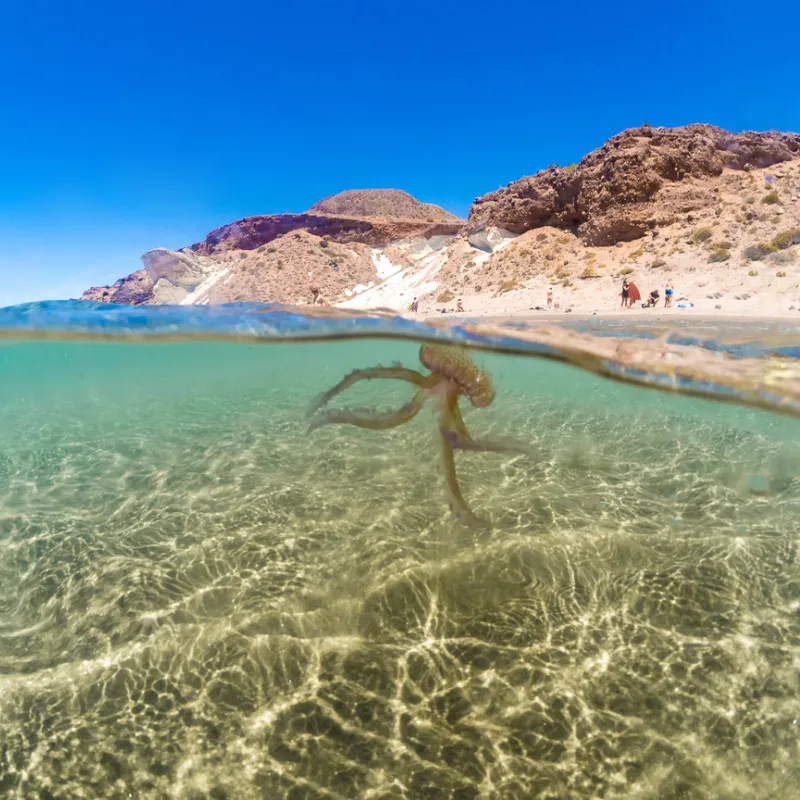
The white flag is particularly important during the summer and early fall. As the ocean temperatures peak, the warm water occasionally brings blooms of jellyfish (locally known as aguamalas) into the shallow bays.
While the species found in Cabo are rarely life-threatening, their stings pack a highly painful, burning punch that can quickly ruin a perfect beach day. These translucent creatures are incredibly difficult to spot in the surf, and their long tentacles can detach and still deliver a sting while floating freely in the waves.
If you see a white flag flying alongside a green or yellow flag, it means you are swimming at your own risk. If you do happen to get stung, do not rinse the area with fresh bottled water, as this can trigger remaining stingers to fire. Instead, immediately flag down a local lifeguard or head to your resort’s beachside concierge; they keep specialized sprays and white vinegar on hand to instantly neutralize the venom and soothe the burning sensation.

Respect the Ocean
A trip to Los Cabos offers some of the most spectacular coastal scenery in the world. By respecting the flag system, sticking strictly to designated swimmable bays, and keeping a watchful eye out for the white flag, you can safely enjoy the stunning Sea of Cortez.
And when the red flags are flying, simply consider it the perfect excuse to retreat to your luxury resort and spend the afternoon enjoying the swim-up bar at the infinity pool!
Join Our Cabo Sun Community of 20,000+ Members
Get real-time answers to your travel questions from our team of local experts and thousands of fellow travelers directly inside our interactive group.
Find Your Perfect Los Cabos Resort In Seconds
This simple, powerful tool was built by our on-the-ground experts to match you with the ideal resort for your specific budget and travel style.
The Ultimate Cabo Trip Planner
When’s the best time to go? Our powerful month-by-month guide breaks down the weather, crowds, hotel rates, and whale watching seasons for your perfect trip.
Enter your email address to subscribe to The Cabo Sun’s latest breaking news affecting travelers, straight to your inbox.