
When you book a tropical vacation, you are signing up for perfect beaches, warm ocean water, and incredible sunsets. But you are also entering a tropical ecosystem, which means sharing paradise with the local insect population. For the most part, mosquito bites on vacation are just a mildly itchy nuisance. However, across Mexico, the Caribbean, and Latin America, they can occasionally carry a more serious threat: Dengue fever.
If you are traveling to Los Cabos, or anywhere in the global tropics, understanding how Dengue works is a fundamental part of travel safety. While it is absolutely not a reason to cancel your hard-earned vacation, it is a risk that requires a bit of basic, common-sense preparation.
Here is everything you need to know about Dengue fever, how to prevent it, and why local authorities in Baja California Sur are currently debating a radical new approach to keep the virus out of the region.
What Exactly Is Dengue Fever?
Dengue is a viral infection transmitted to humans through the bite of infected mosquitoes. It is incredibly common globally, with the World Health Organization estimating that roughly half of the world’s population is now at risk of the disease.
Often referred to colloquially as “breakbone fever,” Dengue is notorious for the severe muscle and joint pain it can cause in symptomatic patients. The symptoms typically begin four to ten days after being bitten and usually include:
- A sudden, high fever (often reaching 104°F)
- Severe headaches and intense pain behind the eyes
- Muscle, bone, and joint pain
- Nausea and vomiting
- A widespread skin rash
The vast majority of people who contract Dengue recover completely within a week or two by resting, drinking plenty of fluids, and taking acetaminophen for the fever. (Travel safety note: You should never take aspirin or ibuprofen if you suspect you have Dengue, as the virus can decrease your platelet count, and those medications can increase bleeding risks).

The Culprit: The Aedes aegypti Mosquito
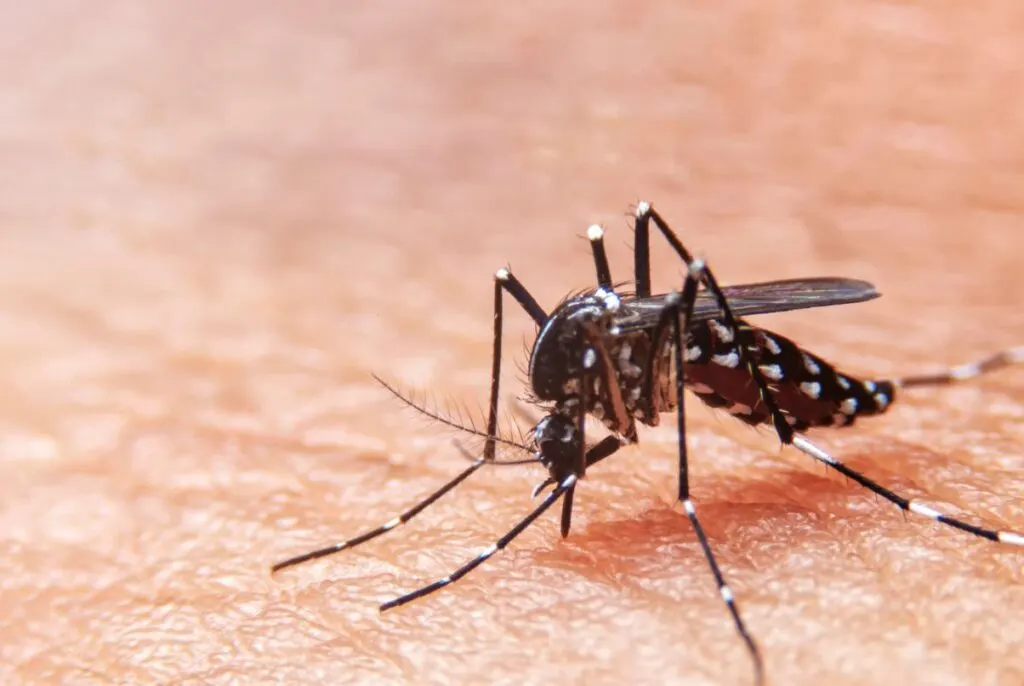
You cannot catch Dengue directly from coughing or shaking hands with an infected person; it requires a vector. That vector is almost exclusively the Aedes aegypti mosquito.
This specific species of mosquito is incredibly well-adapted to human environments. Unlike other species that breed in massive swamps or lakes, the Aedes mosquito prefers small, artificial containers of standing water. A discarded plastic cup, a clogged rain gutter, or an unemptied ice bucket on a resort balcony can become a breeding ground for hundreds of larvae.
Crucially for tourists, the Aedes aegypti is a “day-biter.” While malaria-carrying mosquitoes typically hunt in the dead of night, the Dengue-carrying mosquito is most active in the early morning for a few hours after daybreak, and in the late afternoon right before sunset.

Why Baja California Sur Might Start Screening Flights
Mosquitoes are not born with the Dengue virus. For a mosquito to become a carrier, it must first bite a human who is actively infected with the virus. The mosquito then incubates the virus for a few days before passing it on to the next human it bites.
This human-to-mosquito transmission cycle is exactly why local authorities in Baja California Sur are currently debating a massive shift in how they handle incoming travelers.
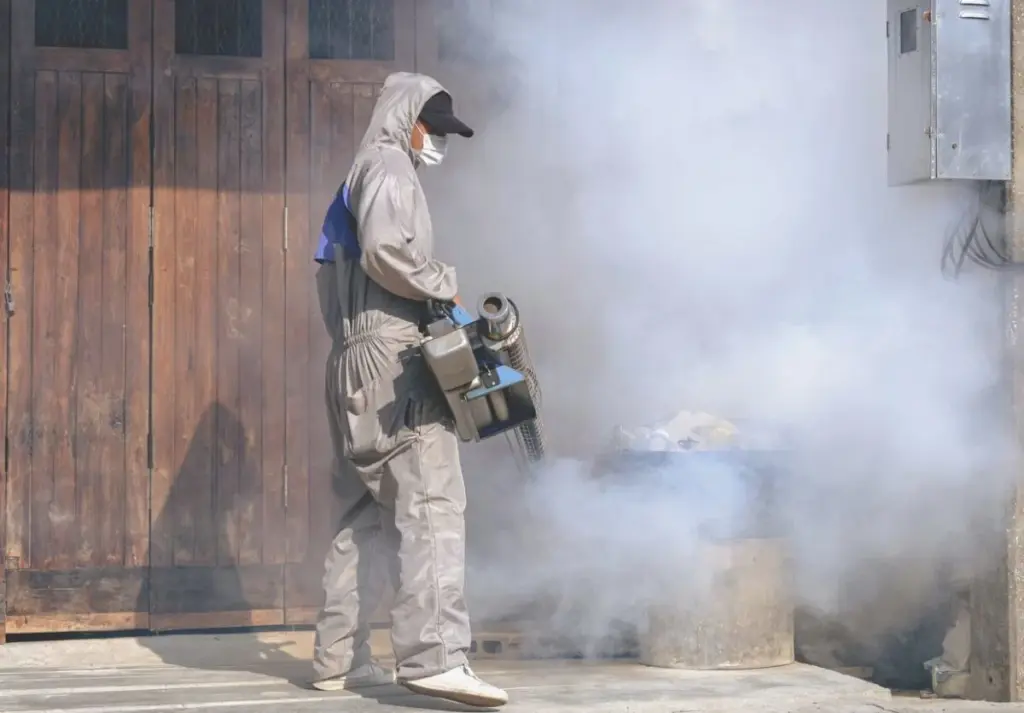
Historically, when Dengue cases spike, local governments focus entirely on fumigation—driving trucks through neighborhoods to spray insecticide and kill the adult bugs. However, Venustiano Pérez Sánchez, a state deputy in Baja California Sur, is arguing that killing the local bugs is not enough. The mosquitoes are native to the Baja desert ecosystem, but the virus itself is constantly being re-introduced by infected humans traveling into the state.
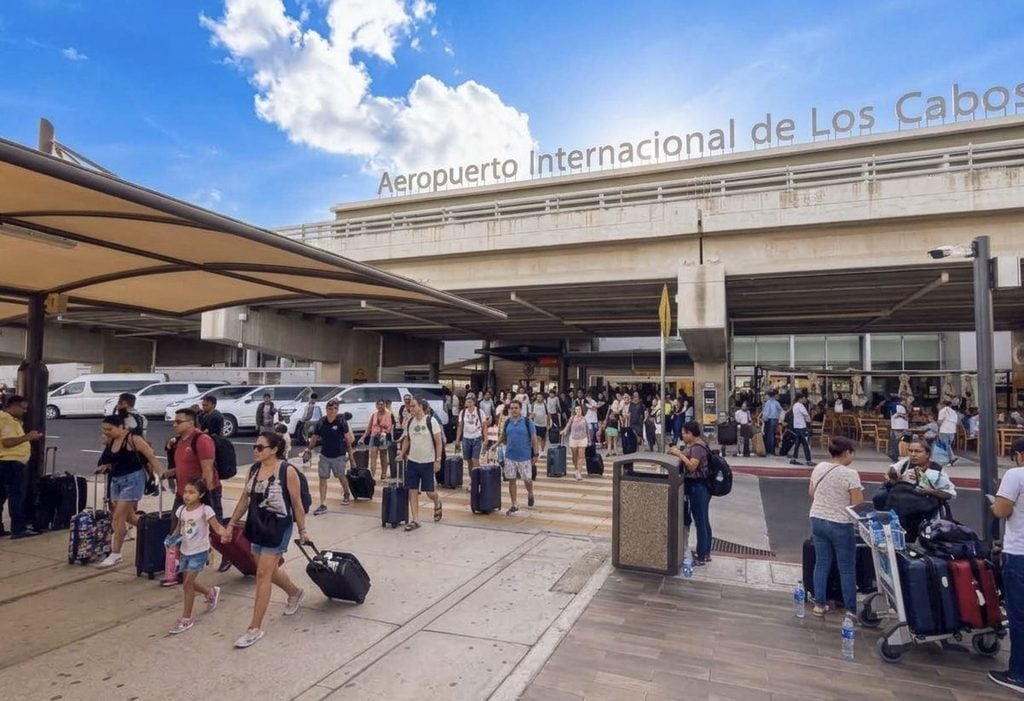
Currently, Baja California Sur has recorded 536 confirmed cases of Dengue in 2026, resulting in one fatality. Because the region relies heavily on migrant agricultural workers and millions of international tourists flying in daily, Pérez Sánchez has formally proposed installing medical screening checkpoints at the state’s airports and maritime ports.
The proposal suggests that personnel from the Secretariat of Health could monitor incoming passengers, identify individuals exhibiting fever or Dengue symptoms, and mandate rapid testing and quarantine to break the chain of transmission before local mosquitoes can bite them. While airport health screenings have not been officially mandated yet, the debate highlights just how seriously the local government is taking the recent spike in regional cases.
How to Protect Yourself on Vacation
Whether you are staying at a luxury resort in Cabo San Lucas or backpacking through mainland Mexico, preventing Dengue comes down to one simple rule: do not get bitten.
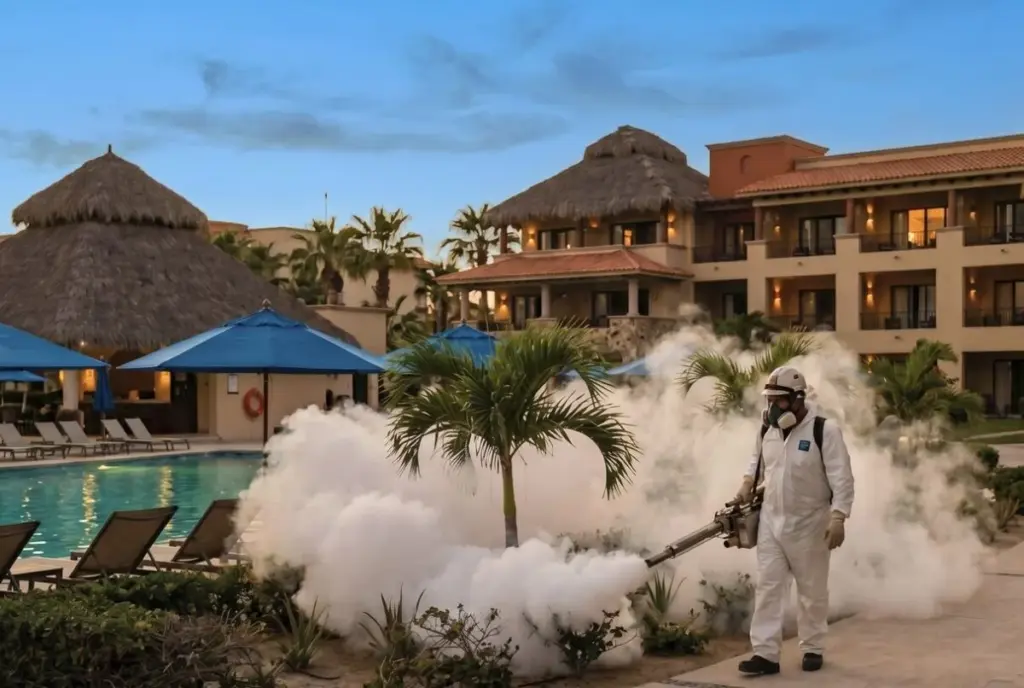
Fortunately, major resorts in Los Cabos take vector control incredibly seriously. Hospitality properties run aggressive, daily “thermal fogging” programs to eliminate mosquitoes, and their landscaping teams are meticulously trained to remove all standing water from the grounds. Because of this, the risk of contracting Dengue inside the manicured tourist zones is incredibly low.
However, if you are venturing off-property for an excursion, dining in the local downtown areas, or hiking in the desert, you must take personal precautions:
- Use the Right Repellent: Do not rely on natural citronella bracelets or essential oils. You need an EPA-registered insect repellent containing DEET (20-30%), Picaridin (20%), or Oil of Lemon Eucalyptus (OLE). Apply your sunscreen first, let it dry, and then apply your bug spray over it.
- Dress Defensively: If you are eating dinner outdoors at a farm-to-table restaurant in the foothills at dusk, wear loose-fitting, light-colored long pants and a long-sleeved shirt. Mosquitoes are attracted to dark colors and tight fabrics they can easily pierce.
- Audit Your Balcony: Check your hotel balcony or Airbnb patio for standing water. Empty out outdoor ashtrays, turn over unused ice buckets, and ensure the saucer under your potted plant isn’t holding stagnant water.
- Use the AC: The Aedes mosquito is an indoor/outdoor bug that loves to fly through open windows. Keep your resort sliding glass doors closed and rely on the air conditioning, which actively deters mosquitoes from entering your room.
Dengue is a reality of tropical travel, but it is highly preventable. By packing the right bug spray and understanding when these mosquitoes are most active, you can completely protect yourself and focus entirely on enjoying your Baja vacation.
Understanding Dengue
Known for severe muscle and joint pain alongside sudden high fevers, symptoms emerge 4 to 10 days after an infected mosquito bite.
The Aedes aegypti Habit
Unlike nighttime mosquitoes, this species breeds in artificial standing water and bites aggressively in early morning and late afternoon.
Proposed Airport Screenings
Following 536 confirmed cases in 2026, state lawmakers are debating airport checkpoints to screen incoming travelers for fever symptoms.
EPA-Registered Repellents
Apply bug spray containing DEET, Picaridin, or Oil of Lemon Eucalyptus over your sunscreen when exploring off resort properties.
Auditing Standing Water
Inspect hotel balconies for standing water in ice buckets, keep sliding glass doors shut, and rely on air conditioning indoors.
Join Our Cabo Sun Community of 20,000+ Members
Get real-time answers to your travel questions from our team of local experts and thousands of fellow travelers directly inside our interactive group.
Find Your Perfect Los Cabos Resort In Seconds
This simple, powerful tool was built by our on-the-ground experts to match you with the ideal resort for your specific budget and travel style.
The Ultimate Cabo Trip Planner
When’s the best time to go? Our powerful month-by-month guide breaks down the weather, crowds, hotel rates, and whale watching seasons for your perfect trip.
Enter your email address to subscribe to The Cabo Sun’s latest breaking news affecting travelers, straight to your inbox.