
The transition from late summer to early autumn is arguably the most beautiful time of year to visit Cabo. The extreme summer heat breaks, the humidity becomes manageable, and the massive winter holiday crowds have not yet arrived. However, this specific season is also defined by heavy, torrential tropical rains and lingering offshore hurricanes.
While the sudden influx of water turns the typically arid, brown desert into a spectacular, lush green landscape, it also brings a highly unwelcome side effect: a massive surge in the local mosquito population.
If you are packing your bags for a vacation to Los Cabos this month, you need to add a high-quality insect repellent to the top of your checklist. The State Secretary of Health in Baja California Sur has officially confirmed an active dengue fever outbreak in the region. To ensure your trip is memorable for the right reasons, here is a detailed breakdown of the current advisory, what local authorities are doing, and how you can easily protect yourself while visiting.
The Current Dengue Outbreak in Baja
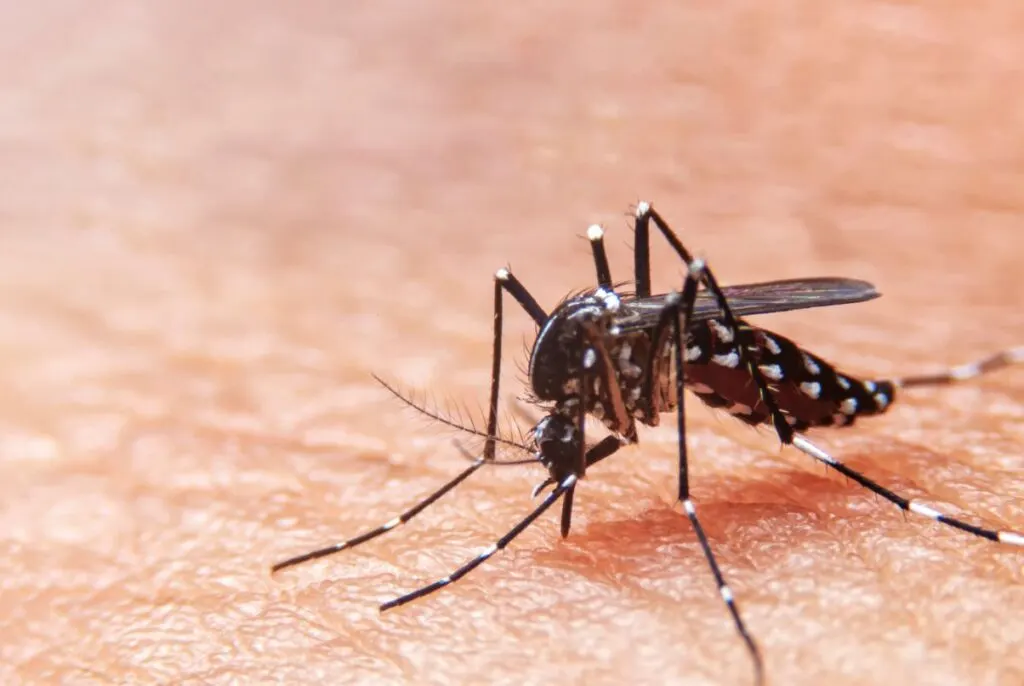
Dengue is a viral infection transmitted to humans through the bite of an infected Aedes aegypti mosquito. While it is not uncommon to see a spike in cases following the rainy season in tropical environments, the current numbers have prompted state health officials to take immediate, highly visible action.
According to Ana Luisa Guluarte Castro, the State Secretary of Health, there are approximately 260 confirmed cases of dengue across the state of Baja California Sur. The vast majority of these infections are currently concentrated north of Los Cabos, specifically in Ciudad Constitución within the municipality of Comondú.

However, because the heavy rains impacted the entire peninsula, the local mosquito population has exploded everywhere. The State Health Department has officially confirmed that there are active, reported cases of dengue in Cabo San Lucas, prompting an immediate redeployment of health resources to the primary tourist zones.
Furthermore, Guluarte Castro noted that they are specifically tracking the circulation of serotype 3 of the virus. State officials are also aggressively monitoring for serotype 2, which has not circulated widely in the state for years, meaning the local population does not have built-up immunity to it.
What the Government is Doing
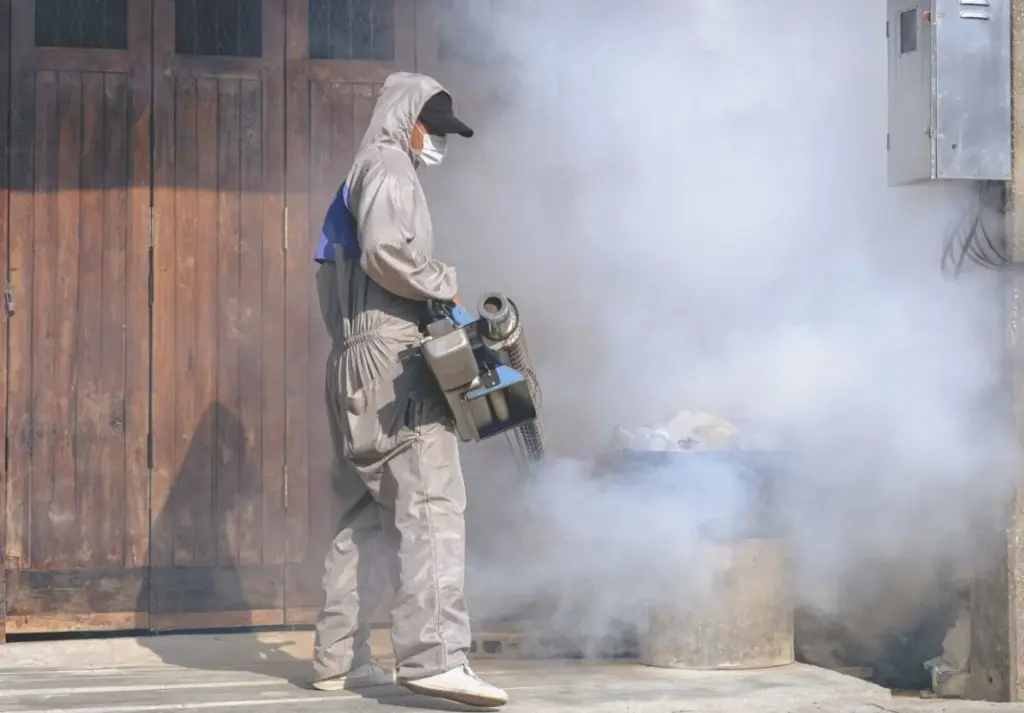
If you are currently vacationing in Los Cabos, or arriving in the next few weeks, do not be surprised if you see specialized trucks driving slowly through the streets late at night or early in the morning, spraying a thick, white mist.
This is not cause for alarm; it is the official government response.
The National Center for Preventive Programs and Disease Control (Cenaprece) has deployed specialized health brigades across the state. These teams are currently wrapping up massive, coordinated fumigation campaigns in Comondú and are officially scheduled to move their operations down into Cabo San Lucas on October 14, 2026.

The fumigation trucks are blanketing local neighborhoods and public spaces with safe, specialized insecticides designed to kill adult mosquitoes. Alongside the chemical spraying, the municipal government has launched a massive “Clean Yard” strategy. They are actively coordinating with local communities to remove trash, old tires, and any abandoned containers that collect stagnant rainwater, effectively destroying the mosquitoes’ breeding grounds.
Why Resorts are Generally Safer
While the outbreak numbers might sound intimidating, the reality on the ground for international tourists staying in the primary hotel zones is vastly different from the local residential neighborhoods.
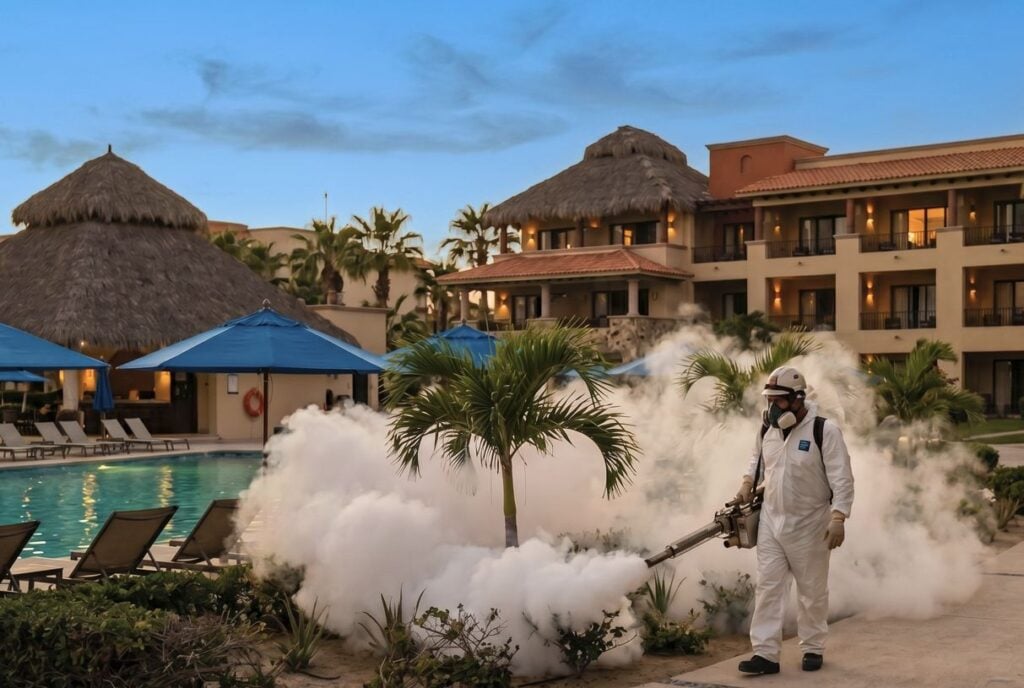
Luxury resorts along the Los Cabos Tourist Corridor are incredibly proactive when it comes to pest control. The major hotel brands understand that a mosquito problem can instantly ruin a five-star review, so they do not wait for the municipal fumigation trucks to arrive.

The vast majority of high-end resorts in Cabo run their own private, aggressive, and continuous fumigation schedules. Their landscaping teams are trained to constantly monitor the grounds and immediately eliminate any standing water near the pools, gardens, or outdoor dining areas. Because the resorts maintain such a strictly controlled environment, the risk of encountering swarms of mosquitoes while lounging by the infinity pool is remarkably low.

How to Protect Yourself
Even with the aggressive government and resort fumigation efforts, you cannot completely avoid mosquitoes if you plan to leave the hotel property to explore the local towns, dine at outdoor farm-to-table restaurants, or hike the surrounding desert trails.
The absolute best way to protect yourself is simple preparation:
- Pack the Right Repellent: Do not rely on natural or holistic sprays. Pack a highly rated insect repellent that contains DEET, Picaridin, or IR3535. Apply it generously if you are heading out for dinner at dusk, as this is when the Aedes mosquito is most active.
- Dress Appropriately: If you are taking a day trip to explore the historic art district in San José del Cabo or hiking near the waterfalls in Santiago, wear lightweight, long-sleeved shirts and long pants to minimize exposed skin.
- Know the Symptoms: If you experience a sudden onset of high fever, severe headaches, pain behind the eyes, or intense joint and muscle pain during or immediately following your trip, do not self-medicate. Visit a local clinic or contact your primary care physician and explicitly mention your travel history.
Active Cases
Heavy tropical rains have caused a surge in the mosquito population, leading to confirmed dengue cases in Cabo San Lucas and surrounding areas.
Street Fumigation
Do not be alarmed by nighttime fumigation trucks. The government is actively spraying safe insecticides and clearing stagnant water from neighborhoods.
Resort Safety
Luxury resorts along the Tourist Corridor run aggressive private fumigation schedules to keep their pools and dining areas strictly mosquito free.
Pack Repellent
Skip the natural sprays. Bring highly rated bug spray and apply it generously when heading out for dinner at dusk when mosquitoes are most active.
Dress Smart
Wear lightweight long sleeves when exploring San Jose del Cabo and seek local medical help if you experience a sudden high fever or severe joint pain.
By simply packing a reliable bug spray and staying aware of your surroundings, you can easily navigate the post-rain mosquito season and enjoy everything the Baja peninsula has to offer safely.
Join Our Cabo Sun Community of 20,000+ Members
Get real-time answers to your travel questions from our team of local experts and thousands of fellow travelers directly inside our interactive group.
Find Your Perfect Los Cabos Resort In Seconds
This simple, powerful tool was built by our on-the-ground experts to match you with the ideal resort for your specific budget and travel style.
The Ultimate Cabo Trip Planner
When’s the best time to go? Our powerful month-by-month guide breaks down the weather, crowds, hotel rates, and whale watching seasons for your perfect trip.
Enter your email address to subscribe to The Cabo Sun’s latest breaking news affecting travelers, straight to your inbox.