
You know those scenes in nature documentaries where the ocean seems to boil with life, and thousands of creatures move in perfect unison? Usually, that stuff happens in remote corners of the Galapagos or South Africa.
But here in Baja, we have our own version, and it happens just down the road.
It’s called the Mobula Ray Migration, and if you are looking for the single most impressive thing you can see underwater in 2026, this is it.
I’m talking about schools of rays so thick they block out the sun. I’m talking about animals leaping six feet into the air like acrobats. And the best part? You don’t need a scuba tank to see it.

What Is It? (The “Fever”)
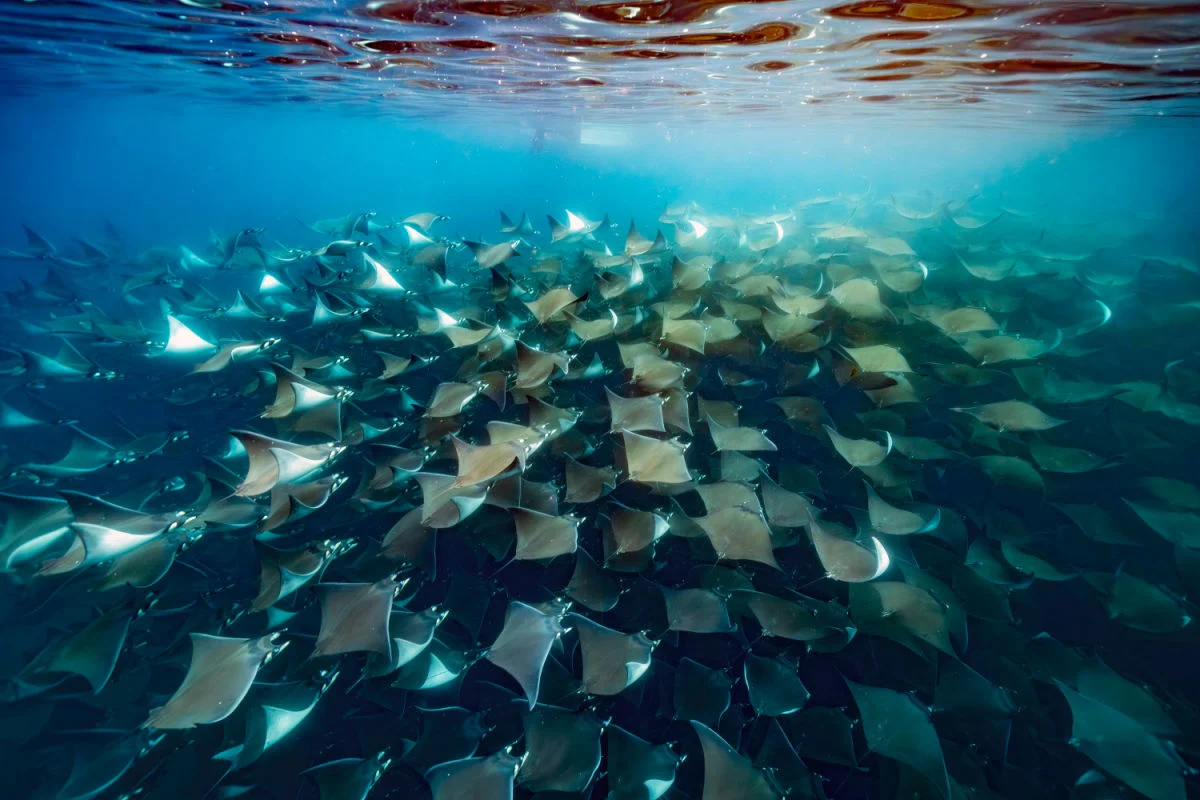
Mobula rays are basically the smaller, more athletic cousins of the Manta Ray. They don’t have stingers, and they travel in massive groups called “fevers.”
Twice a year, thousands of them congregate in the Sea of Cortez to breed and feed. When I say thousands, I’m not exaggerating. You can look down from the boat and see layers of them stacked on top of each other, gliding through the turquoise water like a moving carpet.
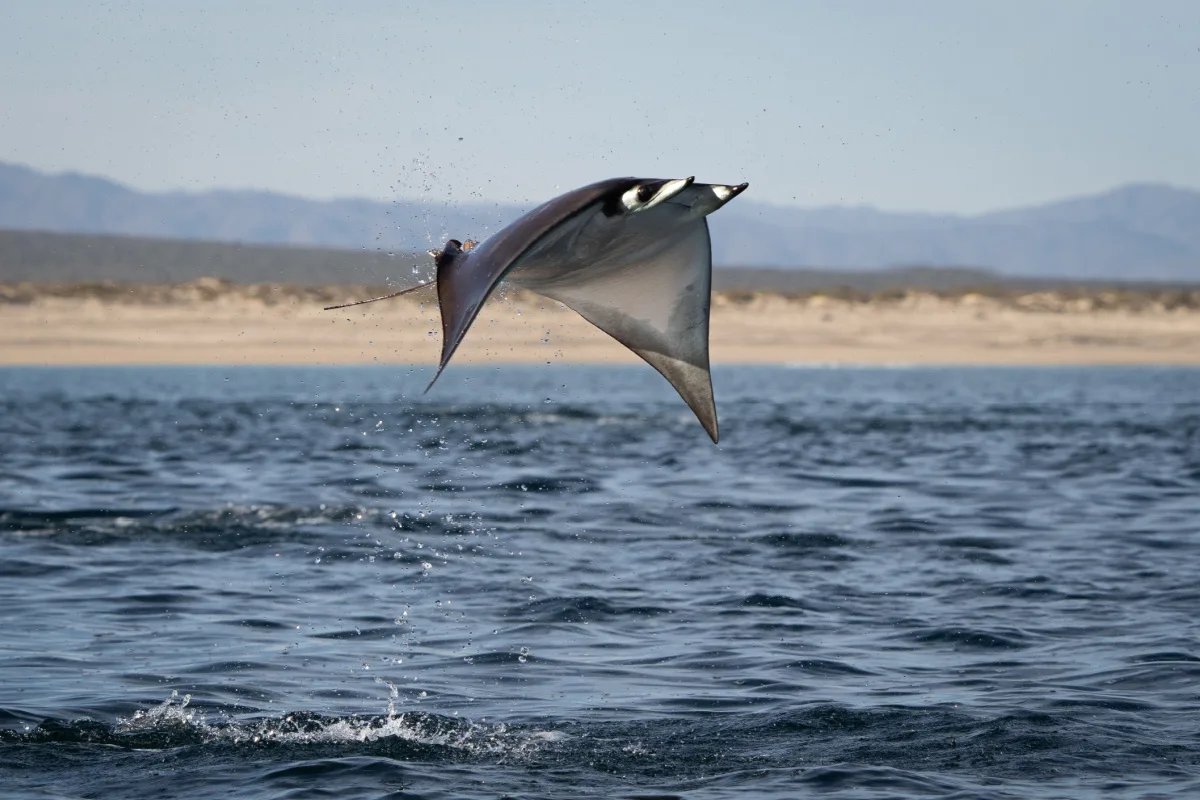
But the real show happens above the surface. For reasons scientists still argue about (mating? communicating? just for fun?), these rays launch themselves out of the water, flapping their wings and belly-flopping back down with a loud smack. It is chaos in the best possible way.


The “Arch” Myth
Can you see them in Cabo?
Tap for Truth ↻No. You must drive.
Distance: 2.5 Hours (One Way).
Location: La Ventana (Sea of Cortez side).
It is a full day trip. Do not expect to see this near the marina.
The “Not in Cabo” Truth
Here is the insider detail most brochures gloss over: This doesn’t happen in front of the Arch.
To see the mega-schools, you have to leave the main tourist zone. The migration centers around the Cerralvo Channel and La Ventana, about a 2 to 2.5-hour drive north of Cabo San Lucas.
This is a day trip. You leave your resort early, drive through the desert, and launch from a panga on the East Cape or La Paz side. Is it a long day? Yes. Is it worth it? Absolutely.

The Timing: Why You Need to Book Now
Here is the tricky part. While you might see a stray ray jumping in January, the massive “National Geographic” style schools have a very specific window.
- Primary Season: May through July. (This is the big show).
Here is the problem: The window is short, and the number of permitted boats is limited, just like swimming with whale sharks. Because this takes place in protected waters, operators can’t just flood the zone with tourists.
If you are planning a trip for May or June 2026, you need to be looking into booking your boat now. I have seen people wait until April to book, only to find out every reputable operator is sold out during the dates of their trip.
The “Fever” Guide
Thousands of jumping rays. It’s the #1 underwater event of 2026. Tap a card to plan your encounter.
What Is It?
Flying Rays
Tap for Info ↻A “Fever”
The Scale: Thousands of rays stacked like a moving carpet.
The Action: They launch 6ft into the air and belly-flop with a loud smack. It is chaotic and beautiful.
Not in Cabo
Where to go
Tap for Map ↻La Ventana
The Drive: It’s a 2.5-hour drive north to the Cerralvo Channel.
The Reality: This is a full day trip, launching from a rustic panga, not a polished marina.
The Window
When to Book
Tap for Dates ↻May – July
The Rush: Protected waters mean limited boat permits.
Advice: Book NOW. Reputable operators sell out by April.
Snorkel Only
Scuba is Out
Tap for Why ↻Bubbles Scare Them
The Method: Slide quietly off the panga and float.
Skill Level: You must be comfortable swimming in deep, open ocean water.
The Experience: No Tank Required
One of the coolest things about the Mobula migration is that scuba bubbles actually scare them.
That means the best way to see them is with a snorkel. You slide quietly off the side of the panga, float on the surface, and watch the parade pass beneath you.
Because they stay shallow, the light is incredible for photography. If you have a GoPro, bring it. You don’t need to be an expert swimmer, but you do need to be comfortable in open water.
Is This Trip For You?
The Bottom Line
There are plenty of “tourist” activities in Cabo. You can ride a banana boat or pet a camel anywhere.
But swimming inside a vortex of thousands of rays is a core memory. It is wild, unscripted, and completely safe. Just make sure you lock in your dates before the rest of the internet catches on.
The Ultimate Cabo Trip Planner
When’s the best time to go? Our powerful month-by-month guide breaks down the weather, crowds, hotel rates, and whale watching seasons for your perfect trip.
Find Your Perfect Los Cabos Resort In Seconds
This simple, powerful tool was built by our on-the-ground experts to match you with the ideal resort for your specific budget and travel style.
Subscribe to our Latest Posts
Enter your email address to subscribe to The Cabo Sun’s latest breaking news affecting travelers, straight to your inbox.