
If you have done your research, you know the “Cabo Paradox”: We have incredible ocean views, but very few beaches where you can actually swim without risking your life in a rip current.
The Tourist Corridor offers two major exceptions: Santa Maria Bay and Chileno Bay.
Both are Blue Flag certified. Both are federally protected marine sanctuaries. Both are safe for swimming. And because they are only two miles apart, travelers often assume they are interchangeable.
They aren’t.
Depending on whether you are traveling with toddlers, looking for serious snorkeling, or have mobility issues, one is significantly better than the other. Here is the deep-dive comparison to help you choose.
1. The Sand and The “Entry”
The geological difference here dictates the entire physical experience.
Santa Maria Bay: The “Rice Grain” Sand
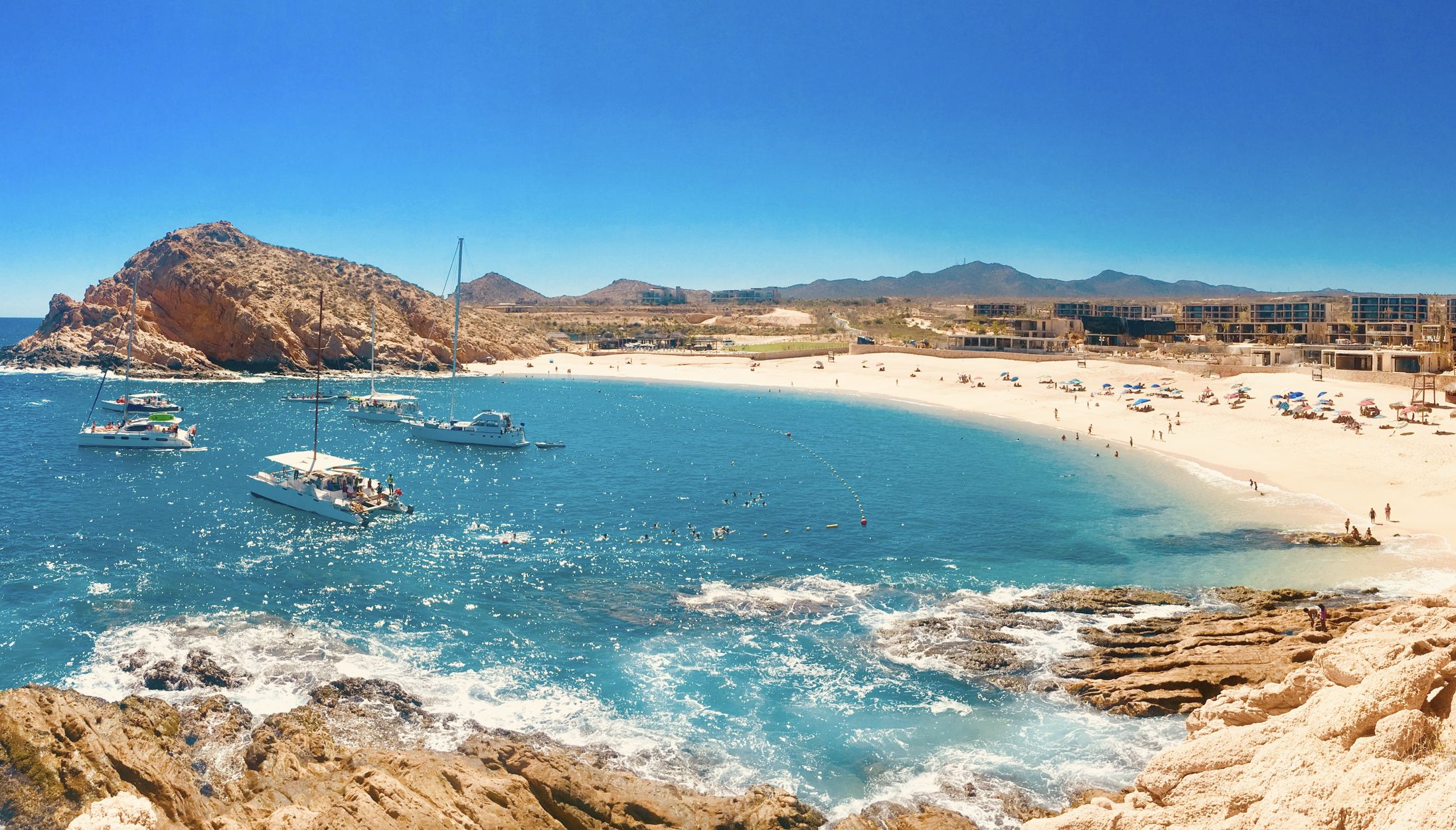
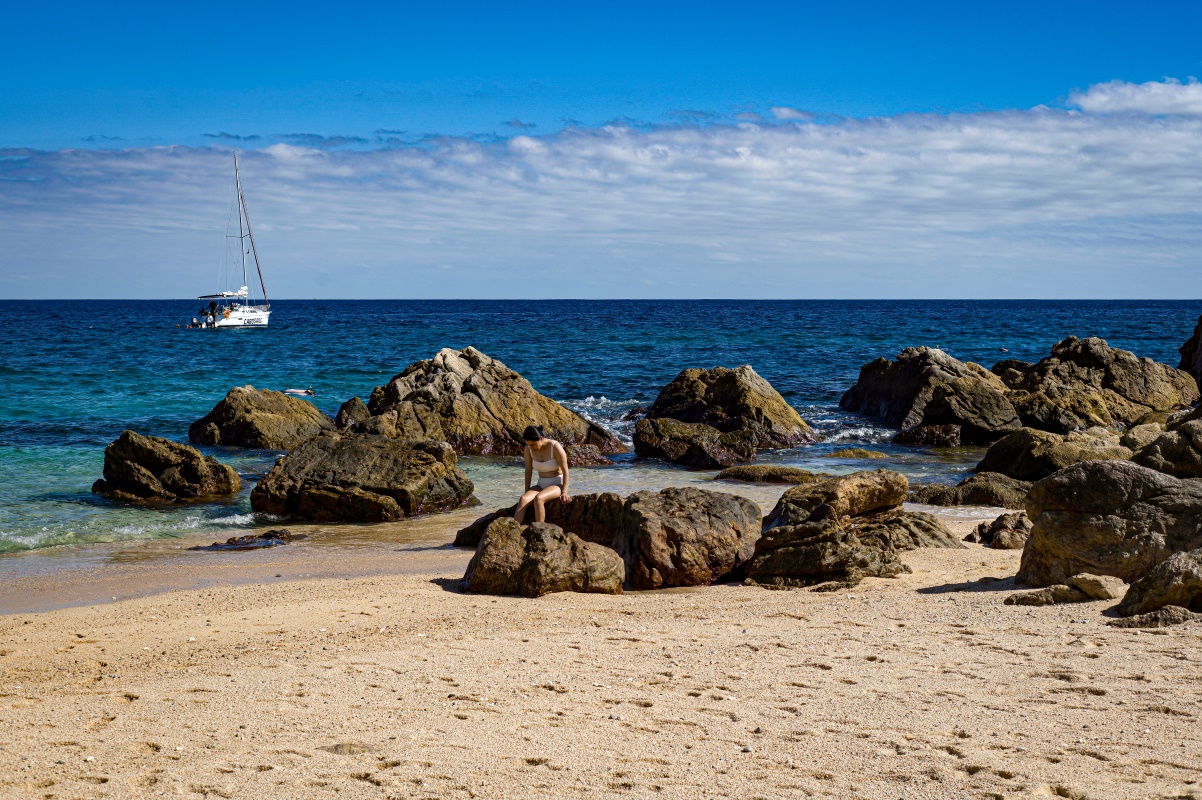
Santa Maria is a “horseshoe cove” protected by two massive cliffs.
- The Sand: It is coarse, pinkish, and feels like small grains of rice.
- The Pro: Because the sand is heavy, it doesn’t cloud the water when waves hit it. The underwater visibility is incredible right at the shoreline.
- The Con: It can be tough on sensitive feet (bring water shoes), and the entry into the water is steep. You take three steps and you are chest-deep.

Chileno Bay: The Gentle Slope
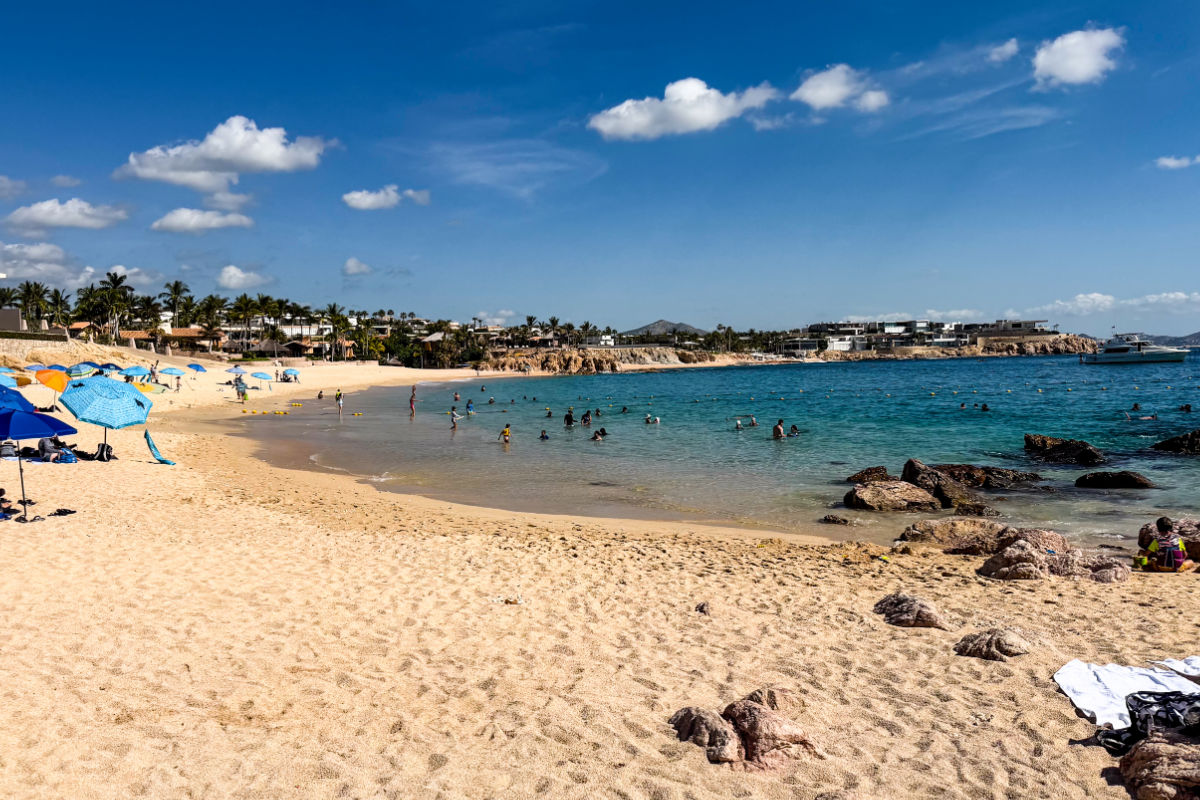
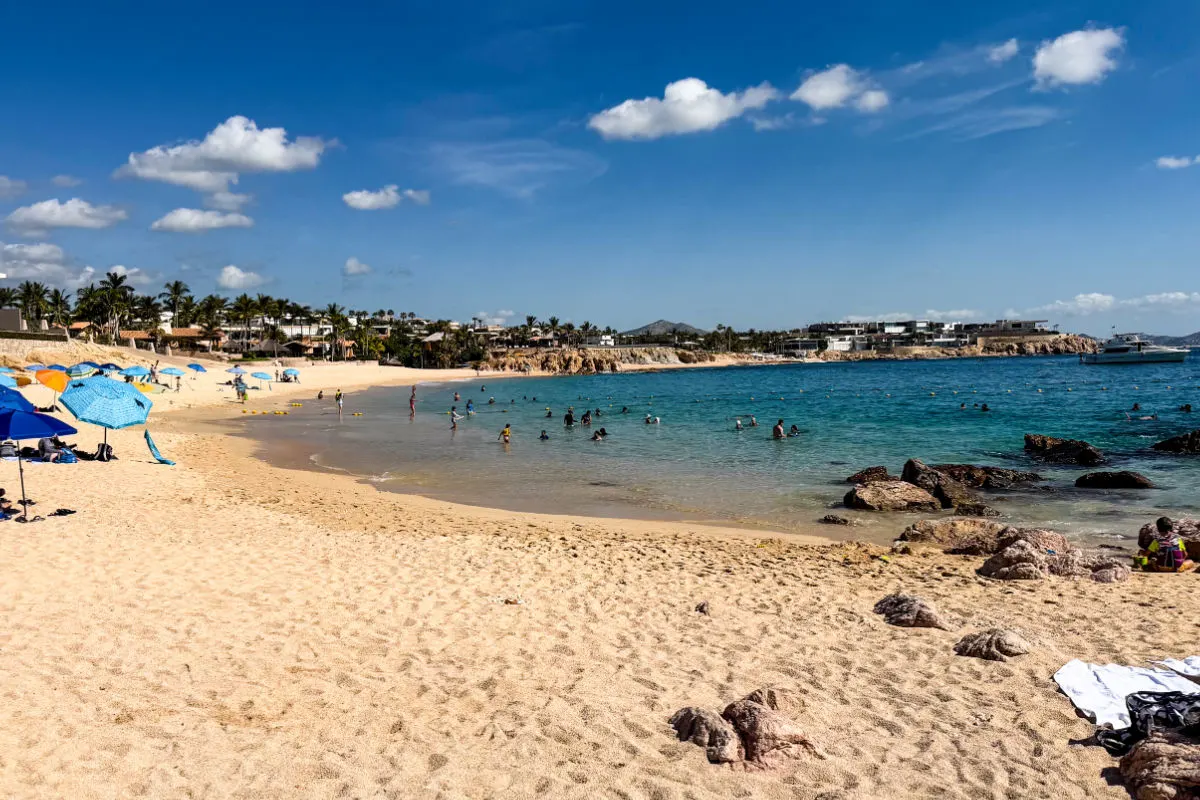
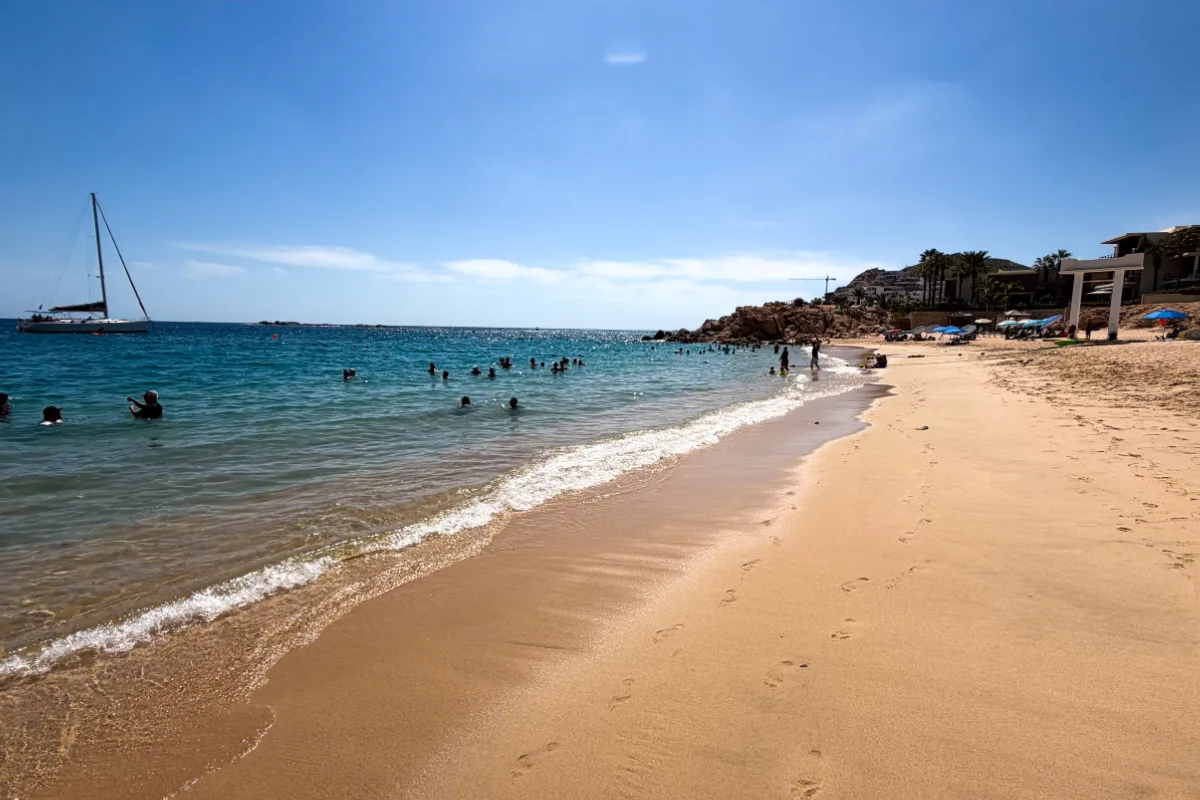
Chileno is a long, flat stretch of coast.
- The Sand: A mix of soft sand and crushed shells.
- The Entry: It is extremely gradual. You can walk out for 20 yards and still be waist-deep.
- The Verdict: If you are with elderly relatives or toddlers who need a “zero-entry” pool experience, Chileno is the winner.

2. The Snorkeling Experience
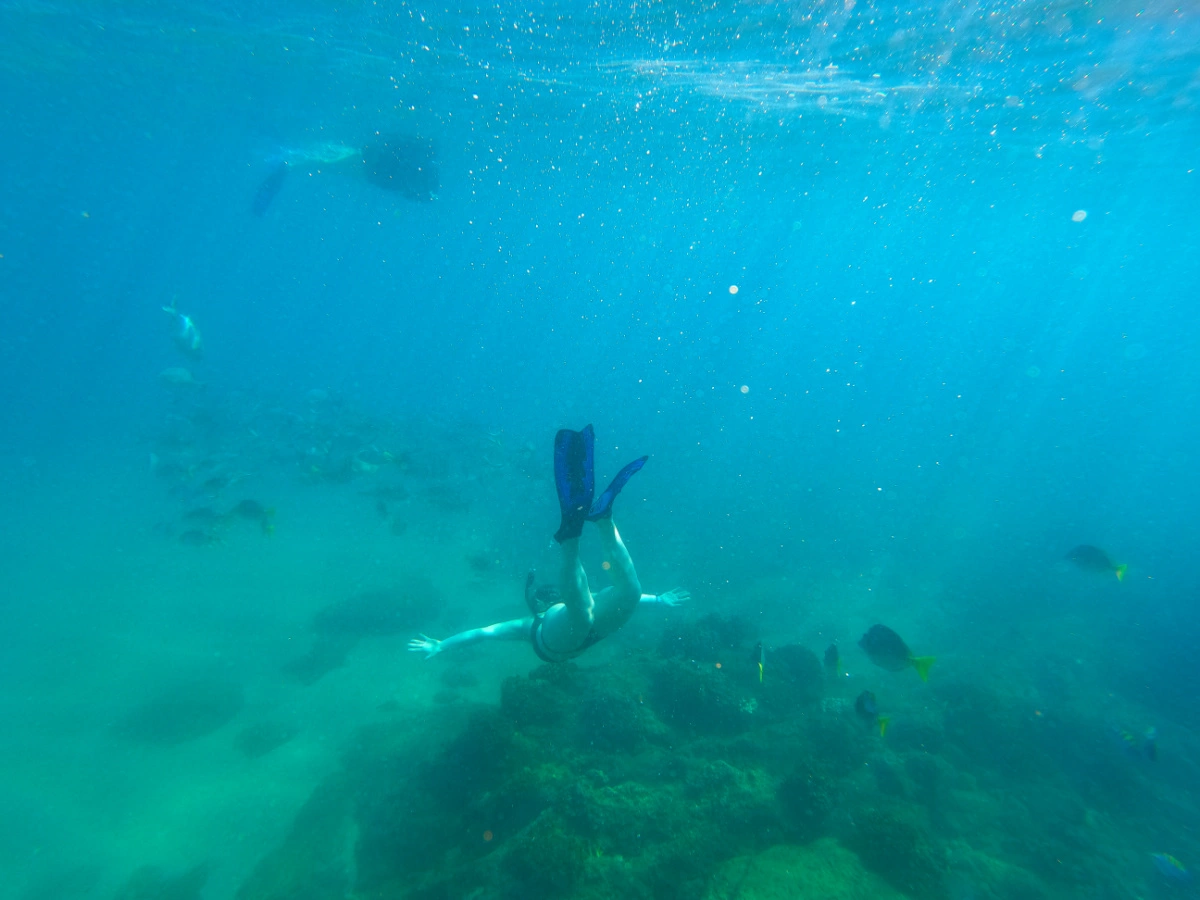
Both spots are teeming with life, but the type of snorkeling is different.
Santa Maria: The Vertical Wall
Because it is a cove, the best snorkeling is along the rock walls on the sides.
- What you see: Dense schools of King Angelfish and Sergeant Majors huddled against the rocks. It feels like swimming in a fish tank.
Chileno Bay: The Horizontal Reef
This bay features long, flat “finger reefs” separated by sandy channels.
- What you see: This is “Big Game” territory. The sandy bottom attracts Diamond Stingrays and Sea Turtles (Green and Hawksbill) that feed on the sea grass.
- Bonus: Chileno has extensive tide pools on the eastern end, allowing non-swimmers to see starfish and crabs without getting wet.

3. Accessibility & Amenities
This is usually the deciding factor for families.
Chileno Bay: The Infrastructure King
- Parking: A massive, paved lot (free) that leads to a fully paved, ADA-compliant boardwalk. It is the most wheelchair and stroller-friendly beach in Baja.
- Shade: There are several large public palapas (wooden umbrellas). They are free, but you need to arrive by 8:30 AM to snag one.
- Facilities: Excellent showers and restrooms located right at the boardwalk entrance.
Santa Maria Bay: The “Hike”
- Parking: A paved lot is available, but the walk to the water is longer and more circuitous than Chileno.
- Shade: Virtually non-existent. There are no public palapas. You are fully exposed to the sun unless you bring your own umbrella or rent one from a vendor ($13 USD).
Crucial Note for Both: Neither beach has food vendors or taco stands. This is a “Pack-In, Pack-Out” situation. Bring your own cooler with water and snacks, or you will be hungry.

4. The “Golden Window” Strategy
Regardless of which beach you choose, the rules of engagement are the same.
The Wind Factor
The wind in Cabo typically picks up around 1:00 PM.
- Morning (7:00 AM – 11:00 AM): Glassy water, great visibility.
- Afternoon (1:00 PM onwards): Choppy water, reduced visibility, sand blowing in your face.
The Tour Boat Factor
Around 10:30 AM, the massive “Booze Cruise” catamarans arrive from the marina.
- Santa Maria: Because the bay is small, two big boats can make it feel crowded instantly.
- Chileno: Because the bay is massive, the tour boats anchor far offshore, leaving plenty of space for locals.
Santa Maria vs. Chileno Bay
Both are Blue Flag certified, but they are very different. Here is how to choose.
Rice vs. Soft
Entry Difficulty
Tap to Compare ↻Winner: Chileno
Santa Maria: Coarse “rice grain” sand. Steep entry (tough for sensitive feet).
Chileno: Soft sand and a gentle, flat entry. Perfect for toddlers and elderly relatives.
The Snorkel
Fish vs. Turtles
Tap for Views ↻Different Vibes
Santa Maria: Like a fish tank. Dense schools of King Angelfish along the rock walls.
Chileno: “Big Game” territory. Look for Diamond Stingrays and Green Sea Turtles in the grass.
Comfort
Shade & Access
Tap for Info ↻Winner: Chileno
Chileno: ADA boardwalk, showers, restrooms, and free shade palapas (arrive by 8:30 AM!).
Santa Maria: No shade structures. Bring your own umbrella or rent one ($13).
Golden Window
Beat the Wind
Tap for Strategy ↻Go Early
The Wind: Picks up at 1:00 PM at both.
The Move: Snorkel Santa Maria at 8:00 AM (best visibility), then move to Chileno at 10:00 AM to relax on soft sand.
The Bottom Line
- Choose Chileno Bay IF: You have small kids, need wheelchair access, want to see sea turtles, or want a “resort-style” beach day with easy parking.
- Choose Santa Maria Bay IF: You are a confident swimmer, you want the best visibility for fish photography, or you prefer a dramatic, enclosed landscape over a wide-open beach.
The Insider Move:
Since they are only a 5-minute drive apart, do the “Dual-Bay Morning.” Start at Santa Maria at 8:00 AM for the dramatic snorkeling, then drive to Chileno at 10:00 AM to rinse off in the showers and relax on the soft sand before the wind hits.
The Ultimate Cabo Trip Planner
When’s the best time to go? Our powerful month-by-month guide breaks down the weather, crowds, hotel rates, and whale watching seasons for your perfect trip.
Find Your Perfect Los Cabos Resort In Seconds
This simple, powerful tool was built by our on-the-ground experts to match you with the ideal resort for your specific budget and travel style.
Subscribe to our Latest Posts
Enter your email address to subscribe to The Cabo Sun’s latest breaking news affecting travelers, straight to your inbox.