
Los Cabos is home to some of the most dramatic and beautiful coastlines in the world. The sight of the deep blue Pacific crashing against the rugged desert landscape is a core part of the magic. But that incredible power comes with a hard truth that all travelers must understand: most beaches in Los Cabos are not safe for swimming.
Following a recent, tragic incident where a man fishing from the shore was lost to the sea, authorities are re-issuing urgent safety warnings for all visitors. This is not a cause for panic, but it is a critical reminder that the ocean in this part of the world operates by a different set of rules.

Here at The Cabo Sun, our top priority is your safety. This is your essential, on-the-ground guide to understanding the risks and knowing exactly how to enjoy the water safely.
1. The Danger Isn’t Just “In” The Water—It’s On The Shore
This is the most critical and least-known danger in Cabo. On the Pacific-facing beaches (like Divorce Beach, Solmar Beach, and the areas by Pedregal), the danger isn’t just about rip currents; it’s about the shore break and “rogue waves.”


The sand on these beaches drops off steeply, allowing massive waves to build and crash directly onto the shore with immense force. Even on a seemingly calm day, a “sneaker wave” can rush up the sand much farther than you’d expect, knocking an adult off their feet and pulling them back into the ocean with a powerful outgoing current.
The Pro-Tip: Never turn your back on the ocean, especially on the Pacific side. Keep a safe distance from the water’s edge, even when just walking or taking photos.


2. You MUST Understand the Beach Flag System
The colored flags on the beach are not “suggestions”; they are a non-negotiable safety system. Trusting the flags over your own judgment is the single most important rule of your vacation.
- GREEN FLAG: Calm conditions. Swimming is considered safe.
- YELLOW FLAG: Use caution. Conditions are changeable.
- RED FLAG: High surf and/or dangerous currents. This is not a “swim at your own risk” invitation. It means even the strongest swimmers will struggle. You should not enter the water.
- BLACK FLAG: This is the most serious. A black flag means the beach is CLOSED to all swimming. This is a hard stop. Entering the water is risking your life, and authorities have issued warnings that you must not, under any circumstances, enter the sea in a black flag area.


3. Swim Only Where Lifeguards Are Present
Unlike many beach destinations, most of Cabo’s long, beautiful beaches do not have lifeguards. The vast majority of the coastline, including the entire stretch on the Pacific side and most of the Tourist Corridor, is designated as “unswimmable.”
A lifeguard’s presence is your clearest signal that you are in an area designated for swimming. If you do not see a lifeguard tower and a clear, roped-off swimming area, you should assume it is not safe to swim.


4. The Solution: Know Where to Swim Safely
So, where can you actually go for a safe, relaxing day in the water? You must go to the beaches that are protected from the powerful Pacific swells.
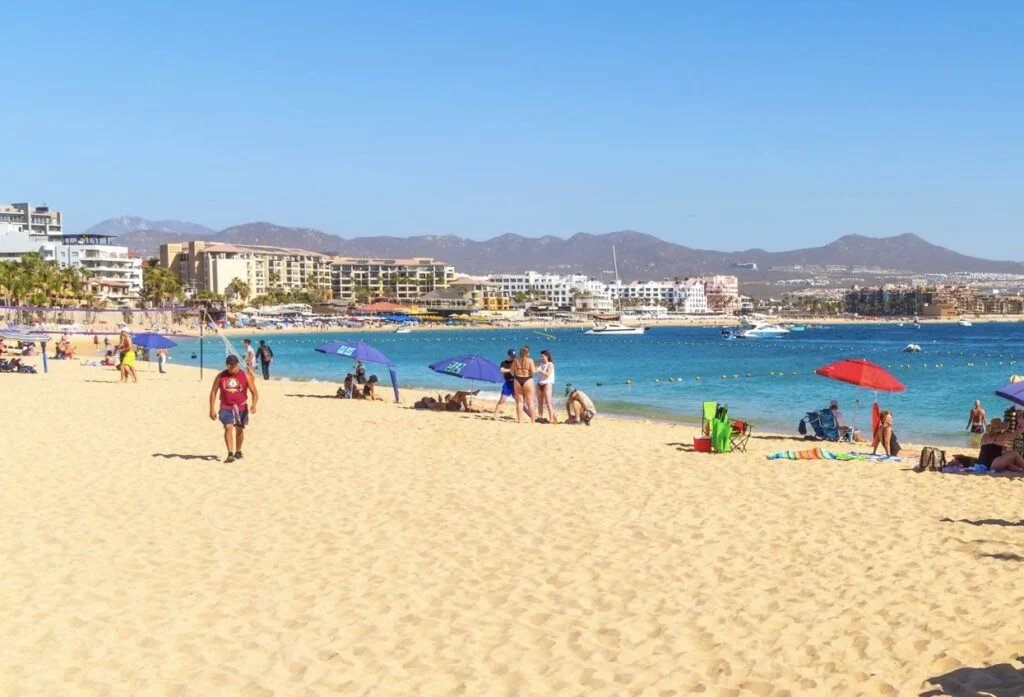
The absolute best and most popular “safe” beach is Medano Beach (Playa El Médano). It’s located right in the protected Cabo San Lucas bay, and its waters are typically calm, clear, and perfect for swimming, paddleboarding, and floating.


If you’re in the Tourist Corridor, the other two designated “Blue Flag” beaches for swimming are Chileno Bay and Santa Maria Bay. These are protected coves with gentle water, perfect for families and snorkeling.
The Bottom Line: Los Cabos is an incredibly safe and wonderful destination, but it demands respect for the power of the ocean. By following the flags, staying off the dangerous shorelines, and choosing your swimming spots wisely, you can guarantee a perfect and safe vacation.
Safe travels!
The Ultimate Cabo Trip Planner
When’s the best time to go? Our powerful month-by-month guide breaks down the weather, crowds, hotel rates, and whale watching seasons for your perfect trip.
Find Your Perfect Los Cabos Resort In Seconds
This simple, powerful tool was built by our on-the-ground experts to match you with the ideal resort for your specific budget and travel style.
Subscribe to our Latest Posts
Enter your email address to subscribe to The Cabo Sun’s latest breaking news affecting travelers, straight to your inbox.