
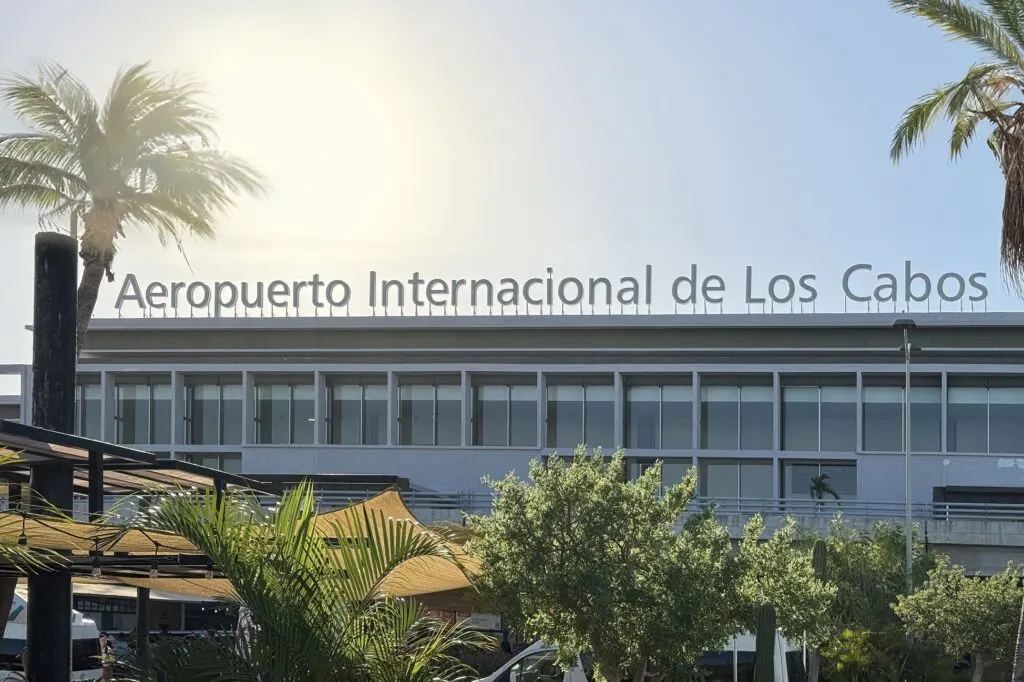
Los Cabos International Airport (SJD) manages hundreds of flights a day with incredible efficiency. However, that steady flow of arrivals and departures came to a sudden halt on Sunday afternoon. An unexpected emergency forced a complete shutdown of the primary runway, temporarily halting all air traffic in and out of the Baja Peninsula.
Fortunately for travelers arriving and departing the Baja Peninsula this week, the emergency closure was brief. The airport has officially returned to normal operations. If you are flying out of Los Cabos today, your travel plans remain secure, and you do not need to alter your scheduled airport transfer.
Here is exactly what caused the sudden ground stop, how it impacted incoming commercial flights, and what travelers need to know before heading to the airport today.
The Private Jet Incident
The closure was not caused by a commercial airliner or an issue with the airport infrastructure itself. The ground stop was triggered by a severe mechanical failure on an incoming private executive jet.
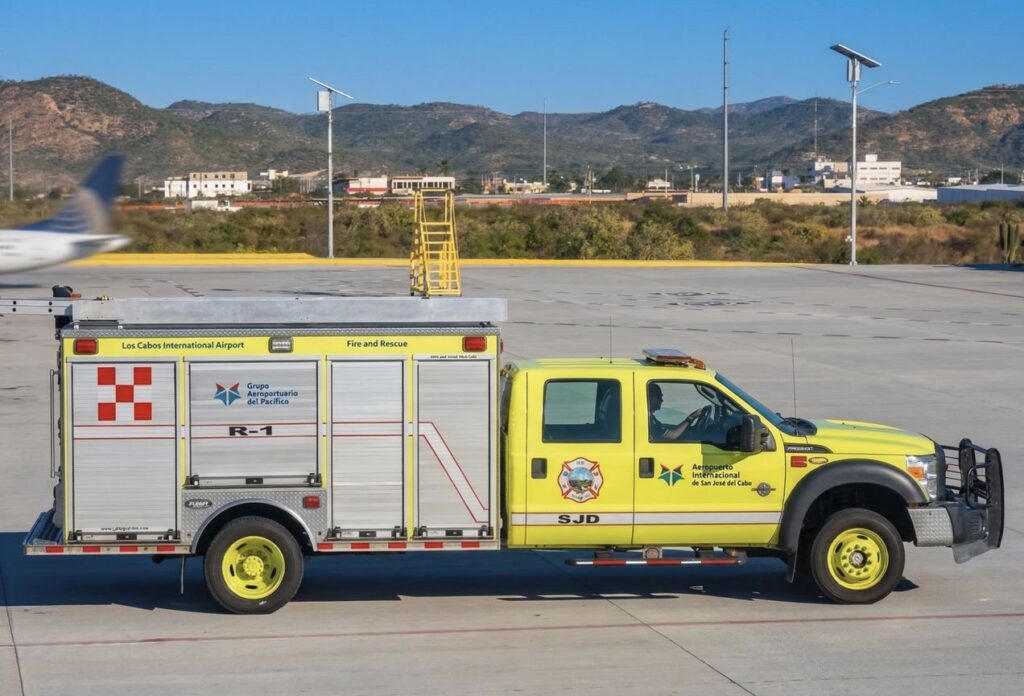
Upon landing at SJD, the aircraft’s landing gear overheated to a dangerous level. In the aviation industry, overheated landing gear is a critical threat that can easily lead to a tire blowout, localized fire, or loss of directional control on the tarmac. This immediately activated the airport’s internal security and emergency protocols.
The dedicated airport firefighting team deployed to the disabled jet instantly. They rapidly secured the aircraft, mitigated the heat threat, and evacuated the plane. Local authorities, including the Civil Protection and Risk Management Directorate, confirmed that the emergency response was flawless and there were zero injuries to the passengers or crew onboard.
The Strict Safety Inspection Protocol
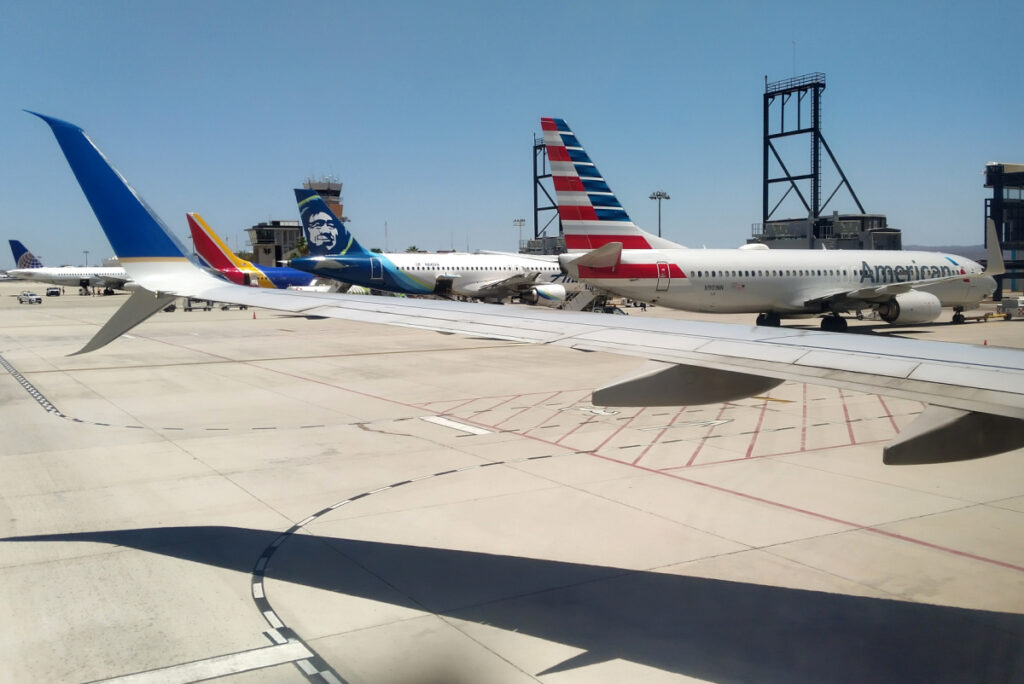
When an aircraft becomes disabled on the primary runway, the entire airport grid locks down. You cannot have commercial Boeing 737s or Airbus A320s attempting to land while heavy emergency vehicles and ground crews are actively working on the active tarmac.
The total runway closure lasted for approximately thirty minutes. During this crucial window, specialized heavy-tow crews rapidly moved the disabled executive jet off the active runway. However, simply moving the plane is not enough to resume commercial flights.


Ground crews had to conduct a rigorous, inch-by-inch safety sweep of the concrete. They had to absolutely guarantee that the overheated landing gear did not damage the runway surface or leave behind hazardous metal debris that could shred the tires of the next arriving passenger jet. Once the runway passed this strict international safety inspection, the air traffic control tower immediately reopened the airspace.
Temporary Flight Diversions To Mazatlán
While thirty minutes sounds incredibly fast for an emergency cleanup, half an hour of closed airspace at one of Mexico’s busiest airports creates a massive logistical bottleneck in the sky.
Incoming commercial flights that were already on final approach or circling the Baja peninsula had to make immediate, fuel-based decisions. Several flights were placed into extended holding patterns out over the Sea of Cortez, burning reserve fuel while waiting for the runway to clear.

Other flights, lacking the fuel capacity to circle indefinitely, were officially diverted to alternate regional airports. Several commercial airliners were forced to cross the water and land at the Mazatlán International Airport in the neighboring state of Sinaloa. While highly frustrating for travelers eager to start their vacations, these diversions are standard aviation safety protocol. The diverted flights landed safely in Mazatlán, refueled on the tarmac, waited for the official all-clear signal from the SJD tower, and then completed the short jump back to Los Cabos later in the afternoon.
What Travelers Can Expect Today
If you are reading this from your resort balcony and have a flight scheduled for today, you can breathe easy. The airport is fully operational. Commercial flights are arriving and departing on schedule.
The brief Sunday interruption did cause a minor ripple effect of downstream delays late into the evening. Airlines had to scramble to reposition their aircraft and manage flight crews who were approaching their maximum legal working hours due to the diversions. However, that backlog was aggressively managed overnight and has been officially cleared from the system.
SJD Incident Report
Pre-Flight Advice For Departing Guests
As always, standard international travel rules apply. Even with the runway fully operational and the backlog cleared, SJD remains a massive, high-traffic transit hub.
Travelers should still plan to arrive at Terminal 2 at least three hours prior to their international departure times. Do not rely on third-party flight tracking websites today; keep a close eye on your airline’s native mobile app for the most accurate, up-to-the-minute boarding times directly from the tower. The rapid, highly professional response by the Los Cabos emergency teams prevented a major travel meltdown, proving once again that the destination’s safety infrastructure is fully capable of protecting its millions of annual visitors.
The Ultimate Cabo Trip Planner
When’s the best time to go? Our powerful month-by-month guide breaks down the weather, crowds, hotel rates, and whale watching seasons for your perfect trip.
Find Your Perfect Los Cabos Resort In Seconds
This simple, powerful tool was built by our on-the-ground experts to match you with the ideal resort for your specific budget and travel style.
Subscribe to our Latest Posts
Enter your email address to subscribe to The Cabo Sun’s latest breaking news affecting travelers, straight to your inbox.