
The margaritas are cold, the sun is shining, and the desert temperatures are absolutely perfect.
But if you are planning to spend your Los Cabos vacation splashing in the ocean this week, you need to seriously pump the brakes.
The Undersecretariat of Civil Protection for Baja California Sur has issued an official warning for the municipality of Los Cabos regarding a significant mar de fondo (deep-water swell) currently battering the Pacific coast.

With the hazardous conditions expected to persist through mid-week, local authorities are urging all tourists and locals to exercise extreme caution and strictly obey the beach warning flags.
Before you pack your beach bag, here is a breakdown of what the current ocean warnings mean, the hidden dangers beneath the breaking waves, and how to safely enjoy your trip.
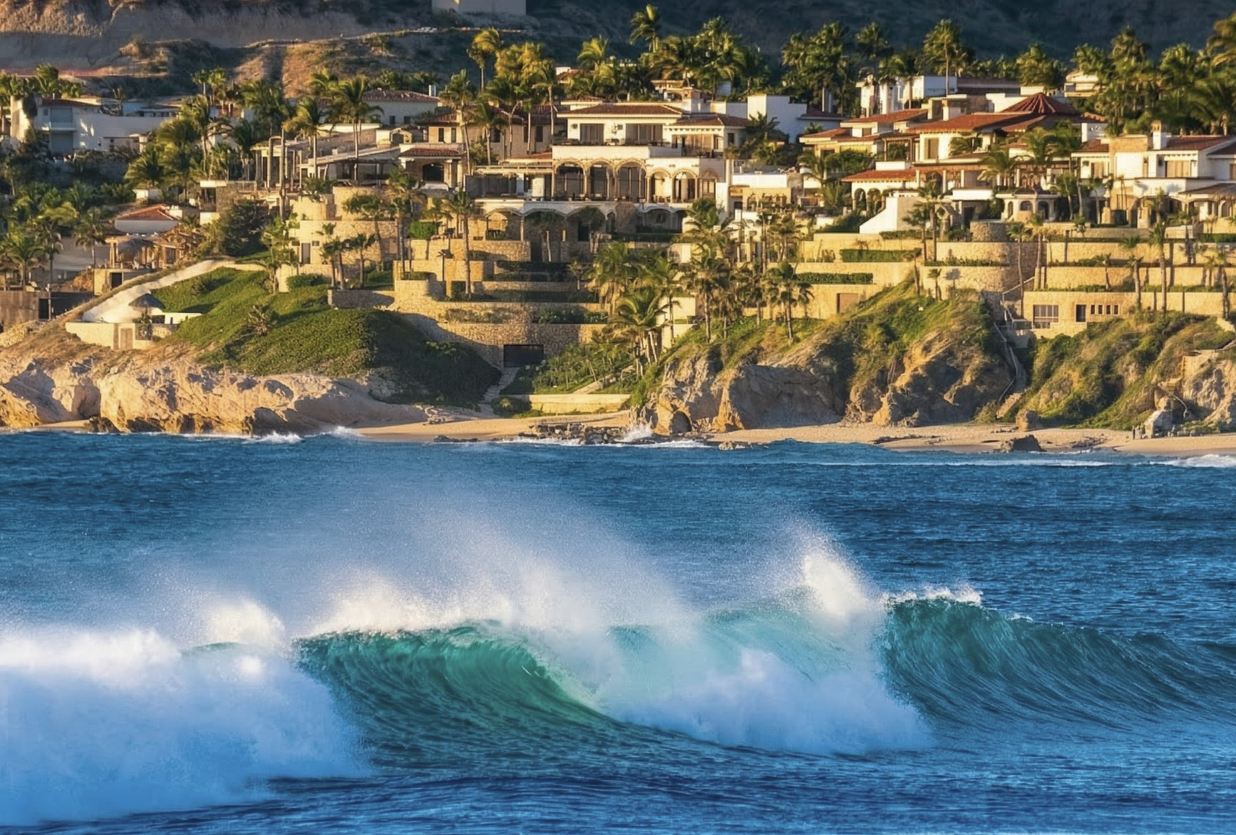
Understanding the Current Ocean Threat
If you stand on the sand and look out at the horizon, the water might look spectacular, but the physics happening beneath the surface are highly dangerous right now.
The current mar de fondo phenomenon is generating massive waves reaching 2 to 3 meters (up to 10 feet) above their normal height.
When these massive walls of water crash onto the steep Baja shoreline, they displace an incredible amount of water that has to quickly rush back out to sea.
This creates an intense, chaotic underwater environment.
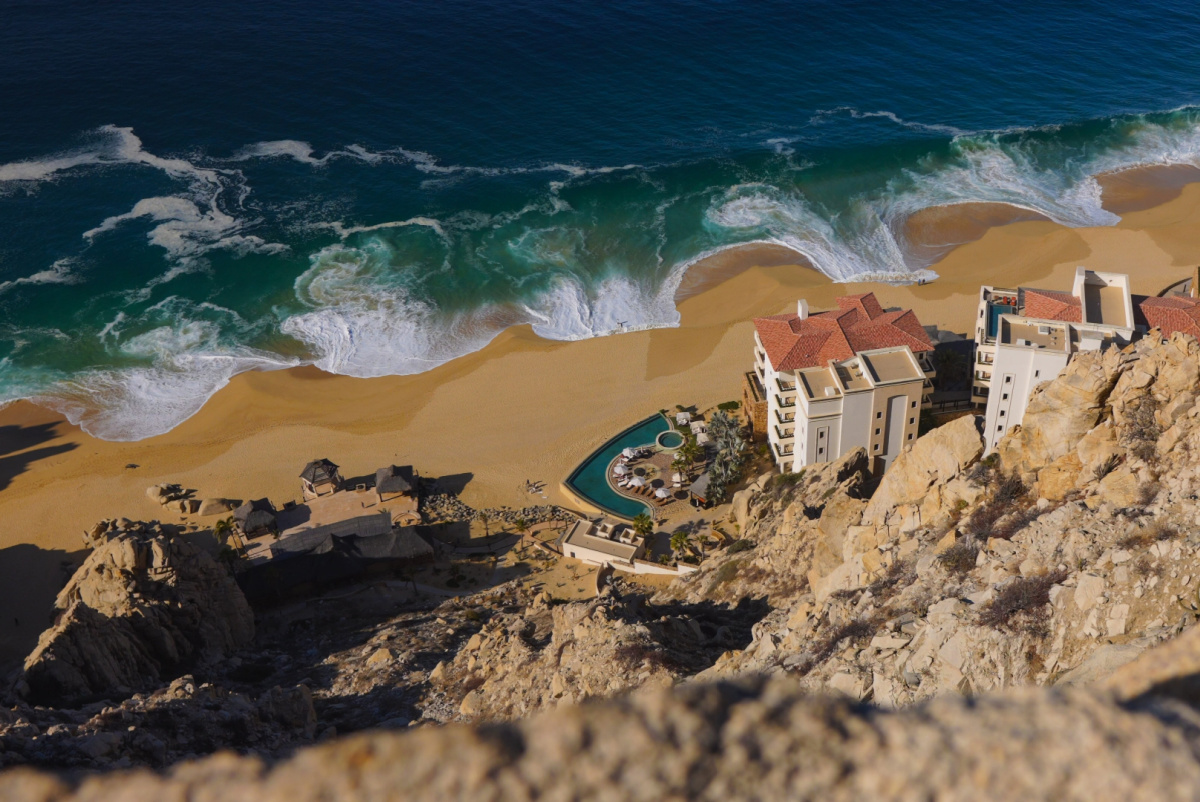

Francisco Cota Márquez, the municipal director of Civil Protection and Risk Management, explained that swimmers are currently facing a double threat:
- Rip Currents: These act like powerful underwater treadmills that instantly pull you away from the shoreline and deep out into the open sea.
- Trough Currents: Once you are pulled out past the break, you hit trough currents, which flow parallel to the shore and violently pull you in unpredictable directions.

Why Experienced Swimmers Are Also At Risk
A common misconception among tourists is that ocean warnings only apply to children or weak swimmers. In Los Cabos, this assumption is incredibly dangerous.
Márquez stressed that even the most skilled, physically fit swimmers can be rapidly overwhelmed by the current ocean conditions. When you have both a rip current and a trough current actively working against you, muscle fatigue sets in rapidly.
The force of the Pacific Ocean is simply not something you can out-swim, which is why authorities are asking everyone to stay out of the break zones until the swell fully subsides.
Decoding the Beach Safety Flags
Civil Protection is maintaining a heavy presence on the beaches this week, and the lifeguard towers are flying colored flags to communicate the real-time hazard level. If you are heading down to the sand, here is what you must respect:
- Red Flags: This signifies a high-hazard environment. Swimming is strictly prohibited. Do not attempt to wade into the water, even if it is just up to your knees.
- Black Flags: This is the highest warning level, indicating that the beach and water are completely closed to the public due to extreme danger.
- Other Colors (Yellow/Green): While these indicate a lower threat level where you have a margin of safety, authorities still urge extreme caution when entering the water during a known swell event.
Cabo Ocean Warning
How to Pivot Your Beach Day
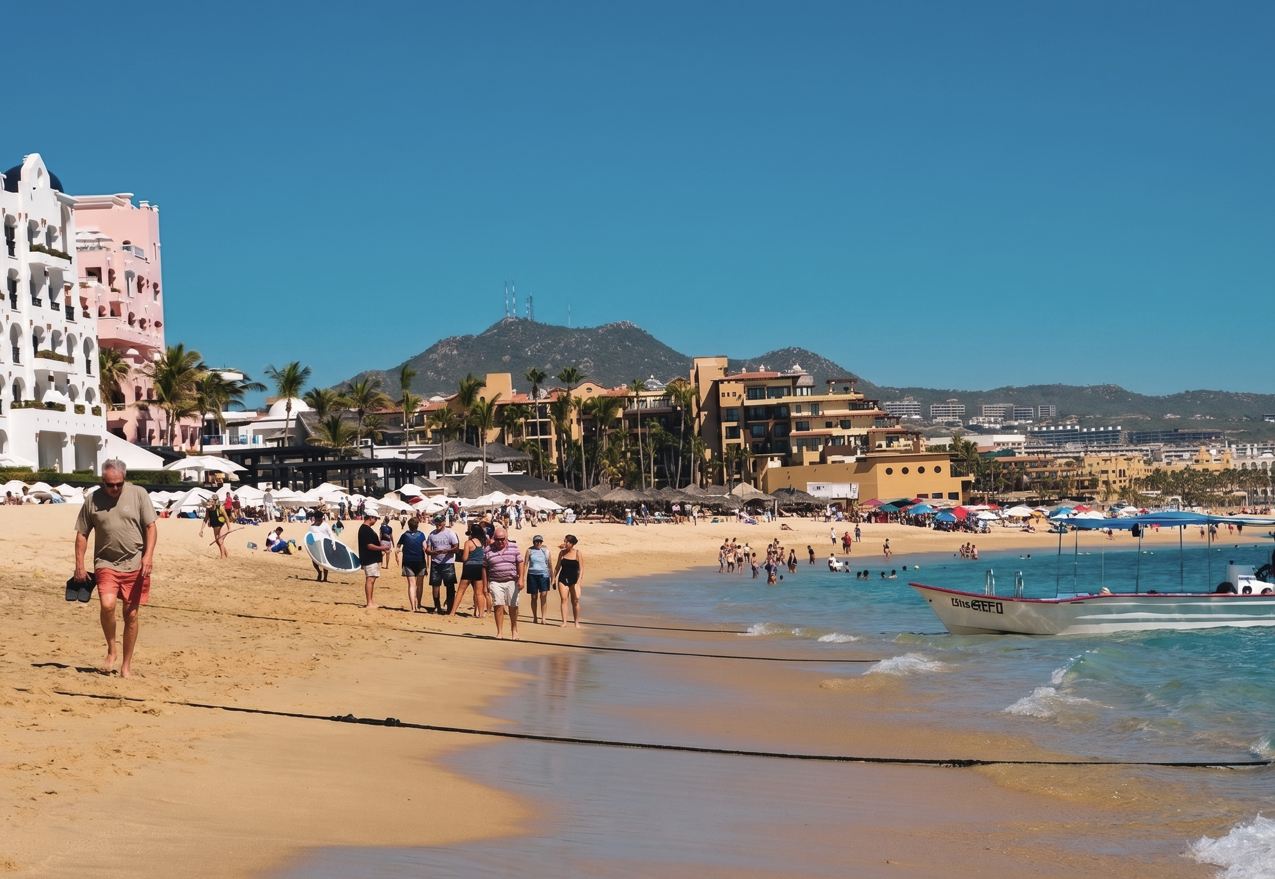
The beach is not entirely off-limits—you just need to stay on the dry sand. You can still enjoy the spectacular ocean views, read a book under a palapa, and order lunch right to your beach chair.
However, if you packed your favorite snorkeling gear—which is a serious commitment now that Southwest bags no longer fly free—you will have to keep those fins in your suitcase for a few more days.
Instead, use this time to take full advantage of your resort’s sprawling pool complex, book a spa day, or explore the historic art district in San José del Cabo until the ocean throws a green flag and it is officially safe to swim again.
The Ultimate Cabo Trip Planner
When’s the best time to go? Our powerful month-by-month guide breaks down the weather, crowds, hotel rates, and whale watching seasons for your perfect trip.
Find Your Perfect Los Cabos Resort In Seconds
This simple, powerful tool was built by our on-the-ground experts to match you with the ideal resort for your specific budget and travel style.
Subscribe to our Latest Posts
Enter your email address to subscribe to The Cabo Sun’s latest breaking news affecting travelers, straight to your inbox.