
When you touch down at the Los Cabos International Airport (SJD), it is incredibly tempting to just hop in a shuttle, drive 30 minutes down the Tourist Corridor, and check into a massive mega-resort. But if you are looking for an authentic, deeply relaxing Baja experience, your final destination shouldn’t be Cabo at all. It should be La Paz.
I just did this exact drive, and let me tell you—escaping the Cabo crowds for the calm, turquoise waters of the Sea of Cortez is a total game-changer. However, getting there requires a bit of a road trip. It is not a quick zip down the highway, and you need to know exactly what you are signing up for before you get in the car.
If you are planning to hire a private transport to take you north, here is my honest, on-the-ground report of what the drive is actually like, how to stay productive on the road, and why the final destination is worth every single mile.

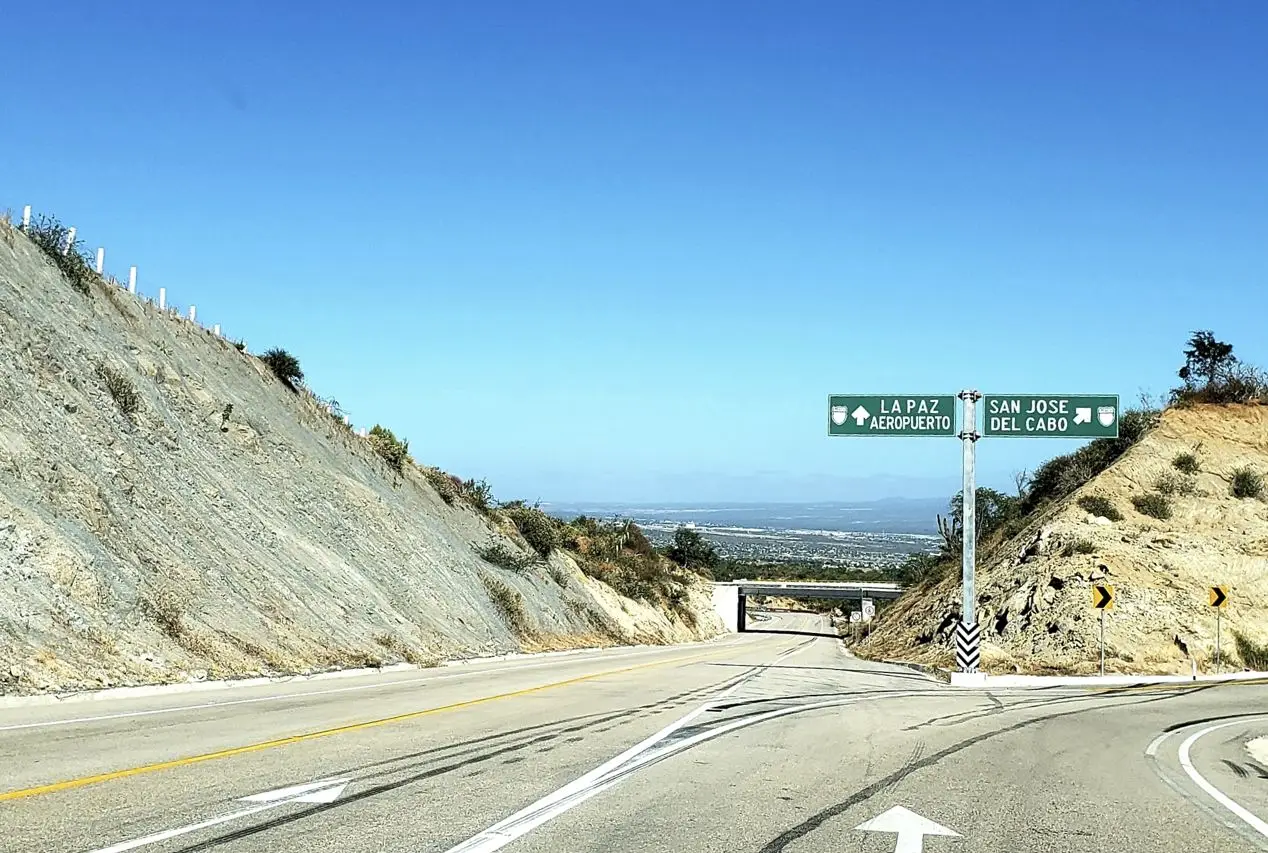
The Route: Expectation vs. Reality
If you punch “SJD to La Paz” into Google Maps, the algorithm will confidently tell you the drive takes about two hours and fifteen minutes.
Do not trust the algorithm.
The Time: In reality, the trip is typically a bit longer than Google Maps predicts. You should mentally prepare for closer to a two-and-a-half to three-hour journey depending on traffic, road conditions, and how heavily your driver’s foot rests on the gas pedal.
The Terrain: The drive is a fascinating mix of landscapes. You will hit sections of the highway (usually Highway 19 up through Todos Santos) that are beautiful, wide-open straight shots. But you will also encounter stretches that are incredibly winding as you navigate the desert and mountain passes. If you are prone to motion sickness, grabbing the front seat or taking a Dramamine before you leave the airport isn’t a bad idea.
The “Baja Speed Bumps”: This is the most critical hazard of the drive. The highway is not completely fenced off, meaning local livestock roam completely free. Your driver will be constantly on the lookout for loose cattle standing right in the middle of the road. This is precisely why you want a seasoned local driver at the wheel, and why it is highly recommended to only make this drive during daylight hours. Hitting a cow at 60 mph in the pitch black is a surefire way to ruin your vacation.


Surviving (And Working) In The Transport
If you are like me and want to use that transport window to knock out some emails or get a head start on a project before officially clocking out for vacation, you need a strategy.
- The Power Situation: Do not assume your luxury SUV will be fully equipped for a mobile office. Some transports have built-in USB or AC charging ports, but absolutely not all of them. Fully charge your laptop and phone at the airport before you get in the car, or bring a high-capacity power bank in your backpack.
- The Connectivity: I bring a personal Wi-Fi hotspot with me (my phone) so I can get work done on the ride. For the most part, the cellular connection is surprisingly strong along the main highway. However, you will lose service here and there when you dip into the valleys or pass through remote desert stretches. My best advice is to download any massive files or email attachments before you leave the airport terminal so you aren’t stuck buffering in a dead zone.
- The Halfway Halt: Because the drive stretches toward the three-hour mark, you are absolutely going to want to stretch your legs. Ask your driver right when you get in the car to plan a stop about halfway through the trip. There are several great roadside convenience stores and gas stations where you can safely use the restroom, grab a hot coffee, and stock up on some local snacks.


The Payoff: Why La Paz is the Ultimate Escape
After hours of desert driving, cresting the final hill and seeing the sparkling, impossibly blue bay of La Paz open up in front of you is a spectacular feeling.
All in all, the drive really isn’t too bad, and the end result is so worth it.
La Paz is a gorgeous destination, and it operates on a completely different frequency than Cabo San Lucas. It is infinitely more laid-back, deeply authentic, and heavily focused on marine eco-tourism rather than thumping nightlife.
The Anti-Mega-Resort Vibe: You will immediately notice something missing from the La Paz coastline: massive all-inclusive resorts. There really aren’t any, and honestly, the locals don’t want them. La Paz is very intentional about not trying to be the “next Cabo.” They want you to leave your hotel, walk the incredible waterfront Malecón, eat at local seafood stands, and support the community rather than staying trapped behind a resort wall for a week.
Where to Stay: If you want a phenomenal home base that perfectly bridges the gap between luxury and local charm, I absolutely loved my stay at the Hotel Indigo (specifically the Puerta Cortés location). It is stunning, perfectly situated right by the water, and provides high-end amenities without losing that relaxed La Paz soul.
SJD to La Paz
The Takeaway
Do not let a two-and-a-half-hour drive deter you from experiencing the absolute best of Baja California Sur.
Book a reputable private transport, pack your hotspot, keep an eye out for the free-roaming cattle, and get ready to experience the quiet, stunning beauty of La Paz.
The Ultimate Cabo Trip Planner
When’s the best time to go? Our powerful month-by-month guide breaks down the weather, crowds, hotel rates, and whale watching seasons for your perfect trip.
Find Your Perfect Los Cabos Resort In Seconds
This simple, powerful tool was built by our on-the-ground experts to match you with the ideal resort for your specific budget and travel style.
Subscribe to our Latest Posts
Enter your email address to subscribe to The Cabo Sun’s latest breaking news affecting travelers, straight to your inbox.