
When I’m talking to travelers planning their ultimate winter escape to Cabo, the conversation inevitably turns to the ocean. Los Cabos offers incredible deep-sea fishing, world-class snorkeling, and stunning sunset cruises year-round. But as the blistering summer heat finally fades and the calendar edges toward November, the local waters prepare for the arrival of the ultimate VIP guests: thousands of migrating humpback and gray whales.
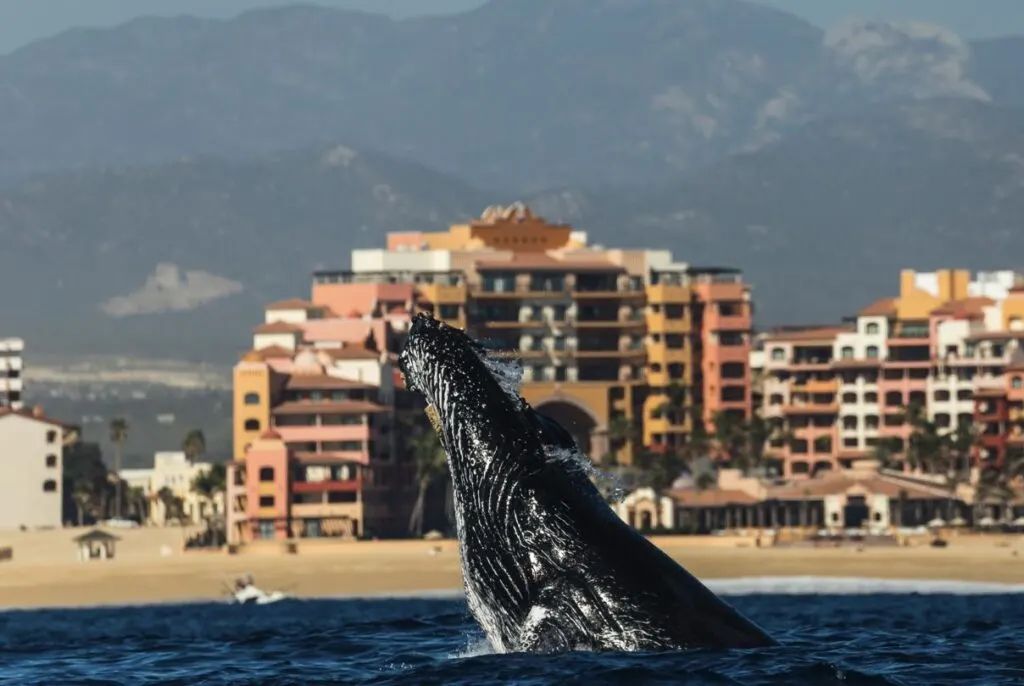
The annual whale migration is, without question, the most spectacular natural phenomenon in Los Cabos. Every single year, these massive, majestic marine mammals travel thousands of miles from the freezing, nutrient-rich feeding grounds of Alaska and the Arctic down to the warm, protected waters of the Sea of Cortez and the Pacific coast to mate and give birth to their calves.
If you are traveling to the southern tip of the peninsula this winter, witnessing a 40-ton humpback breach completely out of the water is an absolute, non-negotiable bucket-list experience. However, because these animals are heavily protected by the Mexican government, the activity is strictly regulated. As the 2026-2027 season officially approaches, premier operators are already opening their booking calendars.

Here are the exact dates, the legal guidelines, and the insider booking strategies you need to know before you secure your spot on a boat.
The Official 2026-2027 Season Dates
Unlike typical tourist activities that run year-round, whale watching in Mexico operates under a strict, federally mandated legal window.
The Secretariat of Environment and Natural Resources (Semarnat) officially dictates when commercial boats are legally allowed to actively approach the whales. For the Los Cabos region, the official 2026-2027 whale watching season will officially commence on December 15, 2026, and will run continuously until April 15, 2027.
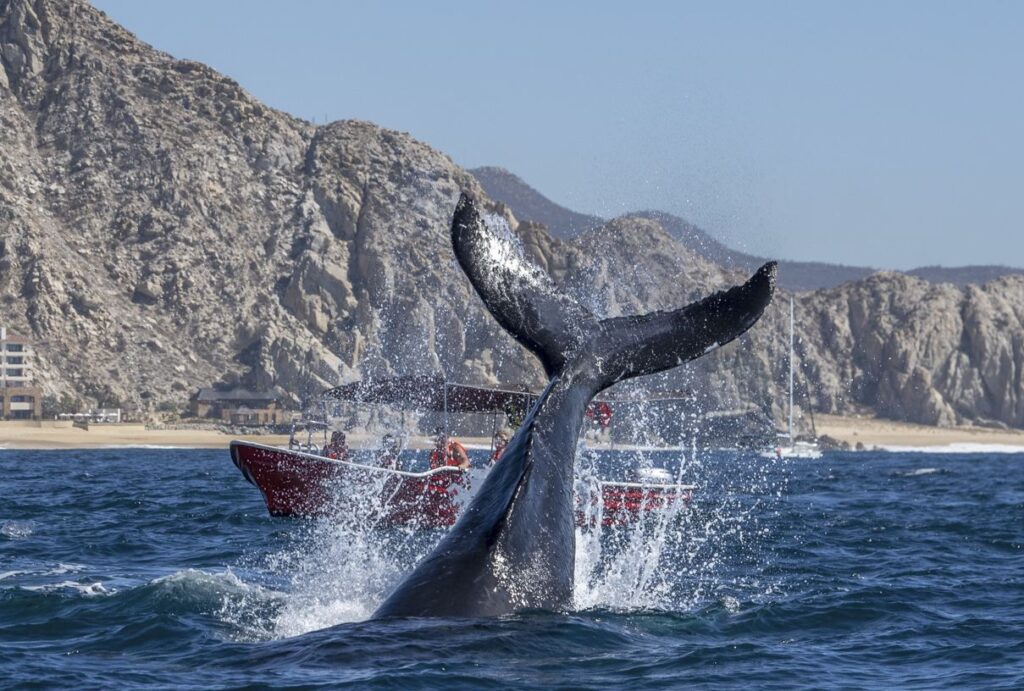
While you might spot a few early arrivals in late November or a few stragglers lingering into early May, commercial tour operators are legally prohibited from running dedicated, close-encounter whale watching tours outside of these exact dates.
If you are specifically traveling to see the whales, you must ensure your flight lands within this four-month window. The absolute peak time for viewing, when the waters are completely saturated with active adults and newborn calves, spans from late January through the end of February.


Why You Need to Book Your Tour Right Now
Even though the official season does not launch until mid-December, the top-tier, highly reputable tour operators are already taking reservations—and they are filling up incredibly fast.
The overlap between the absolute best whale watching weeks and the massive Cabo travel crunch weeks (including the Christmas holidays, President’s Day weekend, and early Spring Break) creates a massive bottleneck for inventory. The best marine biologists and licensed eco-tour companies deliberately limit their passenger counts to provide an intimate, educational experience. If you wait until you check into your hotel in mid-February to book a specialized Zodiac tour, you will likely find that the safest, most ethical boats are completely sold out.


Lock in your reservations right now, and look for operators that guarantee sightings (meaning if you don’t see a whale, they let you ride again for free on another day).
The Resort Balcony Advantage
Here is a spectacular insider secret about the Los Cabos whale season: you do not always have to get on a boat to see them.
Because the underwater geography of the Baja peninsula features incredibly steep drop-offs very close to the shoreline, the whales do not stay miles out to sea. They frequently navigate incredibly close to the beaches along the Tourist Corridor and the Pacific side of Cabo San Lucas.
If you are staying at an oceanfront luxury resort, one of the greatest experiences is ordering morning room service, pouring a cup of coffee, and walking out onto your private balcony. During the peak months of February and March, it is incredibly common to see massive humpbacks actively breaching, tail-slapping, and blowing massive spouts of water just a few hundred yards off the resort beaches. Bring a good pair of travel binoculars, and you can enjoy a private whale watching show before you even put your shoes on.
Understanding the Strict Rules of Engagement
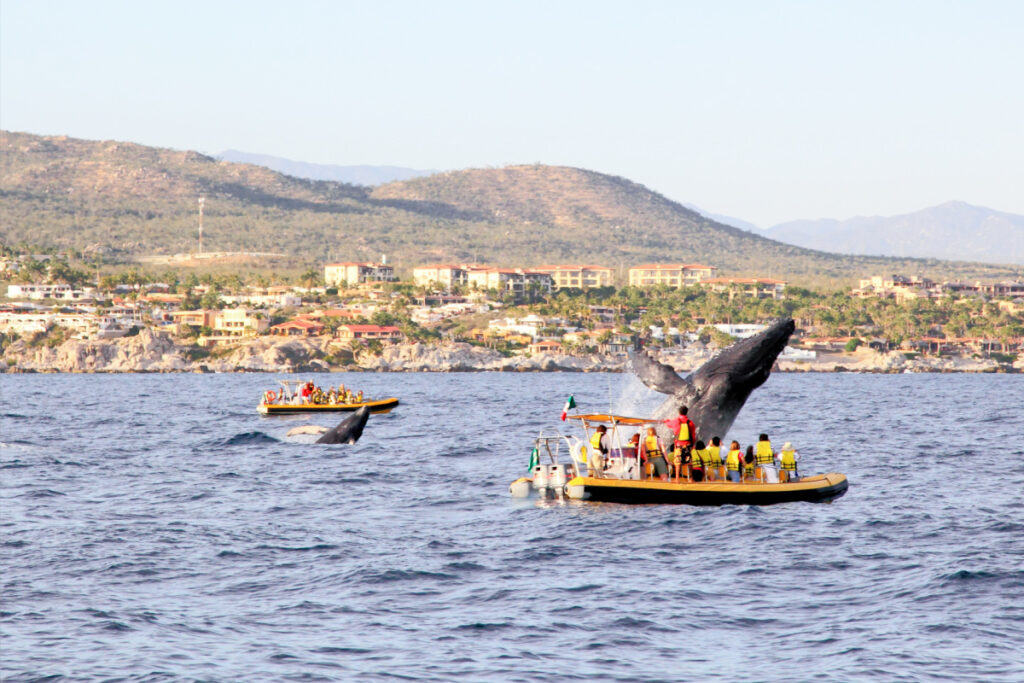
When you do book a boat charter, it is vital to understand that the Mexican government enforces strict rules on the water to protect the animals from extreme stress. Do not pressure your captain to break the law just so you can get a better iPhone photo.
Under Semarnat regulations, all licensed tour boats must adhere to the following rules:
- The Distance Rule: Boats must maintain a strict, minimum distance of 60 meters (roughly 200 feet) from whales, or 80 meters if there is a mother with a newborn calf.
- The Time Limit: A single boat is only legally permitted to observe a specific whale or pod for a maximum of 30 minutes. Once the time is up, the boat must move on so the animals are not harassed.
- The Speed Limit: When approaching a whale observation zone, boats must drop their speed to a maximum of 4 knots, and they must approach the animals diagonally from behind, never cutting off their path of travel.


Most importantly, you must verify that you are booking with a legally licensed operator. When you walk down the Cabo San Lucas Marina, look for boats flying the official Semarnat whale watching flag (a white pennant with a specialized government logo and a unique permit number). Unlicensed “pirate” operators frequently harass the animals, ignore safety guidelines, and run the risk of being stopped by the Mexican Navy mid-tour.
Seeing the sheer power and grace of a humpback whale in its natural habitat is an incredibly moving, profound experience. By planning ahead, booking early, and respecting the environmental guidelines, you guarantee your family will have an unforgettable encounter on the beautiful waters of Los Cabos this winter.
Strict Season Dates
Plan your trip within this federally mandated window, with the absolute peak viewing time (adults and calves) spanning from late January through February.
Book Tours Now
Don’t wait until you arrive; peak winter holidays and Spring Break crunch weeks will quickly deplete top-tier, licensed operator inventory.
See from the Resort
Humpbacks navigate incredibly close to the beaches, meaning you can often watch breaching, tail-slapping, and spouts using travel binoculars right from your room.
Distance Rules
Help protect the animals from extreme stress. Boats must maintain safe boundaries (80 meters for calves) and observe the 30-minute strict encounter limit.
Licensed Operators
Look for boats flying the official white pennant with a unique permit number to ensure safety, rather than unlicensed “pirates” that harass wildlife.
Join Our Cabo Sun Community of 20,000+ Members
Get real-time answers to your travel questions from our team of local experts and thousands of fellow travelers directly inside our interactive group.
Find Your Perfect Los Cabos Resort In Seconds
This simple, powerful tool was built by our on-the-ground experts to match you with the ideal resort for your specific budget and travel style.
The Ultimate Cabo Trip Planner
When’s the best time to go? Our powerful month-by-month guide breaks down the weather, crowds, hotel rates, and whale watching seasons for your perfect trip.
Enter your email address to subscribe to The Cabo Sun’s latest breaking news affecting travelers, straight to your inbox.