
When you finally clear customs, get your US passport stamped, and hit the sand in Los Cabos, you are immediately entering a completely different coastal culture than what you are used to back in the States.
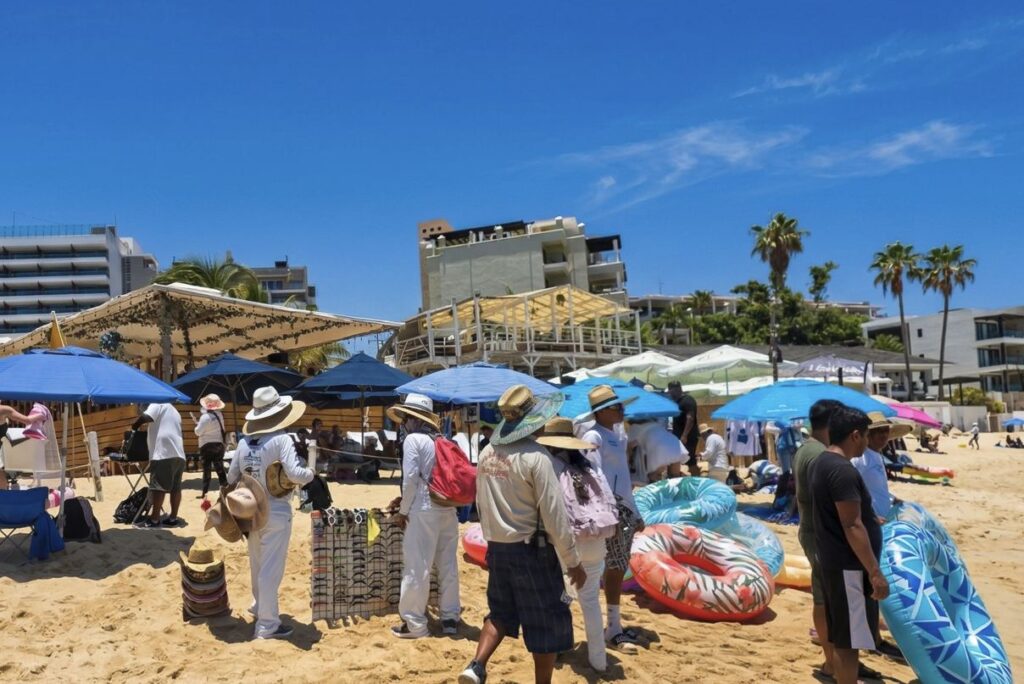
If you set up a beach chair in Florida or Southern California, you might hear the occasional seagull or the distant hum of a boat motor. Down here in Baja, especially on bustling stretches like Medano Beach, the soundtrack of your vacation includes a steady stream of local vendors.
These beach vendors are an iconic part of the Mexican vacation experience, selling everything from silver jewelry and hand-woven blankets to fresh mango on a stick. However, I constantly see American tourists struggling to figure out how to interact with them.


Navigating the local beach commerce doesn’t have to be stressful or annoying.
If you want to enjoy your poolside margarita in peace while still being a respectful guest in a foreign country, here are the 4 biggest mistakes US travelers make with Cabo beach vendors—and exactly how to avoid them.
1. The “Times Square” Ignore
If you have ever walked through Times Square in New York or down Hollywood Boulevard in Los Angeles, you have been trained to deal with street hawkers using one specific tactic: keep your head down, avoid eye contact, and pretend they do not exist.


When Americans bring this exact same strategy to the beaches of Los Cabos, it backfires entirely. In Mexican culture, ignoring someone who is speaking directly to you is considered deeply disrespectful. If you stare blankly out at the ocean while a vendor is holding up a blanket, they will likely just stand there longer, assuming you are considering the purchase or simply didn’t hear them.
The fix is incredibly simple. All you have to do is make brief eye contact, smile, and offer a polite, firm “No, gracias.” (Or “No, thank you”). Nine times out of ten, they will immediately return the smile, wish you a good day, and walk away. Acknowledging them as human beings goes a long way down here.
2. Haggling Too Aggressively Over Pennies
Americans love a good bargain. We are conditioned to feel like we “won” the transaction if we negotiate a lower price. While mild haggling is absolutely expected and accepted on Mexican beaches, some US tourists take it way too far.
I’ve watched guys wearing $400 sunglasses argue with a local vendor for ten straight minutes over a $2 USD difference on a hand-painted ceramic skull. When you factor in the massive inflation we are currently dealing with back stateside—where a basic iced coffee will easily run you $7—arguing fiercely over a couple of US dollars on the beach is just absurd.
By all means, ask for a “better price” if you are buying three or four items from the same seller. But keep the exchange rate in perspective. That extra $3 USD means almost nothing to your overall vacation budget, but it makes a massive difference in putting food on the table for that vendor’s family. Negotiate respectfully, but know when to just hand over the cash.


3. Buying Excursions From Unauthorized Sellers
While buying a woven bracelet or a straw hat on the sand is perfectly safe, handing over hundreds of US dollars for a sunset cruise or a jet ski rental to a random guy walking the beach is a massive gamble.
Legitimate tour companies operate out of the Cabo San Lucas Marina or have dedicated, authorized desks inside your resort. The guys walking the shoreline selling “discount” glass-bottom boat tours often require a cash deposit upfront. The mistake here is that you have absolutely zero US credit card chargeback protection if that guy suddenly vanishes with your money or the boat never shows up. Furthermore, unlicensed excursion operators rarely carry the proper liability insurance.
If you want to book a water taxi or a catamaran, walk off the beach and go directly to the marina docks or book through a reputable agency. Keep your purchases on the sand strictly to souvenirs and snacks.


4. Using Large U.S. Bills For Small Purchases
Because Los Cabos caters so heavily to the American market, US dollars are accepted practically everywhere on the peninsula. However, a major rookie mistake is walking out of your resort carrying nothing but crisp $50 and $100 US bills.
Beach vendors are not walking ATMs. If you try to buy a $15 USD silver ring with a $100 bill, the vendor is either going to have to spend twenty minutes running up and down the beach asking other sellers for change, or they simply won’t be able to make the sale at all. Worse yet, if they do have the change in Mexican pesos, you are going to get an incredibly poor exchange rate on the fly.
Before you leave the States, go to your local bank and break your cash into small denominations. Carry a stack of $1 and $5 US bills, or withdraw local pesos from a secure ATM at the airport. You will make the transactions infinitely smoother and avoid getting gouged on the exchange rate in the process.
Join Our Cabo Sun Community of 20,000+ Members
Get real-time answers to your travel questions from our team of local experts and thousands of fellow travelers directly inside our interactive group.
Find Your Perfect Los Cabos Resort In Seconds
This simple, powerful tool was built by our on-the-ground experts to match you with the ideal resort for your specific budget and travel style.
The Ultimate Cabo Trip Planner
When’s the best time to go? Our powerful month-by-month guide breaks down the weather, crowds, hotel rates, and whale watching seasons for your perfect trip.
Enter your email address to subscribe to The Cabo Sun’s latest breaking news affecting travelers, straight to your inbox.