
If you woke up this morning, checked your news feed, and saw a headline about an “earthquake swarm” hitting Los Cabos while you were sleeping, you might have experienced a brief moment of panic. The phrase “earthquake swarm” sounds like the premise of a disaster movie, especially when you are thousands of miles away from home in a beachfront resort.
However, before you start frantically searching for your passport and looking up early flights out of SJD International Airport, you need to take a deep breath.
In the early morning hours of Thursday, November 12, the National Seismological Service (SSN) did indeed record a cluster of seismic activity just off the coast of San José del Cabo. But in reality, this is a completely common, everyday occurrence for the Baja California peninsula. These tremors are no biggie—they are so minor that they are very rarely even felt by anyone on land.
If you are currently vacationing in Los Cabos or packing your bags for an upcoming trip, here is what the recent seismic data means and why you have absolutely nothing to worry about.


What Actually Happened Offshore?
When scientists use the term “swarm,” they simply mean a cluster of earthquakes happening in the same general area over a short period of time.
According to the latest morning seismicity report from the SSN, a total of 15 minor earthquakes were recorded just off the coast between 12:22 AM and 3:48 AM on Thursday. The epicenters were located relatively close to land—primarily between 6 and 11 kilometers southwest of San José del Cabo.


While 15 earthquakes in a three-hour window sounds intense, you have to look at the magnitude. These were absolute micro-quakes, ranging from a tiny 1.0 to just a 2.4 on the Richter scale. To put that into perspective, geologists categorize anything under a 2.5 as a “microearthquake.” They are generally not felt by humans at all and can only be detected by highly sensitive local seismographs.
The vast majority of tourists sleeping in their luxury beds along the Tourist Corridor during that three-hour window had absolutely no idea the earth was even moving.


Why Does Los Cabos Get Earthquakes?
To understand why these micro-swarms happen, you just have to look at a geological map. Mexico is one of the most seismically active countries on the planet because the entire nation sits atop the intersection of five major tectonic plates: the Caribbean, North American, Pacific, Rivera, and Cocos plates.
The Baja California peninsula, in particular, sits directly on the boundary between the massive Pacific Plate and the North American Plate. As these two giant slabs of the earth’s crust constantly grind past each other, tension builds up.
These tiny, 1.0 and 2.0 magnitude swarms are actually a good thing. Instead of the fault line locking up and releasing all its tension at once in a massive, destructive earthquake, the earth is constantly making tiny, microscopic adjustments to release the pressure harmlessly.
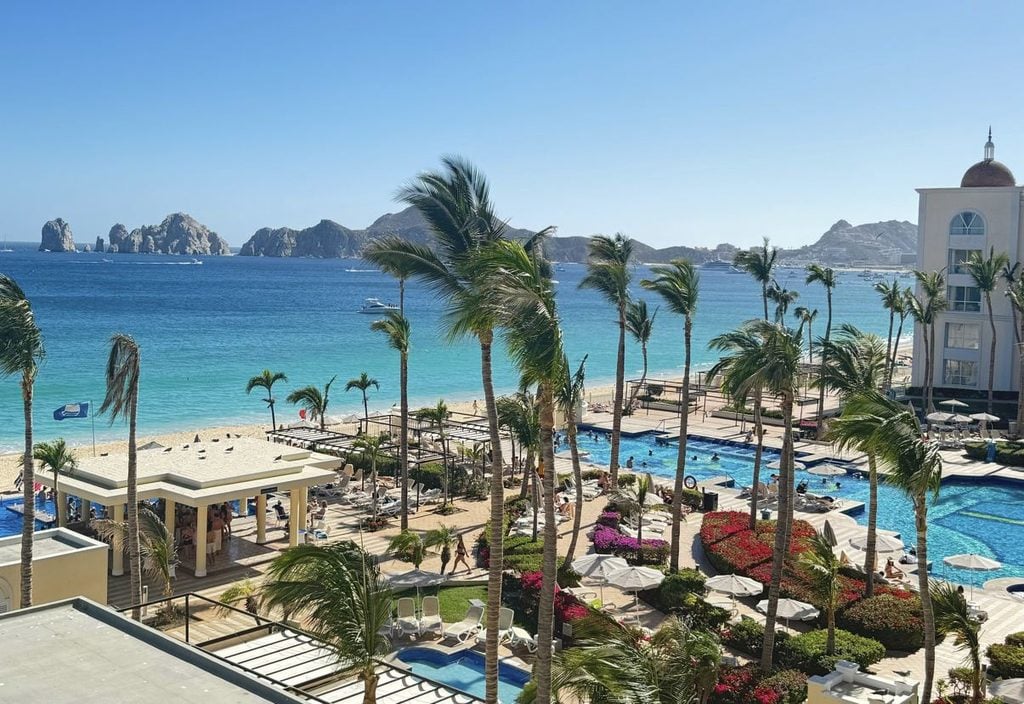
The Tourist Experience: “It Was Kinda Cool”
If you are lucky enough (or awake enough) to actually feel one of these minor tremors during your vacation, it is usually a very brief, mild sensation.
There is no violent shaking, no swaying buildings, and no things falling off the shelves. Typically, a magnitude 3.0 or 4.0 tremor just feels like a large, heavy truck drove past your hotel window, or like a brief, low rumble vibrating through the floorboards. In fact, we recently felt a minor tremor while staying in the area, and honestly, it was kinda cool to experience the natural geology of the Baja peninsula in action. It becomes a fun travel story to tell rather than a terrifying ordeal.
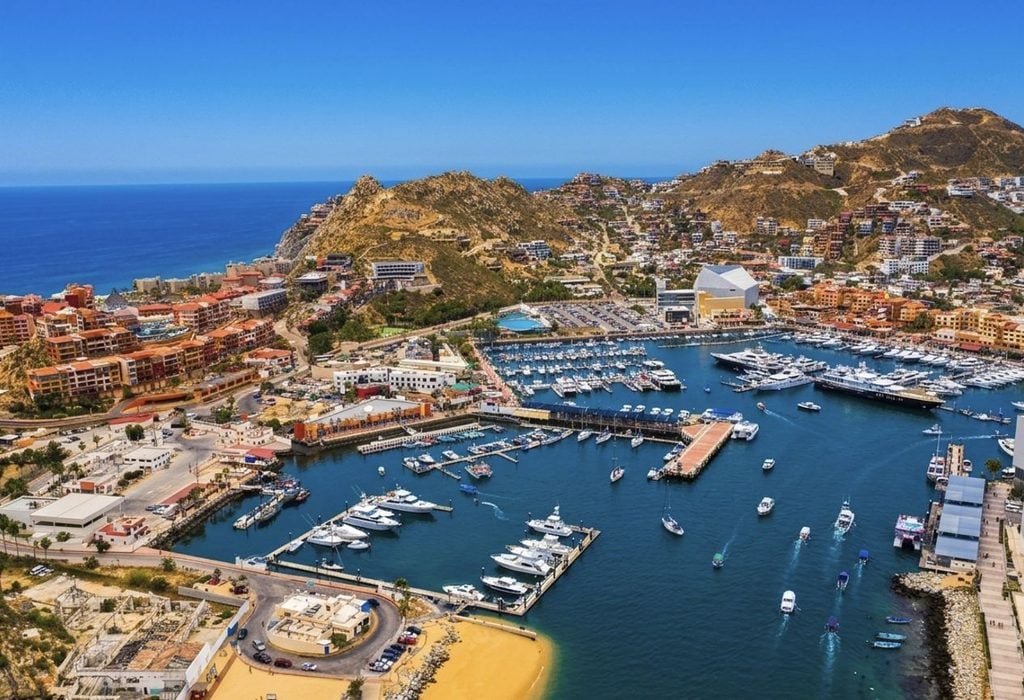
Resort Safety and What You Should Do
If you do happen to feel a mild rumble while lounging by the pool or sitting in your room, your best course of action is to simply do nothing.
The mega-resorts in Los Cabos are incredibly safe. Because the region is located in a known seismic zone, municipal building codes are incredibly strict. The massive concrete resorts, luxury villas, and high-end hotels along the coast are heavily reinforced and engineered specifically to withstand major seismic activity. Furthermore, these 1.0 to 3.0 magnitude micro-quakes are far too weak to ever generate a tsunami threat.
Ultimately, an offshore earthquake swarm in Los Cabos is just a reminder that the earth is alive and moving. It is a completely normal part of the local environment. So, grab another margarita, head down to the beach, and enjoy your vacation—the only shaking you should be worrying about is the blender at the swim-up bar.
Micro-Quake Swarms
Clusters of minor earthquakes recorded off the coast of San Jose del Cabo are everyday occurrences that are rarely felt by anyone on land.
Tectonic Plate Boundaries
The Baja peninsula sits directly on a major fault boundary where microscopic adjustments release pressure harmlessly instead of large shocks.
Barely Noticeable Rumbles
If felt at all, minor tremors feel like a heavy truck driving past your hotel window, with zero structural damage or tsunami threat.
Strict Resort Building Codes
Massive concrete mega-resorts and luxury villas along the coast are heavily reinforced and engineered specifically for regional seismic zones.
Zero Travel Disruption
Dismiss seismic headlines as routine geology, grab another margarita by the pool, and enjoy your beachfront vacation stress-free.
Join Our Cabo Sun Community of 20,000+ Members
Get real-time answers to your travel questions from our team of local experts and thousands of fellow travelers directly inside our interactive group.
Find Your Perfect Los Cabos Resort In Seconds
This simple, powerful tool was built by our on-the-ground experts to match you with the ideal resort for your specific budget and travel style.
The Ultimate Cabo Trip Planner
When’s the best time to go? Our powerful month-by-month guide breaks down the weather, crowds, hotel rates, and whale watching seasons for your perfect trip.
Enter your email address to subscribe to The Cabo Sun’s latest breaking news affecting travelers, straight to your inbox.