
When travelers ask me for the absolute best day-trip excursion to book during a Los Cabos vacation, my answer is always immediate: rent a car, drive two hours north to the capital city of La Paz, and swim with the whale sharks.
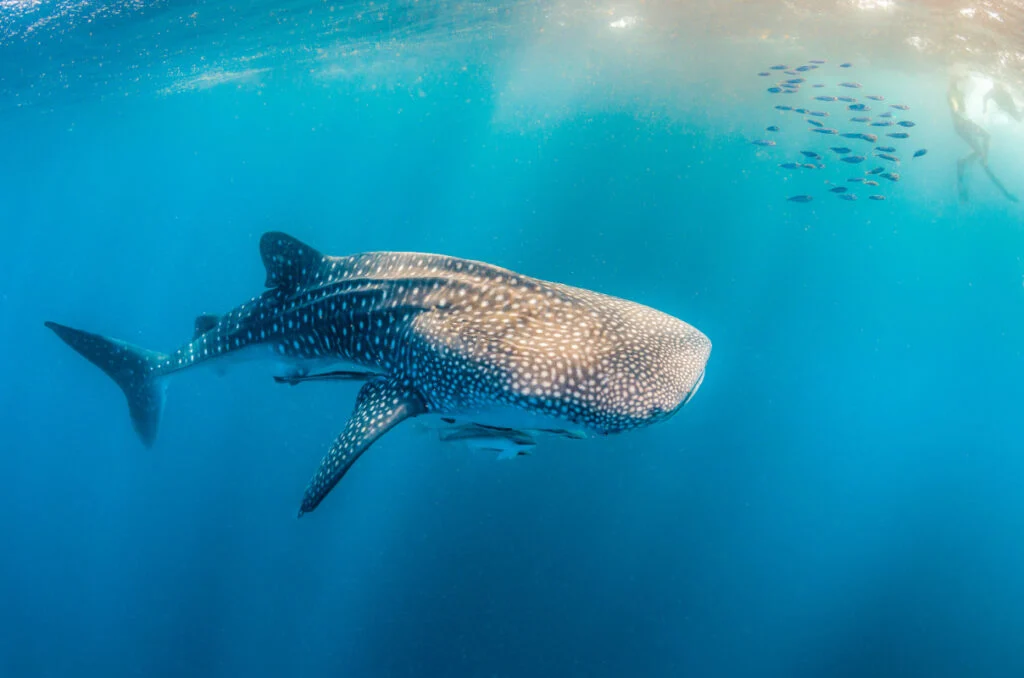
There is simply nothing else like it on the Baja peninsula. Slipping into the calm, turquoise waters of the Sea of Cortez and coming face-to-face with a 30-foot, polka-dotted giant is a profound, bucket-list wildlife encounter. Because La Paz Bay acts as a massive, natural buffet for these filter-feeding gentle giants, it has become one of the most reliable places on the planet to swim alongside them between October and April.


However, because the whale shark (Rhincodon typus) is officially listed as an endangered species, the Mexican government tightly controls who can access their feeding grounds. If you are planning to book a tour this season, things are going to look a bit different.
The Ministry of Environment and Natural Resources (Semarnat) and the National Commission of Natural Protected Areas (Conanp) have just unveiled a highly strict, comprehensive new Type Management Plan. Covering the next three consecutive seasons (2026 through 2029), these new regulations completely overhaul the daily boat quotas and establish zero-tolerance rules for tourists in the water.
If you want to swim with the largest fish in the ocean this coming year, here is exactly what you need to know about the new conservation laws.
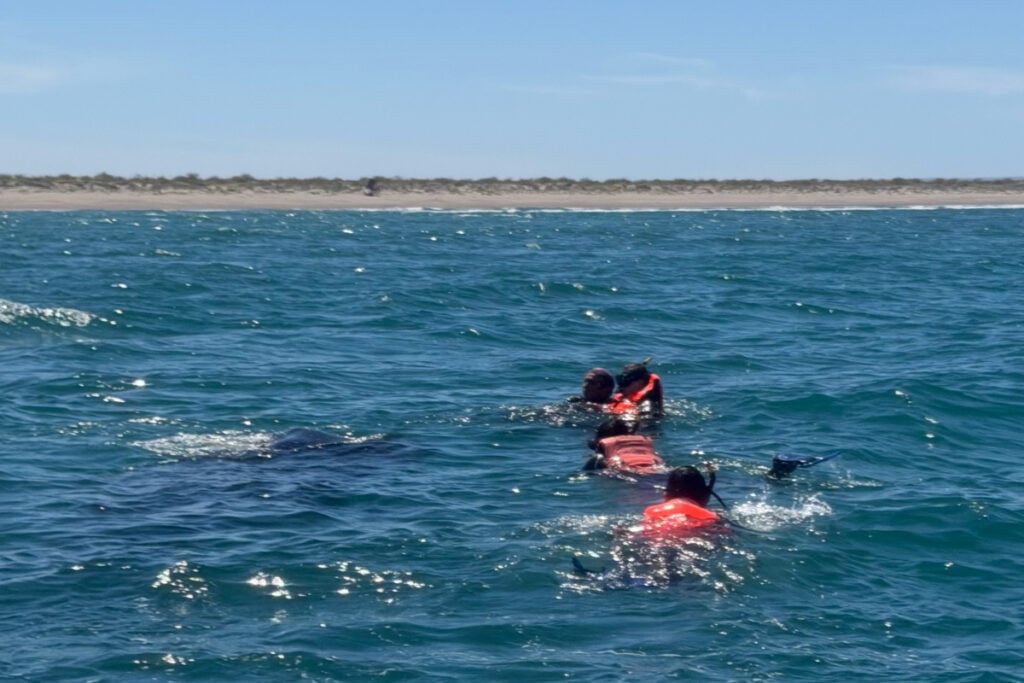
The New “Dynamic Quota” System
In previous years, overcrowding in the bay became a massive issue. Too many boats operating too closely to the feeding sharks led to accidental strikes and severe stress on the animals. To fix this, Semarnat is implementing a dynamic quota system that scales the number of permitted tour boats directly to the number of sharks currently in the bay.
Local marine biologists will conduct official counts to establish a reference value. Based on that count, the daily limits are strictly capped:
- 14 or More Sharks: A maximum of 14 tour boats are allowed in the designated zone per shift (capped at 56 boats per day).
- 6 Sharks: The quota drops to a maximum of 6 boats per shift (capped at 24 boats per day).
- 5 or Fewer Sharks: If the local population drops to five or fewer sharks, all tourist observation and swimming activities are immediately suspended until the numbers rebound.
Furthermore, the bay has been strictly sectioned. All swimming activities are confined exclusively to Zone I. Zone II is a designated, zero-access conservation area, and Zone III is heavily speed-restricted to a maximum of 7 knots (roughly 12.9 km/h) for transit only.
Strict Rules For Swimmers in the Water
Once your licensed tour boat locates a whale shark, the rules for getting into the water are incredibly specific.
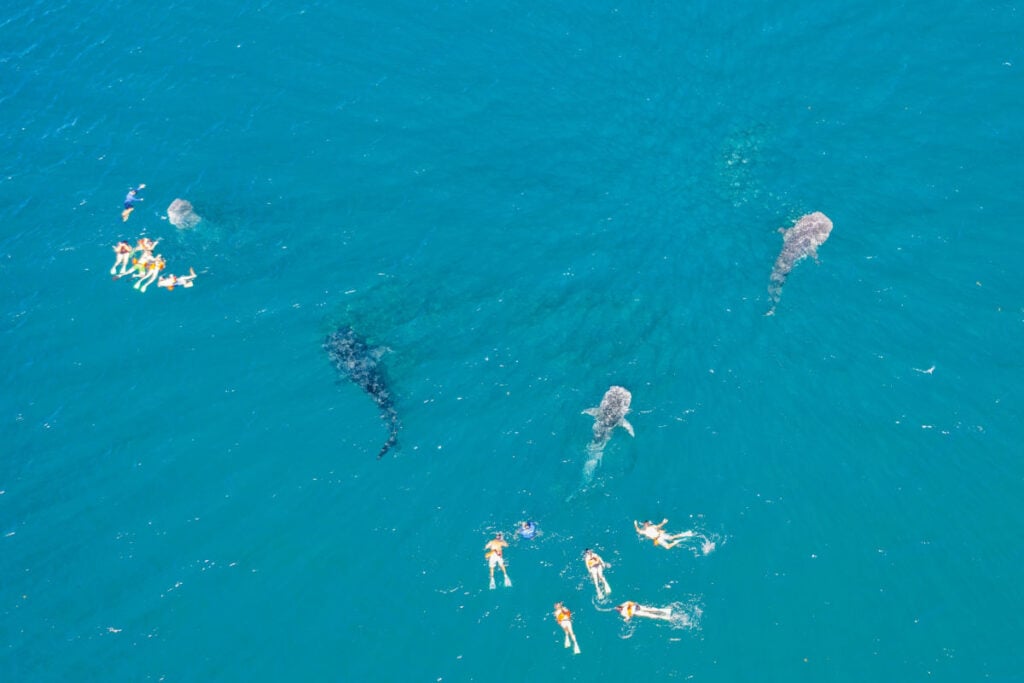
Only one boat is allowed to interact with a specific shark (or group of sharks) at a time, and the encounter is strictly capped at a maximum of 30 minutes. All other tour boats must maintain a 50-meter perimeter.
When you get the green light to jump in, you must adhere to the following mandates:
- Group Size: Only five tourists are allowed in the water at a time, and you must be closely supervised by a certified guide.
- Mandatory Gear: You must wear a full-torso life vest or a neoprene wetsuit. Snorkels, masks, and fins are required.
- The Distance Rule: You must maintain a strict distance of at least 2 meters (roughly 6.5 feet) from the shark’s head and sides, and 3 meters (roughly 10 feet) away from its massive tail fin.
- Stay at the Surface: The tourist group must stay tightly united at the surface of the water. Free-diving down to swim underneath the belly of the shark is strictly forbidden.
The Zero-Tolerance Prohibited List
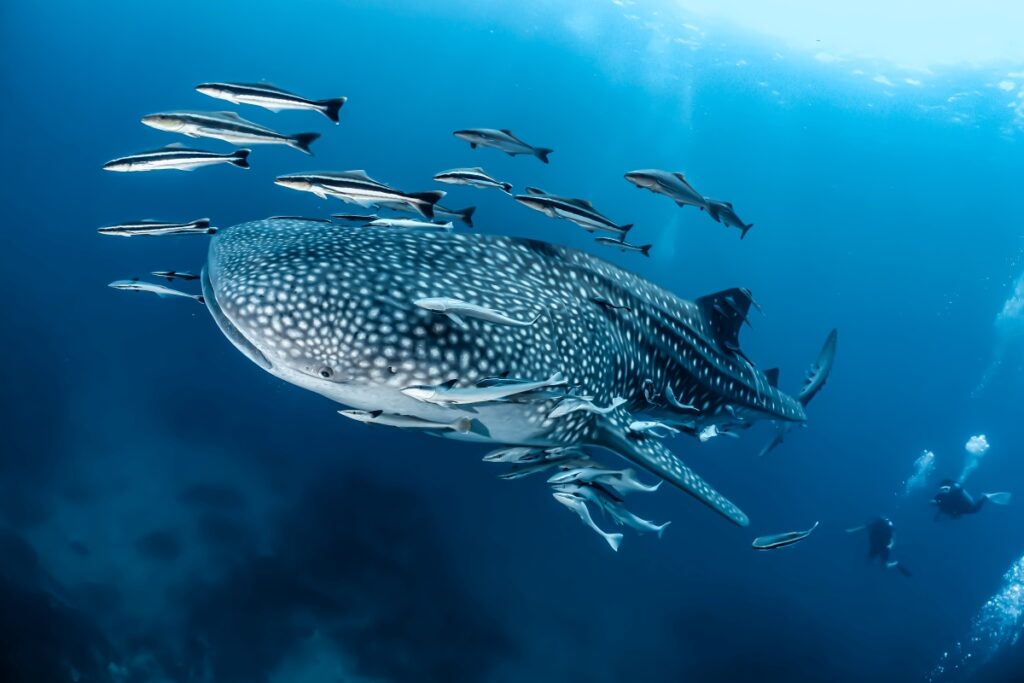
The new 2026–2029 code of conduct explicitly bans several popular tourist behaviors to ensure the sharks are not harassed while they feed on the dense zooplankton blooms.
Under no circumstances are you allowed to touch, ride, chase, feed, or intentionally obstruct the swimming path of a whale shark. Furthermore, the use of drones during the activity is banned. In the water, you cannot use any motorized propulsion devices to keep up with the shark, you cannot use underwater artificial lighting, and selfie sticks are strictly prohibited.

Behavioral Triggers That End the Tour
Even if your 30-minute window is not up, the encounter will be immediately terminated by your guide if the shark displays any signs of distress.
Tourists must approach the shark slowly from behind, swimming diagonally and parallel to its path. If the shark begins to display evasive swimming patterns, defensive tail-slapping, sudden aggressive changes in direction, or initiates a deep, prolonged dive, everyone must exit the water immediately. The same rule applies if the human presence interrupts the shark’s natural feeding, defecating, or mating habits.
La Paz Bay is an incredibly vital ecosystem, recently identified by researchers as a crucial secondary nursery area for juvenile whale sharks. By strictly adhering to these new regulations, tourists can still experience the magic of swimming alongside these magnificent creatures while ensuring the population continues to thrive in Baja waters for decades to come.
Join Our Cabo Sun Community of 20,000+ Members
Get real-time answers to your travel questions from our team of local experts and thousands of fellow travelers directly inside our interactive group.
Find Your Perfect Los Cabos Resort In Seconds
This simple, powerful tool was built by our on-the-ground experts to match you with the ideal resort for your specific budget and travel style.
The Ultimate Cabo Trip Planner
When’s the best time to go? Our powerful month-by-month guide breaks down the weather, crowds, hotel rates, and whale watching seasons for your perfect trip.
Enter your email address to subscribe to The Cabo Sun’s latest breaking news affecting travelers, straight to your inbox.