
Whenever I’m packing a bag for another trip down to Los Cabos, I inevitably get the same well-meaning question from friends and family: “Is it really safe down there right now?”
Thanks to sensationalized evening news broadcasts and sweeping, generalized travel advisories, many people believe traveling anywhere in Mexico comes with an inherent, unavoidable risk of crime. Because of this, travelers often step off their flights at Los Cabos airport feeling anxious, gripping their bags tightly, and looking over their shoulders.
However, the reality on the ground is completely different. If you are heading to the southern tip of the Baja Peninsula, crime should be the absolute least of your worries. The leading cause of tourist incidents, injuries, and tragic fatalities in Los Cabos has absolutely nothing to do with crime.
The real danger is the ocean.
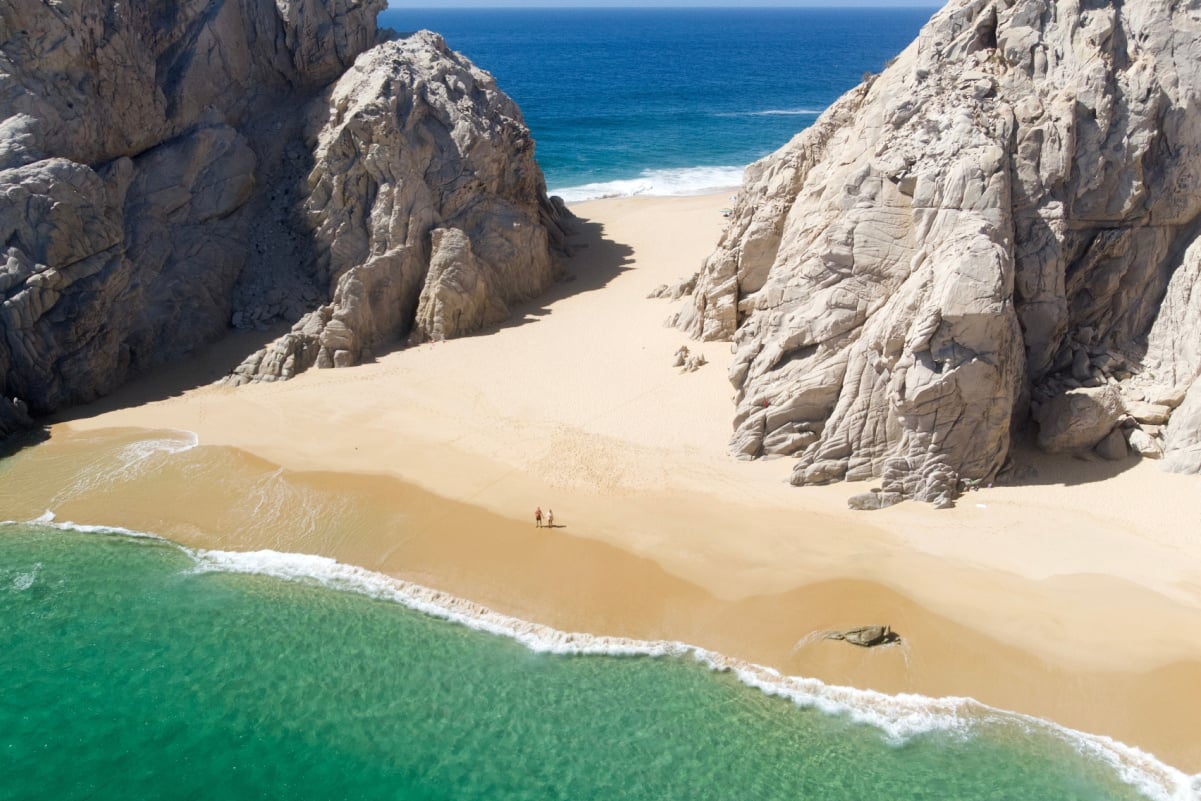
Fortunately, unlike a random act of crime, ocean safety is a risk factor that is entirely within your control. Here is exactly what the data says about your personal security in Cabo, why the Pacific Ocean is so deceptive, and what you need to know to ensure your vacation is perfectly safe.
The True Security Data: Cabo’s Safety Index
To understand why you can stop stressing about crime, you just have to look at the hard data.
Los Cabos operates inside a highly protected, heavily funded luxury bubble. Because the regional economy depends on international tourism, the local government and private resort developers invest staggering amounts in security. This “Baja Shield” involves active patrols by the Mexican Navy, the National Guard, and elite private resort security forces.
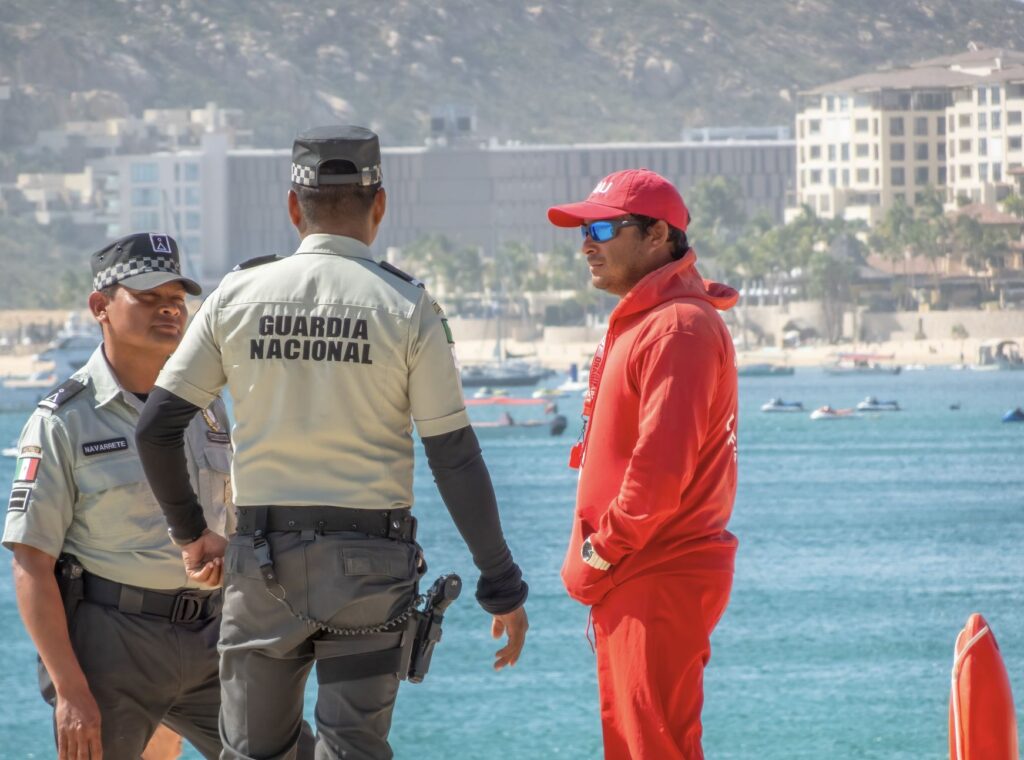
The numbers reflect this massive effort. According to the latest regional safety tracking data, Cabo San Lucas currently holds an incredibly high Traveler Safety Index score of 94 out of 100, while the quieter neighboring town of San José del Cabo sits at a 92 out of 100.
To put that into perspective, those scores make Los Cabos statistically safer than many major metropolitan cities back home. You can comfortably walk the downtown Marina after sunset, dine out at incredible restaurants, and take authorized taxis without fear. The threat of violent crime directed at tourists is practically non-existent.
The Real Threat: The Untamed Pacific
With crime out of the equation, the focus shifts to the natural environment. The geography that makes Los Cabos so unbelievably stunning is the exact same geography that makes it so dangerous.
The peninsula sits directly at the violent collision point between the calm Sea of Cortez and the raw, untamed Pacific Ocean. While the water often looks crystal clear and incredibly inviting, most beaches in Los Cabos are strictly unswimmable.

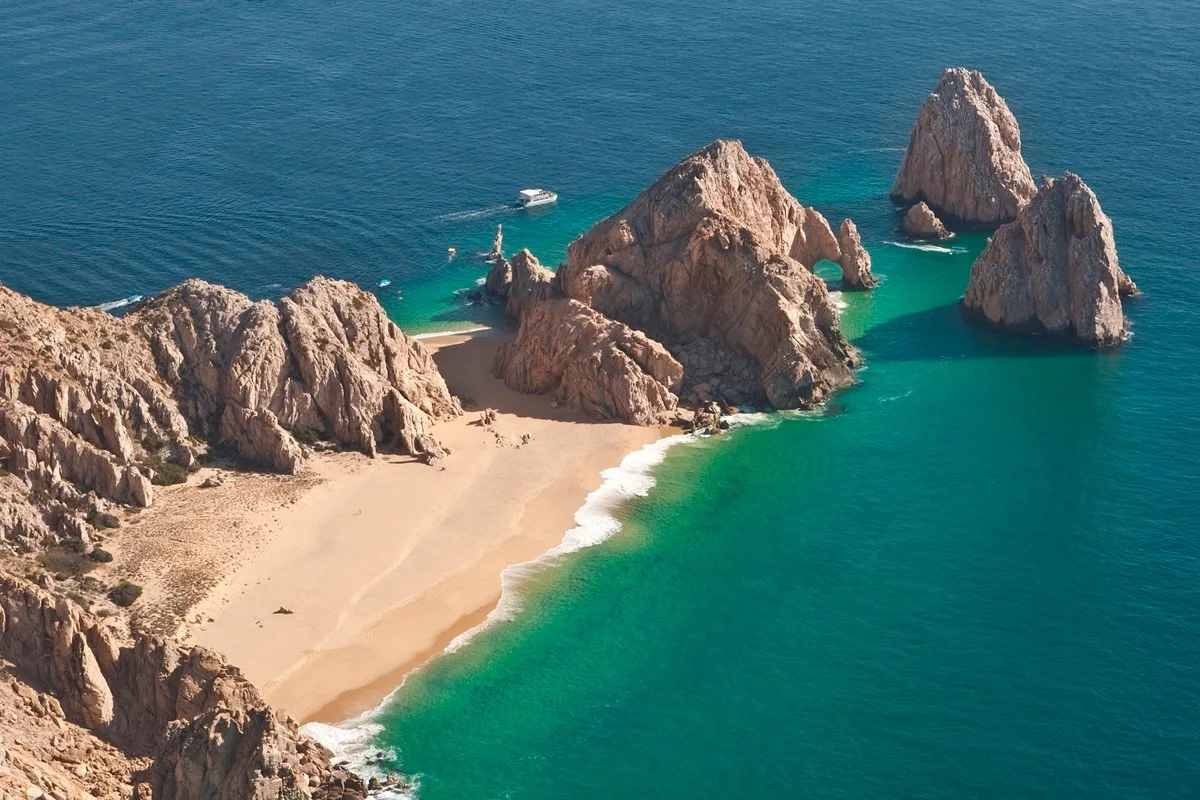
The danger lies in what you cannot see from your beach towel. The shoreline is defined by massive, plunging drop-offs that begin just feet from shore. This creates violent, high-speed rip currents and powerful undertows that can instantly sweep an adult off their feet. The region is also notorious for rogue waves—massive walls of water that surge high onto the dry sand without any visual warning.
Almost every major tourist incident, injury, or rescue operation in Cabo involves a visitor who underestimated the water, turned their back to the ocean for a photo, or waded in “just up to their knees” to cool off.
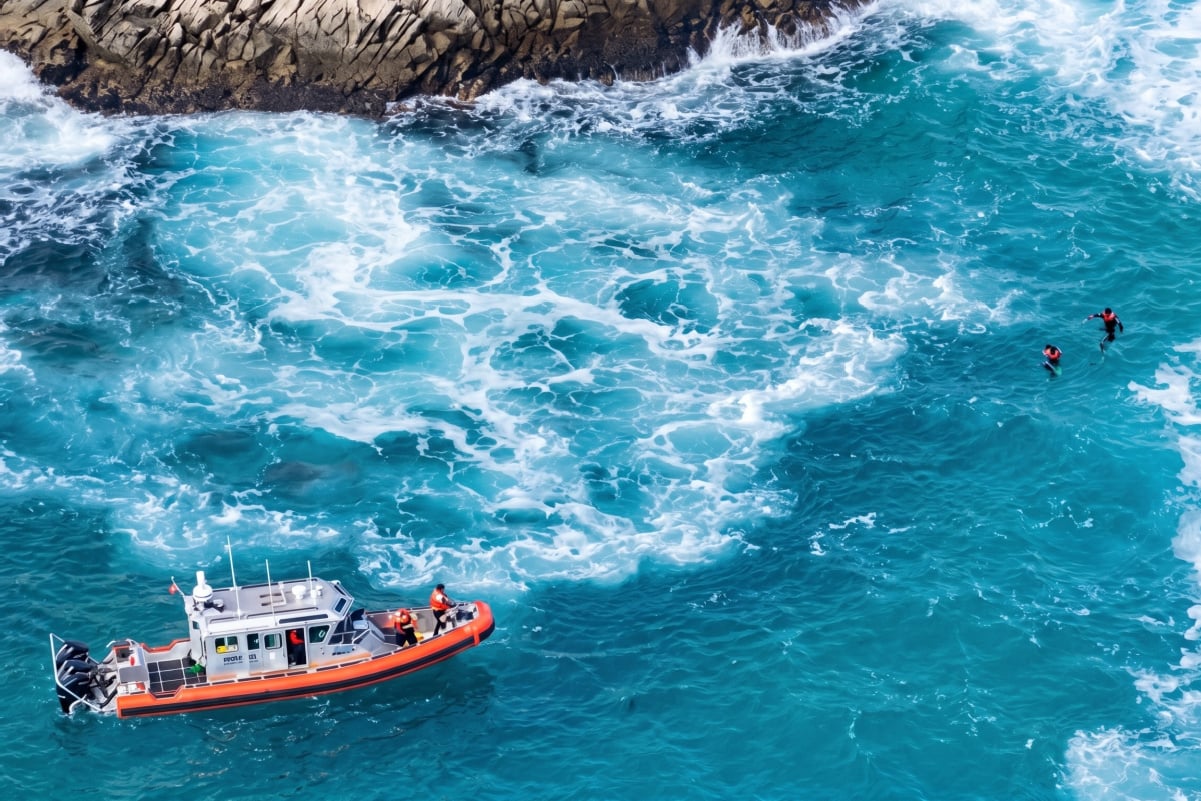
Just this past week 2 men were rescued after getting into some dangerous swells near the Cabo Arch.
Respecting the Flag System
Because these ocean incidents are entirely preventable, staying safe requires only basic situational awareness and respect for local rules.
Every resort and public beach in Los Cabos uses a highly visible colored flag system planted in the sand to communicate current water conditions. You must take these flags seriously:
- Green Flag: The water is calm and safe for swimming.
- Yellow Flag: Use extreme caution; there are moderate waves and currents.
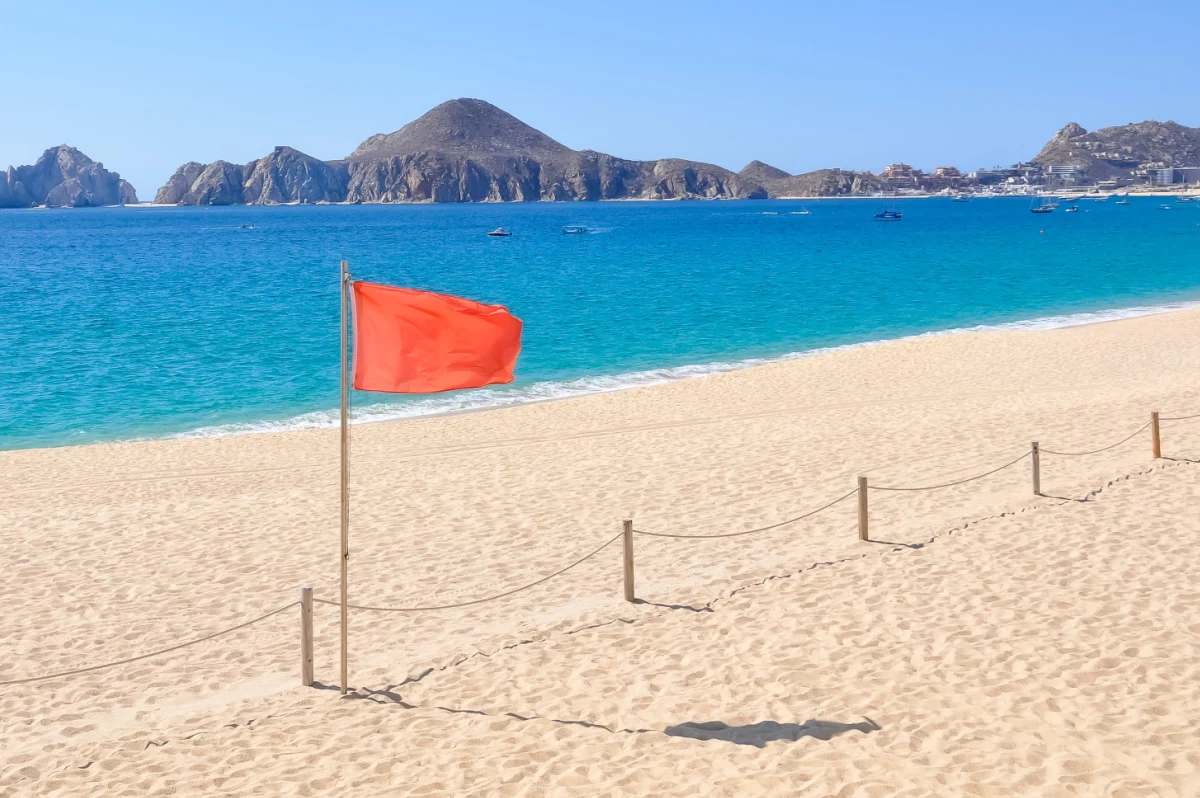
- Red Flag: High danger. Do not enter the water under any circumstances.
- Black Flag: The highest level of danger. The beach is completely closed, and you should not even walk near the wet sand.
On the Pacific-facing side of the peninsula, you will almost exclusively see red and black flags flying year-round. Do not assume you are a strong enough swimmer to beat the system. If the red flag is flying, your ocean access is completely shut down.
Where You Can Actually Swim
You don’t have to give up ocean swimming; you just need to choose your spots wisely.
If you want to spend the afternoon floating in the saltwater, you need to head to the protected bays and coves situated along the Sea of Cortez. Medano Beach is the undisputed safest stretch of sand in Cabo San Lucas, offering calm, swimmable waters perfect for wading and paddleboarding. Further up the Tourist Corridor, Chileno Bay and Santa María Bay offer incredible, naturally protected coves that boast some of the best snorkeling in the region.
Los Cabos is an incredibly safe, world-class destination. Leave your anxieties about crime at home, respect the sheer power of the Pacific Ocean, and stick to the resort pools when the red flags are flying. If you can do that, you are guaranteed to have a flawless vacation.
Join Our Cabo Sun Community of 20,000+ Members
Get real-time answers to your travel questions from our team of local experts and thousands of fellow travelers directly inside our interactive group.
Find Your Perfect Los Cabos Resort In Seconds
This simple, powerful tool was built by our on-the-ground experts to match you with the ideal resort for your specific budget and travel style.
The Ultimate Cabo Trip Planner
When’s the best time to go? Our powerful month-by-month guide breaks down the weather, crowds, hotel rates, and whale watching seasons for your perfect trip.
Enter your email address to subscribe to The Cabo Sun’s latest breaking news affecting travelers, straight to your inbox.